


CBD may help some people relax, but its effects vary depending on the dose, form, and individual. Available data shows encouraging results for anxiety in several trials, but this does not constitute universal proof. Caution is still advised regarding drug interactions and the quality of the chosen product.
In short:
- The effective dose of CBD for anxiety varies from 200 mg to 1,500 mg depending on the studies and the formulation used.
- The effectiveness of CBD depends heavily on individual sensitivity, method of administration and context of intake, making the effects highly variable.
- Clinical trials show a positive effect on anxiety, but with limitations such as modest sample sizes and significant heterogeneity in protocols.
- Medical supervision is recommended to avoid drug interactions and adverse effects, particularly on the liver.
- It is advisable to start with low doses, observe over several days, and favour certified products to guarantee their quality.
Table of Contents
- Biological mechanisms: how CBD influences relaxation
- What do clinical studies show, and where are their limitations?
- Which form of CBD should you choose depending on your current needs?
- How to gradually dose CBD, and when to monitor for interactions
- Side effects and safety: what the WHO and FDA report
- Checklist for choosing a reliable CBD product
- Credibility and resources for further exploration of the topic
- Does CBD act differently on chronic or occasional stress?
- CBD, lemon balm, valerian or meditation: which to choose?
- How to incorporate CBD into a daily relaxation routine
- Is CBD legal in France today?
- CBD is not a substitute for a comprehensive stress management strategy
- Which Buddha Farm's oil should you choose for daily relaxation?
- Frequently Asked Questions
- Sources
Biological mechanisms: how CBD influences relaxation
CBD acts on multiple systems in the body rather than a single target. It interacts with the endocannabinoid system by slowing the breakdown of anandamide, a molecule involved in regulating mood and stress. This indirect action distinguishes it from THC, which binds directly to CB1 receptors and produces psychoactive effects.
Preclinical data and some reviews also suggest that CBD modulates GABAergic transmission and partially activates 5-HT1A receptors, a plausible mechanism behind its reported anxiolytic effects. GABA is the brain's main inhibitory neurotransmitter, and modulation of this system could explain a feeling of calm experienced by some users.
Several factors influence the intensity of this effect:
- The administered dose, which varies greatly from one study protocol to another.
- The product formulation, oil, isolate or full spectrum, changes the bioavailability.
- Individual metabolism, including genetic variants of the liver enzymes CYP450.
- The person's physiological state, including their weight and diet at the time of intake.
Pro tip: note the time and context of each dose during the first few weeks; this helps to identify what actually works for you.
This variability explains why two people taking the same dose can experience very different effects. CBD doesn't work like a switch, but rather as a gradual adjustment of several interconnected systems.
What do clinical studies show, and where are their limitations?
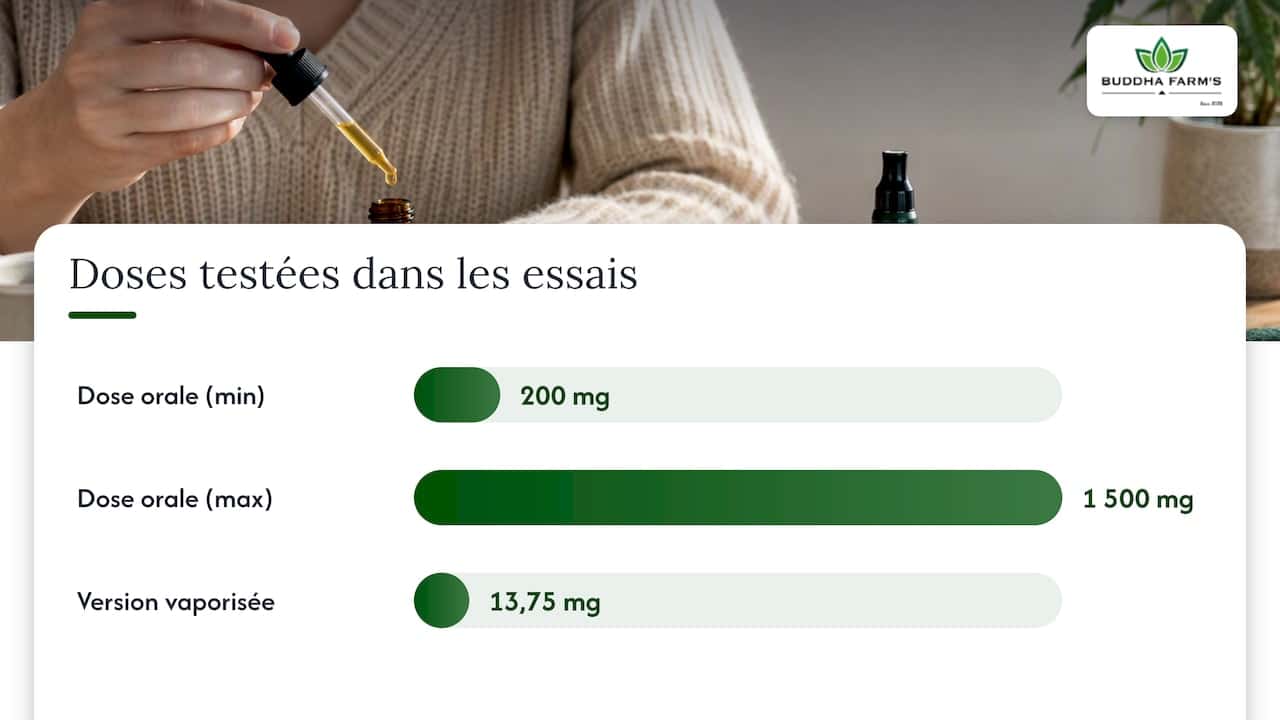
Recent randomized trials and meta-analyses converge on a positive signal, although they do not eliminate all uncertainties. A review of randomized trials found an improvement in anxiety in 9 out of 16 trials analyzed, with effective doses ranging from 200 mg to 1,500 mg orally, and sometimes 13.75 mg in vaporized form. This dose variation, ranging from one to seven, demonstrates the significant heterogeneity of protocols across studies.
A 2024 meta-analysis of 316 participants observed a significant effect of CBD on anxiety, with an effect size of Hedges' g = -0.92. In practical terms, this means a notable difference between the treated and control groups, a result that the researchers themselves describe as promising rather than definitive, given the wide confidence interval.
Several methodological limitations affect these conclusions:
- Sample sizes often remain modest, which widens the confidence intervals.
- The tested formulations differ greatly, oil, capsule or spray, making direct comparisons difficult.
- Individual response depends on factors such as body mass index, diet, and genetic variants of CYP enzymes, which alter actual exposure to the compound.
- Systematic reviews call for better standardized trials, with fixed doses and longer follow-up, to confirm these results.
These reservations do not discredit the existing data; they simply encourage us to read it with the nuance it deserves. An effect observed in the laboratory does not always translate identically into everyday use.
Which form of CBD should you choose depending on your current needs?
The format you choose directly affects the speed and duration of the effect. An oil taken under the tongue typically takes between 15 and 45 minutes to take effect, as some of the cannabidiol passes directly into the bloodstream before being digested. Inhalation, on the other hand, produces a noticeable effect within minutes, making it better suited for acute, occasional anxiety.
Edibles, such as gummies, and herbal teas follow a complete digestive pathway: the effect appears later, often after 45 to 90 minutes, but generally lasts longer. The bioavailability of CBD also depends heavily on what accompanies its intake: taking it with a high-fat meal can increase exposure four to five times compared to taking it on an empty stomach.
To help guide your choice:
- For evening relaxation before bedtime, an oil or herbal tea taken with a light meal allows for a gradual and prolonged effect.
- For acute and occasional anxiety, inhalation offers faster relief, useful in immediate stressful situations.
- For daily use with precise dosage, sublingual oil remains the easiest form to adjust drop by drop.
- For a discreet and regular routine, gummies or infused foods are suitable for those who prefer to avoid the taste of hemp.
Choosing the right format isn't just a matter of preference; it directly determines the speed and stability of the desired effect. Consulting our comparison of consumption methods will help you refine this decision based on your lifestyle.
How to gradually dose CBD, and when to monitor for interactions
Starting low and adjusting slowly remains the safest approach, in the absence of a validated universal dose. Here is a simple protocol to follow:
- Start with a low dose, often between 10 and 20 mg per day depending on the product.
- Maintain this dose for 5 to 7 days to observe the effects before making any changes.
- Increase gradually in stages if the effect felt remains insufficient, without exceeding the doses tested in research, which generally range from 200 to 1,500 mg in some clinical trials on anxiety.
- Record each change in a simple notebook: dose, time, how it felt.
Pro tip: Increasing too quickly doesn't make the effect stronger faster, it only makes it harder to identify the dose that's really right for you.
Drug interactions warrant special attention. CBD inhibits several cytochrome P450 enzymes, including CYP3A4 and CYP2C19, which may increase exposure to certain co-administered medications, as observed with clobazam metabolites. Individuals taking anticoagulants, antiepileptics, or medications metabolized by these pathways should consult a healthcare professional before regular use.
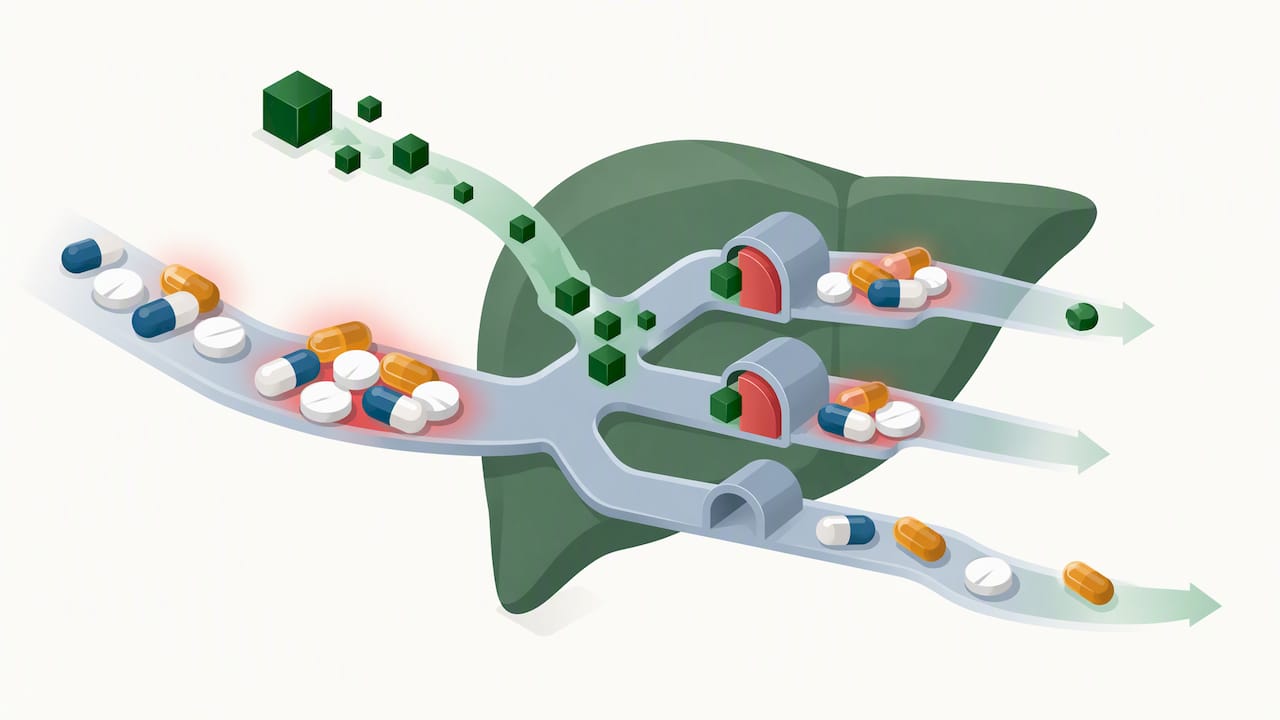
A medical consultation is necessary in cases of unusual fatigue, jaundice, or persistent abdominal pain. A blood test, including liver transaminase levels, can detect any abnormalities before they worsen.
Side effects and safety: what the WHO and FDA report
CBD is generally well tolerated, according to the WHO expert committee, which has not identified any potential for abuse or dependence in its pure form. The most frequently reported side effects remain:
- Drowsiness, especially at high doses or in combination with other sedative substances.
- Diarrhea is common when initiating the treatment too quickly.
- Fatigue, which often fades after dose adjustment.
A more serious area of concern relates to the liver : an FDA -supervised study observed that 5.6% of healthy participants had transaminase levels more than three times the normal limit after four weeks of use. This signal warrants close monitoring in individuals with a history of liver disease, regular alcohol consumption, or those taking other medications that affect the liver. Our detailed analysis of CBD's effects on the liver delves deeper into these points.
Checklist for choosing a reliable CBD product
The CBD market remains heterogeneous, and quality varies greatly from one manufacturer to another. Before buying, check these essential points:
- A Certificate of Analysis (COA) issued by a third-party laboratory, confirming the actual CBD content and the absence of contaminants.
- The type of spectrum suited to your purpose: full spectrum retains other cannabinoids and terpenes, broad spectrum removes THC, isolate contains only pure CBD.
- The origin of the hemp and its method of cultivation, organic or not, which influences the purity of the final product.
- The seller's transparency on traceability, from field to packaging, and the absence of unfounded therapeutic claims.
Pro tip: a product without a publicly accessible COA does not deserve your trust, regardless of its advertised price.
Clear labeling and accessible documentation remain the best indicators of reliability before a purchase.
Credibility and resources for further exploration of the topic
We select our organic hemp-based products with careful attention to traceability and legal compliance for each item. This ethical approach guides both our choice of suppliers and our usage recommendations.
To learn more, consult our resources on CBD bioavailability, our guide on consumption methods, or our dossier on CBD legislation in France. This content complements the information presented here for informed use.
Does CBD act differently on chronic or occasional stress?
The distinction between chronic and acute stress changes the way we approach CBD. When faced with acute tension, an exam, or an unexpected event, the desired effect is rapid and temporary: inhalation or a high dose of sublingual oil better meets this immediate need.
Chronic stress follows a different pattern. It develops over weeks or months, and a single dose of CBD is generally insufficient to reverse its cumulative effects. Clinical trial protocols testing anxiety often use repeated daily doses over several weeks rather than a single dose, suggesting that consistent use is more important than a single high dose.
This distinction has a practical consequence: expecting immediate and lasting relief from a single dose for stress that has been building up for months often leads to disappointment. A gradual approach, with a stable dose maintained over several weeks, better aligns with protocols that have shown positive results in research. CBD then acts as a long-term adjustment, not as an emergency sedative, even though some fast-absorbing forms can also relieve an isolated spike in tension.
CBD, lemon balm, valerian or meditation: which to choose?
CBD isn't the only natural option for promoting relaxation, and it doesn't necessarily replace other methods. Lemon balm and valerian are plants traditionally used for their calming properties, with a long history of use in herbal medicine, particularly to aid sleep. Their mechanism of action differs from that of CBD, which acts on the endocannabinoid system rather than on the pathways targeted by these plants.
Meditation, on the other hand, does not rely on any substances: it works through the gradual training of attention and breathing, with effects that build up over time rather than through a single dose. Clinicians interviewed in the specialized press note that CBD can help slow down certain processes of mental rumination, without, however, replacing psychotherapeutic support when it is necessary.
These approaches are not mutually exclusive. Combining a regular meditation practice with CBD intake can enhance the perception of calm, each method acting on a different level, one on the body and brain chemistry, the other on attention and behavior.
How to incorporate CBD into a daily relaxation routine
Incorporating CBD into a routine requires consistency rather than intensity. Set aside a specific time of day, for example, in the morning to prepare for a busy day, or in the evening to facilitate the transition to rest. This consistency makes it easier to assess the actual effect over several weeks.
Associate taking CBD with a routine already established in your day, such as brushing your teeth or making coffee, to avoid forgetting. Combining CBD with a relaxing activity, a hot herbal tea, a few minutes of breathing exercises, or a short walk often enhances the feeling of relaxation, although it's not possible to isolate the exact contribution of each element.
Here are some useful guidelines for building this routine:
- Keep the same form and dose for at least one week before judging the effect.
- Avoid combining several new wellness habits at the same time, in order to identify what works.
- Choose a calm environment when taking it, as this enhances the perception of relaxation.
This regularity, rather than the search for an immediate effect, corresponds to what is suggested by study protocols that have observed positive results over several weeks of use.
Is CBD legal in France today?
CBD extracted from authorized hemp varieties is legal in France, provided that the THC level remains below the regulatory threshold set for finished products. This distinction between CBD and THC is crucial: CBD is not classified as a narcotic, unlike THC when it exceeds the permitted levels.
French regulations govern the cultivation, processing, and sale of peas, with traceability requirements at every stage, from the field to the finished product offered to the consumer. Reputable producers document this chain with accessible certificates of analysis, which attest to both legal compliance and the absence of contaminants.
For a complete overview of the applicable legal framework, our guide to CBD legislation in France and Europe details the applicable thresholds and the distinctions between different product categories. Before making any purchase, verifying compliance remains the best guarantee of safe and lawful use.
CBD is not a substitute for a comprehensive stress management strategy
CBD works best as a complementary tool rather than a standalone solution. Breathing techniques, regular sleep, and physical activity remain essential. Consult a professional if stress persists despite these adjustments, and keep a simple journal of your experiences.
— Fred
Which Buddha Farm's oil should you choose for daily relaxation?
We offer a selection of hemp oils, flowers and extracts designed to complement a relaxation routine, with verifiable traceability on each item.

Each product page includes its certificate of analysis and usage recommendations, allowing you to choose a concentration suited to your CBD experience. If you're a beginner, an oil is often the easiest format to gradually increase the dosage. Discover our selection of CBD oils and find the concentration that fits your relaxation routine.
Frequently Asked Questions
Which CBD should I take to relax?
A low-concentration sublingual oil is often the simplest starting point, as it allows for precise and gradual dosing. The choice also depends on the desired onset of effect: inhalation acts faster, while oil or edibles last longer.
Does CBD have a relaxing effect?
CBD can produce a relaxing effect in some people, with positive results observed in several anxiety trials. However, this effect varies depending on the dose, formulation, and individual physiology.
Does CBD calm anxiety?
A 2024 meta-analysis measured a significant effect of CBD on anxiety, with a notable effect size in 316 participants. Researchers remain cautious about the scope of this result due to the heterogeneity of the protocols tested.
What are the disadvantages of CBD?
The most common side effects include drowsiness, diarrhea, and fatigue, according to the WHO. An FDA study also observed elevated liver transaminase levels in 5.6% of participants after four weeks, warranting particular attention in individuals with a history of liver disease.
Sources
- Meta-analysis (2024) reporting CBD effects on anxiety
- FDA safety study reporting transaminase elevations with CBD
- Cannabidiol comprehensive review of randomized trials (PMC)
- WHO expert committee review on cannabidiol


