The vocabulary of hemp resins is constantly expanding with new terms. After dry sift, bubble hash, and references to successive filtrations, the term static sift is gaining attention. It refers to a particularly fine selection of the resinous material, sometimes presented as a high-end benchmark.
But what exactly does this expression mean? Is it a new molecule, a manufacturing method, or simply a brand name? And how does a resin advertised as "static" compare with other products in a catalog?
Static sifting refers to a separation process that utilizes the electrostatic properties of particles, generally as an extension of dry sifting. Scientific research is indeed investigating the possibility of separating trichomes and plant fragments based on their electrical properties. pubmed.ncbi.nlm.nih.gov
This technical basis is worth understanding. However, it does not transform the word "static" into a universal quality certification. For your purchase, the composition of the finished product, batch information, and advertised characteristics remain essential.
Here are the guidelines to discover this process and compare Buddha Farm’s CBD resins with a more precise reading of the product sheets.
What is static sift CBD?
Static sifting belongs to the vocabulary of resinous material processing. The term describes a separation principle, provided that this method is explicitly stated in the relevant reference.
A selection based on electrical properties
The general principle is to exploit the behavior of electrically charged particles to facilitate their separation.
In the context of cannabis, research focuses in particular on distinguishing between resinous structures and plant fragments. However, the methods and practices may differ: a manual technique and an experimental setup should not be confused.
So, for you, the first question is simple: what does the term "static sift" mean on this specific sheet?
A process name, not the name of a cannabinoid
The word static does not, by itself, tell you the composition of the resin.
You must read separately the cannabinoids listed, their potential values, and the other declared components. A manufacturing name and a formulation answer two different questions.
This distinction is particularly important in a catalogue offering several product families.
A term that must be accompanied by an explanation
A product sheet can use static in its title, in its technical description, or as a product range name.
These uses do not provide the same level of information. If the process is your main reason for buying, look for an explanation in the description or ask the seller for clarification.
This will prevent you from attributing a documented method to a simple marketing title.
Static sift and dry sift: what's the difference?
The two expressions are similar, but do not refer to exactly the same information.
Dry sifting describes dry sifting
Dry sifting refers to the dry separation process generally associated with the use of sieves.
To understand a reference, you can look for information about the material collected, its selection, and its final preparation.
The term provides a manufacturing reference. It does not automatically provide the characteristics of the packaged resin.
The static sift describes a complementary separation logic
Scientific literature presents "static tech" as a technique that utilizes, among other things, the charge differences created by friction. It also distinguishes it from electrostatic separators developed to process materials using specific equipment.
These approaches share an interest in electrical properties, but do not necessarily constitute an identical protocol. link.springer.com
For your comparison, ask how the seller describes the sequence of operations.
The two entries can appear together
A product sheet may indicate a material that has been dry-sifted and then subjected to electrostatic sorting.
There is not necessarily a contradiction between dry sift and static sift. The first term can describe a step, the second an additional announced selection.
The clarity of the explanation will allow you to understand what truly distinguishes the product.
Comparative table of the main mentions
| Mention | Key information to search for | What it does not replace |
|---|---|---|
| Dry sift | Dry sieving work announced | Composition of the finished product |
| Static sift | Electrostatic separation announced | Analytical results of the batch |
| Ice-o-lator or bubble hash | Ice water separation announced | Description of the final texture |
| Filtered | Nature of the operation described | Explanation of the process |
| Filtered several times | Meaning of the number of passages | Overall quality assessment |
| Microns | Element to which the mesh size relates | Cannabinoid content |
| Premium | Concrete criteria that support the positioning | Traceability and precise characteristics |
This table is for reading a catalogue. It does not constitute an automatic classification between resins.
A reference becomes easier to compare when each mention has a clearly explained meaning.
What do the studies on electrostatic separation show?
The term "static sift" is not just a marketing term. The electrostatic properties of cannabis particles are the subject of scientific research.
A study on an experimental separator
An article published in 2025 in the Journal of Cannabis Research describes the development of an electrostatic trichome separator. The authors studied the electrical charges and forces involved in designing their device.
They demonstrate the value of these properties for separating matter fractions. However, the work pertains to specific equipment and conditions; it does not certify products sold under the name "static sift." pubmed.ncbi.nlm.nih.gov
Recent work on several separation cycles
A 2026 publication examined the effect of successive tribo-electrostatic separation cycles on dry-sieved extracts. The authors tracked the composition and distribution of the resulting fractions.
Under the conditions studied, some fractions had more trichomes and less plant debris. These results should not be interpreted as a quantifiable promise applicable to all commercially available CBD resins. sciencedirect.com
The research explains a technical potential
For your purchase, the practical consequence is to distinguish between two levels of information.
Studies explain why a process might be beneficial. The reference data tells you what is actually being offered.
A convincing fact sheet should allow you to make this connection without confusing an experimental result with the characteristics of an entire catalogue.
"Purer": what does this formula mean for a resin?
The word purity comes up often in descriptions. To understand it, we need to ask what kind of purity is being referred to.
A selection of materials is not a complete composition
A fact sheet may mention a reduction in plant fragments. This describes a selection objective or result, depending on the information provided.
This concept does not automatically answer all questions about the components of the finished product.
To find out the formulation, look at the declared composition. To find out about the controls carried out, consult the relevant documents.
A percentage must have a specific title
“90% pure” and “90% CBD” are not two equivalent expressions.
If a figure appears without sufficient explanation, ask what it measures and on what basis it is announced.
You will then be able to appreciate its relevance to your comparison.
Avoid general warranties deduced from a single word
A selection described as refined does not constitute an automatic response to all product parameters.
Keep separate readings of the method, composition, and available results. This organization prevents you from giving a commercial formula undue importance.
Does static sift necessarily contain more CBD?
To compare the contents of two references, you need to look at their respective data.
The method name does not give a value
A static sift datasheet must present its stated content, just like any other resin.
You cannot replace missing data with an estimate based on the name.
If concentration is a major factor in your choice, check precisely what is indicated.
Compare information presented in the same way
Two percentages are only useful if you understand what they represent.
Look at the titles and available documents. If a reference lists multiple cannabinoids or a particular formulation, take the time to examine each piece of information.
A question to the seller may be enough to clear up any ambiguity.
A rating doesn't describe your entire preference
You can place more importance on the texture, the advertised flavor profile, or the packaging.
Therefore, the highest number is not necessarily the one that best meets your search.
Choose based on all the features that matter to you.
How to read an analysis associated with a static sift resin?
The presence of a document is interesting. Its reading should then focus on its identification and content.
Check the reference examined
Look for the sample name, date and possible batch number.
The objective is to understand the link between the document and the product currently offered.
A result relating to a starting material does not necessarily answer a question concerning a different final preparation.
Look at the parameters actually being sought
What cannabinoids or other elements are included in the report?
Do not assume that a document covers controls that are not shown in it.
This will allow you to use the analysis for what it actually establishes.
Compare the information sheet and the document
The headings should allow you to understand the correspondences.
If you notice a difference in value or a formulation that is difficult to interpret, ask for an explanation. This approach is preferable to making a personal assumption.
Your choice will be clearer once the information is compared.
Can static sift resin be identified by sight?
A photograph provides information about the presentation. It does not describe the entire manufacturing process.
The color does not identify the process
You might prefer a golden hue or a darker finish. To see how the product is presented, please refer to the technical specifications.
Do not use colour as a substitute for information that should be written.
The texture deserves its own description
Sandy, crumbly, flexible or compact: these words can help you choose a presentation.
They should not be interpreted as the sole evidence of electrostatic separation.
If you are looking for a specific texture, start with that criterion, then check the other characteristics.
An illustration does not necessarily represent a batch
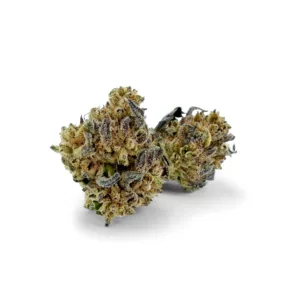
The image accompanying this article illustrates the world of resinous materials and screening. It does not depict electrostatic separation equipment in operation and is not a contractual photograph of a Buddha Farm's product.
For your purchase, please refer to the images of the relevant item.
Static, microns and filtrations: how to avoid confusion?
These references can be grouped under the same title. However, they answer different questions.
Microns describe a dimension
A micron corresponds to one thousandth of a millimeter. In a sieving context, a value can notably refer to a mesh opening.
Before comparing two numbers, look at what they specifically represent in each card.
A sieve size and a CBD content are not two interchangeable measurements.
The number of filtrations requires an explanation
A "filtered several times" statement becomes useful when it specifies what has been done.
Are these successive passages, different selections, or a range name? The answer changes your interpretation.
Don't automatically turn the highest number into a better grade.
The term "static" needs to be contextualized
You can ask if the term describes the advertised method or is part of the trade name.
This precision is particularly useful when several technical words are accumulated in a short title.
Your goal is to understand the offer, without having to guess the meaning of every expression.
What about the aromatic profile?
If the advertised fragrance is your priority, look for a description specific to the finished product.
The process does not replace aromatic notes
A fact sheet can explain a selection of materials while remaining very general about the fragrance.
To choose a woody, vegetal, floral or fruity register, use the corresponding information.
You will be able to compare several options according to a specific preference.
Distinguish between intensity and character
A very expressive description does not necessarily mean that it will better match your tastes.
You might prefer a more discreet profile or a particular family.
Note down the words that interest you and keep them as reference points from one sheet to the next.
Do not deduce the perfume's formulation
A mention of mango or red berries describes a sensory profile. To find out about any declared additives, consult the ingredients list.
This separation allows you to appreciate the aromatic vocabulary without attributing any additional meaning to it.
"Static" in a catalog: always look at the full name
The word can appear on references belonging to different families.
The method and the cannabinoids must remain separate
A process indication alone does not tell you which cannabinoids are advertised.
Read the full title, then the ingredients. This will prevent you from mistaking a product listed under a different category for a simple CBD resin.
Don't just compare similar names
Two products sharing the word "static" can correspond to different descriptions.
To make a comparison, examine their declared components, their format, and their respective data.
The common noun provides a starting point for the search, without establishing an equivalence.
Go back to your initial need
Are you looking for a classic CBD resin, a particular texture, or a precisely identified reference?
This question will help you select the right category before comparing offers.
Why might a static sift resin have a higher price tag?
To understand a price, look at what the seller emphasizes and what you are actually interested in.
An additional step may be part of the positioning
If the description mentions a specific selection process, you can ask for the accompanying details.
The argument becomes more useful when it explains the difference between this reference and another.
A technical term alone does not allow you to decide if the supplement meets your expectations.
Compare the chosen weight
Divide the packaging price by its weight.
In a hypothetical example, a 5g sachet at €30 costs €6/g. Another 10g sachet at €50 costs €5/g.
The second option has a lower unit price, but requires a higher total expenditure.
Choose a quantity suitable for discovery
For a new product, a smaller format might be suitable. You can check if its presentation meets your expectations before considering anything larger.
You can also browse low-priced CBD offers to broaden your comparison.
How can two resins be compared in practice?
Here is a simple method to apply to Buddha Farm’s CBD resins as to any other documented research.
Start with the nature of the product
Make sure you are comparing products whose advertised composition matches your search.
A similarity in texture or name is not enough.
Identify two or three priorities
You can choose the budget, texture, and flavor profile.
Prioritizing your expectations prevents you from searching for a reference that is supposed to be the best in all areas.
Examine the concrete differences
What distinguishes the fact sheets? Is it an explained method, a format, analytical data, or packaging?
Note these elements rather than just the commercial superlatives.
Finish with the final amount
Select your quantity, check for any discounts and review the order total.
You will then have a comparison that corresponds to your actual purchase.
Useful questions to ask before ordering
A short and precise request facilitates communication with the seller.
Specifically, you can ask:
- Does the word "static" describe the method announced for this reference?
- What is the composition of the finished product?
- Which documents correspond to the proposed lot?
- What texture is described for this packaging?
- Are the images representative of the product currently sold?
- What weight corresponds to the selected option?
These questions help clarify the offer. They also allow you to verify that a technical argument truly addresses your needs.
Frequently asked questions about static sift CBD
What is static sifting?
The term refers to a separation process that utilizes the electrostatic properties of the particles. For a commercial resin, consult the product information sheet to see how this method is explained.
What is the difference with dry sifting?
Dry sifting describes dry sieving. Electrostatic screening can be presented as a complementary step. Therefore, the two terms are not necessarily mutually exclusive.
Is Static Sift the name of a cannabinoid?
No. The composition must be read separately from the process name.
Is static resin necessarily richer in CBD?
To determine the stated content, consult the relevant data and available documents. The name alone does not provide a value.
Can the method be identified by the color?
A single color does not document the entire manufacturing process. Use the technical description to learn about the stated process.
Does the smallest number of microns mean the best quality?
This figure should be interpreted according to what it describes. It does not replace the composition, presentation, and other information of the reference.
Can static resin be pressed?
To find out the final format offered, consult the product sheet. A separation indication alone does not describe the packaging or presentation sold.
Are these resins food-grade?
The resins discussed in this guide are presented as non-food products. Respect the intended use and instructions of the chosen product.
Choose your resin using a clear reading method
Static sifting raises an interesting question regarding the selection of resinous materials. Research highlights the importance of electrostatic properties, while product datasheets should explain the specific characteristics of each product.
Before making your purchase, start by looking at the advertised ingredients. Then consider the described method, the texture, the available documentation, and the chosen weight. This will allow you to appreciate the expertise on display without reducing the overall quality to a single word.
Discover Buddha Farm’s CBD resins and compare the different options based on your priorities. If you prefer a botanical presentation, also explore their CBD flowers. Choose an offer with clear characteristics, in a convenient format, and within a reasonable price range.
Scientific sources
- MacGowan and Martynenko — Electrostatic separator of cannabis trichomes: an innovative approach to extraction, Journal of Cannabis Research, 2025.
- Full text of the study on the electrostatic separation of trichomes.
- Abavisani and colleagues — Effect of multi-cycle tribo-electrostatic separation on cannabinoid content in dry-sifted cannabis extracts, 2026.