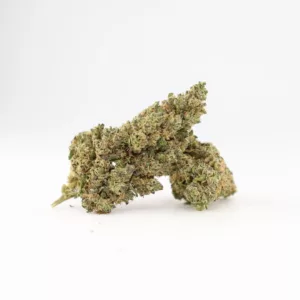
When exploring CBD resins, several terms come up: dry sift, ice-o-lator, bubble hash, filtered, or pollen. They evoke expertise and sometimes give the impression of forming a quality scale. However, these terms don't all answer the same question. Some describe a separation method, others a marketing presentation or a claimed characteristic.
Dry sifting relies on dry sieving. Ice-o-lator, generally associated with bubble hash, uses ice water separation followed by filtration and drying. A scientific journal dedicated to cannabis processing methods distinguishes between these two mechanical processes. pmc.ncbi.nlm.nih.gov
This difference is your first point of reference. However, it is not enough to automatically identify the best resin. The raw material, the selection process, the subsequent operations, and the composition of the finished product must also be taken into account.
To choose from Buddha Farm’s CBD resins, here’s how to understand these names, interpret the technical details and compare the products according to your preferences.
Dry sift and ice-o-lator: two methods, not two ratings of quality
Before comparing products, it is necessary to distinguish between the advertised manufacturing process and the evaluation of the result.
A method provides information on part of the material's journey. A complete datasheet must then explain what characterizes the product being sold: composition, texture, aromatic profile, weight, and information available on the batch.
What the name of the process tells you
The term "dry sift" indicates a dry separation process. The term "ice-o-lator" refers to a process using cold water and filtration systems.
These terms therefore provide useful information on the general principle stated. They do not detail all the production conditions.
When comparing two offers, look for the specific details of each. A technical term becomes more useful when accompanied by a clear explanation.
What needs to be examined separately
The price, the advertised CBD content, and the final presentation answer other questions.
You can appreciate a particular method while maintaining the same requirements for clarity regarding the product. It is this thorough review that allows you to compare offers.
What is dry sift CBD?
Dry sift literally means dry sieving. In the vocabulary of resins, this expression refers to a mechanical separation of the resinous fraction from dry plant material.
A sieve separation principle
Sieving allows the collection of a fraction that passes through a mesh. In the case of cannabis, the process aims in particular to separate the resinous structures from the rest of the plant material.
The collected fraction can then be processed or pressed. The product presented to the customer is therefore not necessarily a loose powder. The review published in the Journal of Cannabis Research describes this distinction between the material obtained by sifting and its eventual transformation into hash. pmc.ncbi.nlm.nih.gov
A name that requires clarification
On a product sheet, check if "dry sift" describes the process actually advertised for the product or if it only appears in a trade name.
The difference matters. If you want to choose the method, you need a manufacturing description, not just a catchy title.
You can ask the seller what exactly this mention covers.
A final presentation can be found in the fact sheet
Do not assume that a dry sift must necessarily have a unique color or texture.
To find out what you will receive, consult the item description, available images, and chosen packaging. This information complements the method details.
What is Ice-o-lator CBD?
Ice-o-lator belongs to the vocabulary of ice-water separations. You will also encounter the expressions bubble hash or water hash.
The role of cold water and filtration
The principle involves mechanically detaching the resinous structures in a cold environment, then separating the fractions using filters.
The collected material must then be dried before the following steps. The CBD.fr guide to the ice-o-lator describes this general sequence: separation in cold water, filtration, collection, and drying. CBD Blog
This is an explanation of professional vocabulary, not a protocol for home manufacturing.
A method to be distinguished from presentation
A resin can be pressed or presented in various forms after separation. Therefore, for the buyer, the final texture must be described independently of the process name.
If you're looking for a crumbly or soft product, start by checking the product details. Then, verify the stated preparation method if that's an important factor for you.
A reference must remain identifiable
The term ice-o-lator does not replace the full product name, its weight, or its stated composition.
A clear sheet allows you to understand these elements without having to deduce them from technical vocabulary.
Comparison chart: dry sift or ice-o-lator CBD?
| Criteria | Dry sift CBD | Ice-o-lator CBD |
|---|---|---|
| The principle announced | Dry sieving | Chilled water separation and filtration |
| Separation medium | Material worked dry | Cold or iced water |
| Final presentation | To be checked according to the reference | To be checked according to the reference |
| Texture | Cannot be deduced from the name alone | Cannot be deduced from the name alone |
| Aromatic profile | Read more in the fact sheet | Read more in the fact sheet |
| CBD content | To be verified in the announced data | To be verified in the announced data |
| Important point | Understanding what the term "sieving" encompasses | Understanding the announced process and final preparation |
| Common criterion | Composition, traceability and batch description | Composition, traceability and batch description |
This comparison helps you identify the fundamental differences. To determine your preference, you then need to look at the products actually offered.
Why do trichomes occupy a central place?
The vocabulary of resins regularly refers to trichomes. This link helps to understand what the processes are trying to separate.
A resinous fraction derived from the plant
The methods described aim to collect a fraction associated with the resinous structures of cannabis. CBD.fr's comparison of bubble hash and dry sifting presents this common approach, while distinguishing between ice-water processing and dry sifting. cbd.fr
When reading this document, remember that both terms refer to a process of separation. They do not constitute two uniform compositions.
The raw material also deserves a description
If you want to understand a reference, ask what information is available about the source material.
An indication of origin or a varietal description provides a different context than that of the process. You can examine both without confusing them.
selection of CBD flowers also allows you to discover another major form of hemp. However, a flower and a resin should be considered as distinct formats.
The process does not replace the data of the finished product
Even when the manufacturing principle is explained, look at the final information: name, stated composition, packaging and available documents.
Your purchase relates to this specific item, in the selected format.
"Solvent-free": how to understand this statement?
Mechanical methods are often presented as solvent-free. This expression should remain attached to the described process.
Ask what the mention covers
If a product sheet uses this argument, check if it relates to the initial separation, the entire advertised manufacturing process, or just one step.
A precise answer allows you to understand the offer. It also prevents attributing a broader characteristic to the product than the one actually stated.
Don't confuse process and complete composition
A separation method and a final formulation are two different pieces of information.
If any additions are mentioned, incorporate them into your comparison. If this topic is important to you and the information sheet remains ambiguous, ask the question directly.
You can ask: "What is the stated composition of this product and what additions, if any, are declared?"
A technical argument is no substitute for inspections
To find out which parameters were examined, consult the available documents.
Do not turn a mention of a process into a general guarantee on all aspects of the product. Each piece of information has its own scope.
Microns: What do the numbers in the descriptions mean?
Resin datasheets may mention mesh sizes expressed in microns.
A unit of length
A micron, or micrometer, is equal to one thousandth of a millimeter. A value of 100 microns is therefore equivalent to 0.1 millimeter.
In a filtration context, this unit can be used to describe a mesh opening. However, to interpret a commercial number, look at what it actually represents.
One value alone does not tell the whole story of the selection
If a datasheet states a number of microns, ask if it describes a sieve, a collected fraction, or a selection range.
Without this clarification, you risk comparing indications that do not represent the same thing.
A number becomes useful when it answers a clearly defined question.
Avoid automatically sorting from smallest to largest
The smallest number does not, by itself, constitute an overall quality rating.
To make your choice, return to the product's specifications: composition, presentation, advertised profile, and documentation. The knit can complement your research but should not be your sole criterion.
Filtered resin, triple filtered resin or dry sift: should they be considered opposites?
These expressions may appear in the same catalogue. Before classifying them, look up their definition in the relevant entry.
A mention of filtration must be explained
"Filtered" may seem precise, but you need to know what operation is being announced.
Does the seller indicate a number of passes, a particular selection, or a range name? This information is not interchangeable.
If the term plays a role in your choice, ask for a product-specific explanation.
The number of visits is not a universal ranking
A mention of "triple filtered" does not allow for automatic comparison of this product with all other resins.
Look at what truly sets the offers apart. A detailed description will allow you to decide if the selling point matches what you're looking for.
Compare the products on a common basis
First, choose a format and a budget. Then, examine the advertised composition, descriptions, and terms of sale.
This method avoids letting a single number dictate your entire selection.
Can you tell a dry sift or an ice-o-lator from its texture?
A photograph provides information about a presentation. It does not, on its own, document the manufacturing process.
Texture vocabulary remains useful
Friable, sandy, flexible or compact: these words can help you imagine the product offered.
They must be sufficiently consistent with the visuals and the announced format.
If you appreciate a particular texture, use it as an explicit search criterion.
Do not reconstruct the entire method from a single piece
A golden appearance or a darker surface may catch your eye. To learn about the process, look for an indication in the text.
This approach allows you to separate your visual assessment from manufacturing information.
Request representative visuals
If texture is important to you, check if the listing shows the surface and an interior view.
You can ask if these images are representative of the lot being offered. The answer will provide more than an interpretation based on a single close-up photograph.
Do the aromas allow one to choose between the two methods?
The best starting point remains the profile announced for each reference.
Search for a specific aromatic family
You might prefer woody, vegetal, floral, or fruity notes. Choose a few words that describe your tastes and compare them to the descriptions that use them.
This research will give you a more concrete direction than a general opposition between two processes.
Distinguish between intensity and preference
A very expressive description does not necessarily mean that you will like the product more.
You might prefer a more discreet profile or a particular style. Note what matters to you so you can maintain the same standards from one reference to the next.
The trade name does not replace the composition
A reference to fruit or confectionery evokes a sensory world. For information on any declared additives, please refer to the formulation information.
This will allow you to appreciate the aromatic vocabulary without attributing to it a meaning it does not have.
Which process yields the best CBD content?
To answer this question about two offers, you need to consult their respective data.
Compare the advertised values
Look at the content presented for each product and how it is explained.
If analyses are offered, verify their identification and their correspondence with the reference or batch.
You will have a concrete point of comparison, without having to deduce a value from the manufacturing name.
Check that the figures are comparable
When a product sheet lists multiple cannabinoids or a particular formulation, take the time to understand what is being measured.
An isolated percentage should not be interpreted beyond its title.
Ask for clarification if necessary.
Don't reduce quality to the highest number
Texture, packaging, advertised flavor profile and clarity of information sheet can also be important to you.
Your choice should correspond to all your expectations, not to a ranking based on a single value.
How to compare the prices of CBD resins?
A advertised method can contribute to a product's positioning. To assess the price, examine your actual purchase.
Calculate the price per gram
Divide the amount of the selected packaging by its weight.
In a hypothetical example, 5g at €25 works out to €5/g. A 10g package at €40 works out to €4/g.
The second option has a lower unit cost, but requires a higher total expenditure.
Compare similar quantities
The best price for a large package does not necessarily correspond to that of your small order.
Select the desired weight before comparing multiple offers.
You will avoid remembering a price you don't intend to pay.
Look at what justifies your preference
If a more expensive product interests you, identify the characteristic that matters to you: texture, advertised composition, presentation or documentation.
You can also browse low-priced CBD offers to broaden your comparison.
Your selection grid before ordering
Use this list to compare two or three references, without unnecessarily multiplying the criteria.
- Identify the nature of the product.
Check the name and any formulation information. - Read the advertised method.
Check if dry sift or ice-o-lator is explained in the description. - Examine the format.
Confirm the weight, number of pieces, and presentation. - Identify your preferences.
Texture and aromatic profile can guide your search. - Consult the available documents.
Check what relates to the batch and the parameters examined. - Calculate the total.
Include any applicable discounts and delivery charges.
This method helps you choose a specific reference rather than a process presented as superior in absolute terms.
Two examples to guide your selection
These situations are fictional and do not describe any particular product in the catalogue.
You are primarily looking for a crumbly texture
Start with the information sheets that announce this presentation. Then compare the declared methods and other information.
If a reference meets your preference, it deserves your attention even if its process name was not your first choice.
You want to discover a resin on a limited budget
Set a total amount, then examine the smaller packaging options available.
A quantity suitable for discovery can be consistent, even if its price per gram is slightly higher than that of a larger format.
You will then be able to specify your preferences based on a product that has actually been discovered.
Frequently asked questions about dry sift and CBD ice-o-lator
What is the main difference?
Dry sifting refers to dry sieving. Ice-o-lator refers to separation using ice water and filtration, followed by final preparation.
Do bubble hash and ice-o-lator refer to the same family?
These terms are generally associated with ice water separations. For a precise reference, see the explanation provided by the seller.
Does a dry sift have to be powdery?
To see the product description, please refer to the product sheet. The material obtained from sieving may undergo further processing, including pressing.
Is a lighter resin necessarily better?
Color alone is not enough to establish a ranking. Compare the advertised features with the available documentation.
Does the number of microns indicate a CBD level?
A distinction must be made between a unit related to the filtering of compositional data. For the stated rate, consult the corresponding analytical value.
Does the term "solvent-free" describe the entire composition?
Ask what it covers in the relevant information sheet. A process indication and a final composition must be examined separately.
Should we choose the most expensive method?
The price should reflect what matters to you. Compare the format, texture, available information, and the final price.
Are these resins intended for food use?
The resins presented in this guide are considered non-food products. Respect the intended use and instructions specific to the chosen product.
Find your CBD resin based on specific criteria
Dry sift and ice-o-lator provide two manufacturing guidelines. To choose the best option, supplement them with a careful examination of the finished product.
Define your priority, select your desired weight, and compare a few options. A clearly described texture, an understandable composition, and a controlled budget will help you more than automatically ranking two appellations.
Discover Buddha Farm’s CBD resins, examine the characteristics of each offer, and select those that meet your needs. This way, you can appreciate the advertised expertise while maintaining a clear understanding of your purchase.