CBD without THC refers to a product formulated to contain 0% detectable THC, with no expected psychoactive effects. This absence of THC cannot be inferred from the label alone; it must be verified via a Certificate of Analysis (COA) issued by an independent laboratory. Before purchasing, two checks are therefore essential: the product's legal compliance and the presence of a recent and legible COA.
In short:
- Legal compliance and the presence of a recent certificate of analysis issued by an independent laboratory are essential to ensure that CBD without THC does not actually contain any detectable traces.
- Only isolate and certain broad spectrum products, verified by analysis, guarantee a minimal risk of traces of THC that could cause problems during controls.
- A careful reading of a certificate of analysis should make it possible to identify whether the product complies with the legal limit of 0.3% THC, thanks to the numerical results and the limit of detection (LOD).
- Products in the form of flowers or resins carry a higher risk of contamination or mislabeling, especially without rigorous control and a reliable COA.
- In practice, it is best to use an oil isolate or a capsule to reduce the risk of a positive test during screening, and always keep a copy of the COA for each batch.
Table of Contents
- Isolate, broad spectrum, full spectrum: how is CBD made without THC?
- Which forms of THC-free CBD should you choose depending on your needs?
- What does the law say about CBD without THC in France and Europe?
- Can CBD without THC cause a drug test to fail?
- How to read a COA to confirm the absence of THC?
- What effects can be expected from CBD without THC, and what precautions should be kept in mind?
- How do you store a CBD product without THC and how long does it retain its properties?
- CBD without THC or CBD with THC: what is the difference in the effects felt?
- What criteria distinguish a reliable THC-free CBD from a dubious product?
- What direction is the CBD market without THC heading in?
- What industry experience teaches us about THC-free CBD
- Where can I buy certified and verifiable THC-free CBD?
- Sources
- Frequently Asked Questions
Isolate, broad spectrum, full spectrum: how is CBD made without THC?
Harvested hemp naturally contains over 120 cannabinoids, including CBD and THC, along with terpenes and flavonoids. The distinction between hemp and cannabis lies precisely in the concentration of THC present in the original plant, not in a fundamental botanical difference. It is the extraction process that then determines what remains in the finished product.
Three families of extracts dominate the market:
- Isolate : CBD that is over 99% pure, obtained after complete purification. No other cannabinoids, no terpenes, therefore a virtually zero risk of THC traces.
- Broad spectrum : retains some of the terpenes and secondary cannabinoids, but the THC is removed through an additional distillation step. This is the compromise sought by those who want the entourage effect without the THC.
- Full spectrum : retains the entire profile of the plant, including THC, within the legally permitted limits. Therefore, it is not, by definition, a "THC-free" product.
Supercritical CO2 extraction remains the most reliable method for preserving terpene quality while allowing for precise refining. A poorly controlled distillate, on the other hand, can leave residual traces even in a product sold as broad spectrum. A manufacturer marketing a broad-spectrum oil without THC generally relies on batch-by-batch analysis to guarantee this result, which clearly illustrates the logic: formulation alone is never enough; analysis validates the result.
Which forms of THC-free CBD should you choose depending on your needs?
The market now offers several formats, each with its own advantages and practical limitations.
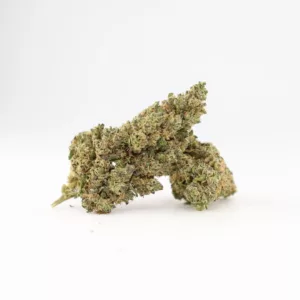
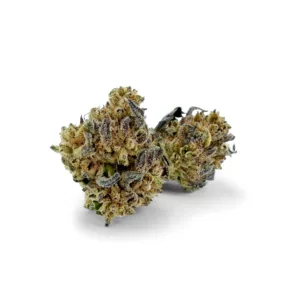
- The flowers offer a rapid effect by inhalation, but their "THC-free" status depends entirely on the variety grown and post-harvest control: this is the format most exposed to the risk of traces.
- Resins concentrate cannabinoids and require increased vigilance regarding their origin, as the pressing process can also concentrate undesirable residues.
- The oils allow for precise dosing, drop by drop, and are well suited to regular use with an easily verifiable COA for each batch.
- e-liquids act quickly, but their absorption depends on the quality of the equipment used and the purity of the distillate.
- Capsules and edibles offer the greatest discretion and a fixed dosage, at the cost of a longer onset of action due to digestion.
For someone who undergoes regular drug testing or drives frequently, isolate oil or capsules minimize the risk because their composition is the easiest to analyze and the most stable from batch to batch. Flowers, on the other hand, remain the least predictable option until the Certificate of Analysis (COA) has been consulted.
What does the law say about CBD without THC in France and Europe?
In France, the Public Health Code strictly regulates the possession and sale of cannabis-based products, and the marketing of a product containing THC beyond the authorized thresholds remains punishable, regardless of the "THC-free" label on the packaging.
The 0.3% THC threshold defines the legal boundary between industrial hemp and cannabis classified as a narcotic in the European Union, a benchmark that every buyer should know before comparing two products.
However, this framework leaves room for interpretation, which weighs more heavily on the consumer than on the seller:
- A mislabeled product may display "0% THC" without any independent analysis confirming it, making verification essential.
- In the event of an inspection, responsibility often falls on the buyer, not the distributor.
- The traceability of the batch (origin of the culture, date of analysis, laboratory) constitutes the only evidence that can be used in the event of a dispute.
The public debate surrounding the status of cannabis continues to evolve, with recent bills in the Senate aiming to clarify or modify the current regulations. The French Monitoring Centre for Drugs and Drug Addiction (OFDT) also reiterates the difference between decriminalization and legalization, two concepts often confused despite granting different rights. In practice, keeping the Certificate of Authenticity (COA) for each purchase remains the only truly protective measure for the buyer, even before consulting a guide on CBD legislation in France and Europe.
Can CBD without THC cause a drug test to fail?
Yes, in some cases, even a product advertised as "THC-free" can leave a detectable trace. The reason is almost always the same: cross-contamination during cultivation, pressing, or storage, or a discrepancy between what the label states and what the analysis actually reveals.
Urine and saliva tests used in roadside or professional settings have varying sensitivity thresholds, and French regulations have a zero-tolerance policy for driving under the influence of drugs. Therefore, even a trace amount of THC, without any perceptible effect, can be enough to skew a result.
Several precautions can effectively limit this risk:
- Opt for an isolate rather than a broad spectrum if you are subject to regular testing.
- Avoid consuming a new product just before driving, even if no THC is advertised.
- Always verify that the COA indicates a limit of detection (LOD) low enough to guarantee the actual absence of traces.
Pro tip: Keep a photo or copy of the Certificate of Authenticity (COA) for each batch purchased on your phone. In case of an inspection or question from your employer, you'll have immediate proof rather than just a statement from the seller.
How to read a COA to confirm the absence of THC?
A reliable certificate of analysis always contains the same elements, regardless of the issuing laboratory. French health authorities emphasize this point : without independent analysis, no "THC-free" claim can be considered verified.
A complete and usable COA indicates:
- The batch number, which must exactly match the one printed on the packaging of the purchased product.
- The analytical method used (liquid or gas chromatography) is a guarantee of technical reliability.
- The numerical results for each cannabinoid sought, including THC, and not just a "compliant" mention.
- The limit of detection (LOD) and limit of quantification (LOQ), which specify the actual threshold below which THC is no longer measurable.
- The issue date, ideally recent and linked to this specific batch, not to a generic analysis taken from an old product.
A report stating "< LOQ" for THC means that the amount present, if any, is below the threshold the laboratory is capable of measuring. This is the most honest formulation a Certificate of Analysis (COA) can display, as distinct from a simple "0% THC" without any specific figures.
A reliable Certificate of Authenticity (COA) comes from a laboratory independent of the manufacturer, often includes a QR code linking to the original document, and is less than one year old. If you have any doubts about a result, contact the seller to obtain the original document, and consider independent testing with a third-party laboratory if the response is delayed or unclear.
What effects can be expected from CBD without THC, and what precautions should be kept in mind?
CBD without THC primarily acts on relaxation and stress management, without causing the euphoria or cognitive impairment associated with THC.
It's best to start with a low dose, gradually increasing it over several days, and observing your own reaction before adjusting. CBD can interact with certain medications metabolized by the liver, particularly anticoagulants, which warrants prior medical advice if you are currently taking any medication.
Two groups require particular caution. For pregnant or breastfeeding women, health authorities recommend avoiding all CBD consumption due to a lack of sufficient data on its effects on the fetus or infant. For minors, the absence of robust studies on neurological development necessitates the same restraint: these products are not intended for them, regardless of whether the formula contains THC.
How do you store a CBD product without THC and how long does it retain its properties?
oil stored away from light and heat, in a sealed bottle, generally retains its properties for twelve to eighteen months after opening. Direct light and temperature fluctuations accelerate the degradation of cannabinoids and terpenes, gradually reducing the perceived effectiveness without rendering the product unsafe.
Flowers and resins are more delicate: storing them in an airtight container, away from moisture, limits the loss of terpenes, which contribute significantly to their aromatic appeal and the desired entourage effect. A poorly stored flower will lose its fragrance within a few weeks, a reliable sign that it has begun to deteriorate.
For capsules and edibles, the expiration date printed on the packaging remains the most reliable indicator, as these formats often contain other ingredients (cooking oils, gelatin) that have their own shelf life. A product that changes color, odor, or texture should be discarded, even before the indicated expiration date.
CBD without THC or CBD with THC: what is the difference in the effects felt?
The main difference lies in the absence of the psychotropic effect. THC acts on CB1 receptors in the central nervous system and causes euphoria, altered perception of time, and sometimes anxiety at high doses, which CBD alone does not reproduce.
A full-spectrum product, which retains traces of THC within legal limits, can nevertheless benefit from a more pronounced entourage effect: the combined presence of several cannabinoids and terpenes may amplify the feeling of relaxation experienced by some users, compared to a pure isolate. This is a compromise, not a universal rule, and the effect remains subjective from person to person.
For those seeking only relaxation or sleep aids without any legal or professional risks, a broad-spectrum or isolate antiviral drug covers most of the desired benefits, with significantly better predictability of screening results. The choice therefore depends less on raw effectiveness than on lifestyle factors: profession subject to testing, frequent driving, or simply a preference for peace of mind.

What criteria distinguish a reliable THC-free CBD from a dubious product?
The reliability of a CBD product without THC rests on three pillars which are verified independently of each other: the origin of the raw material, the rigor of the extraction and the transparency of the final analysis.

Origin matters more than you might think: hemp grown organically, indoors, or in a controlled greenhouse limits exposure to pesticides and heavy metals that can contaminate an entire batch. A supplier who can precisely trace the plot or batch of cultivation is already a good first sign of reliability.
The rigor of the extraction process is then judged by the method used: supercritical CO2 remains the gold standard for clean and reproducible results from one batch to the next. Finally, the transparency of the analysis is measured by the Certificate of Analysis (COA) itself, which is publicly available, dated, quantified, and issued by a laboratory independent of the manufacturer. A seller who refuses to provide this document or who only offers a generic statement like "laboratory tested" without specific figures should raise red flags for the buyer.
What direction is the CBD market without THC heading in?
The sector is evolving towards a growing demand for transparency, driven both by regulatory pressure and by a consumer base increasingly adept at reading a Certificate of Analysis (COA) before purchasing. QR code analyses, accessible directly from the packaging, are gradually becoming a standard rather than a differentiating marketing argument.
At the molecular level, research into neo-cannabinoids and synthetic compounds derived from hemp continues to expand, with formulations seeking to replicate some of the benefits of CBD while guaranteeing a complete absence of THC from the molecular design stage. These innovations should be monitored with caution, as their legal framework often evolves more slowly than their market launch.
From a regulatory standpoint, ongoing discussions at the national and European levels could eventually clarify the permitted thresholds and labeling requirements. During this transition period, individual vigilance, with the Certificate of Authenticity (COA) in hand, remains the best guide available to the buyer.
What industry experience teaches us about THC-free CBD
The market for THC-free CBD suffers from a simple paradox: the more the supply expands, the more the "THC-free" claim becomes an easy marketing ploy to display but difficult to verify without effort. Many consumers stop at the label, while the real guarantee is always found in a separate document, the Certificate of Authenticity (COA), which too few sellers proactively highlight.
A crucial requirement is the traceability of each batch, from organic cultivation to final analysis, using controlled extraction methods that minimize the risk of residual traces. This rigor does not absolve the buyer from conducting their own checks: requesting the Certificate of Analysis (COA) for a specific batch, comparing advertised detection limits, and understanding what "broad spectrum" truly means before making a purchase—this is what distinguishes an informed purchase from one based on blind trust. The sector will gain credibility the day this verification becomes second nature for all buyers, not just the most informed.
— Mohamed
Where can I buy certified and verifiable THC-free CBD?
Unlike a seller who advertises "THC-free" without supporting documentation, each batch sold comes with a viewable laboratory analysis, which saves you from having to request a COA that is impossible to find after purchase.

The selection covers several categories: CBD oils formulated as isolates or broad-spectrum, organically grown flowers cultivated indoors, in greenhouses, or outdoors, and resins, each accompanied by its technical data sheet and batch traceability. Customer service remains available for any questions regarding analysis results or specific compositions, a level of support rarely guaranteed by general distributors. To compare available formulations and consult the certificates associated with each product, the dedicated CBD oils page is the most direct starting point before making your first purchase.
This article provides general information and is not a substitute for professional medical advice. Consult a qualified healthcare professional about your specific situation before taking any action based on this content.
Sources
Frequently Asked Questions
Is an expired COA still valid for a purchase?
No, a COA that is more than a year old or linked to another batch number does not guarantee anything about the product you actually buy today.
Does broad spectrum really contain 0% THC?
A well-made broad spectrum aims for 0% detectable THC through an additional distillation step, but only the COA of the precise batch confirms this result.
Can CBD without THC cause a positive result in a saliva test?
This is possible in the event of cross-contamination or incorrect labeling, which justifies checking the detection limit indicated on the COA before driving.
Where does Buddhafarms publish its product analyses?
The product sheets on the site indicate traceability and composition information, with the possibility of requesting the batch analysis certificate corresponding to the purchased product.