

CBD is not a validated treatment for irritable bowel syndrome (IBS), and no health agency recognizes it as such. However, it may be a useful supplement for managing stress and pain in some individuals, provided expectations are kept realistic: human evidence remains limited. Before taking CBD, medical advice is essential if any warning signs are present, and vigilance is required regarding potential drug interactions and liver function in the case of prolonged use.
In short:
- CBD has preclinical potential against IBS, but human trials remain limited, varied and inconclusive to date.
- Modulating the intestinal endocannabinoid system could theoretically soothe motility, inflammation, and pain, but without solid clinical evidence.
- Reducing stress-related anxiety could be the main driver of an indirect improvement in digestive symptoms.
- The use must be carefully managed, particularly to avoid drug interactions and to monitor liver function during prolonged use.
- CBD does not replace standard treatments such as dietetics, psychological approach, and clinical care.
Table of Contents
- What does research say about CBD and irritable bowel syndrome today?
- How CBD might affect irritable bowel syndrome
- Which IBS symptoms could CBD help with (and which ones not)?
- Forms, dosage and progressive trial protocol
- Interactions, side effects and precautions to know
- When to consult a doctor: signs that should never be ignored
- Does CBD have a place in a comprehensive approach to IBS management?
- Buddha Farm's approach to CBD and digestive wellness
- Editor's perspective: prioritize caution over hope
- Choose a CBD oil that suits your testing protocol
- Sources
- Frequently Asked Questions
What does research say about CBD and irritable bowel syndrome today?
Research on CBD and irritable bowel syndrome is progressing at two very different speeds. On the one hand, preclinical studies, conducted on animal models, are producing consistent and encouraging results. On the other hand, human trials remain rare, small, and yield mixed results.
Studies published on PubMed show that cannabidiol-rich extracts reduce colonic inflammation and intestinal hypermotility in mice. However, the effect varies depending on the composition of the extract: isolated CBD does not necessarily behave like a complete botanical extract, which already complicates extrapolation to humans.
This is precisely where the problem lies. A systematic review on cannabidiol and intestinal motility disorders, published on PMC, notes that the available human trials are few, small, and heterogeneous in their dosages, routes of administration, and outcome measures. Some trials, particularly those with CBD chewing gum or enriched extracts, failed to demonstrate a robust effect on transit or digestive symptoms, often due to methodological flaws rather than a genuine lack of effect.
Three shortcomings consistently recur in the literature:
- Samples too small to draw solid conclusions
- A lack of standardization in the doses and formulations tested
- A lack of long-term follow-up on effects and tolerance
Key takeaway: the preclinical promise far outweighs the clinical evidence. Systematic reviews conclude that there is real potential but, without exception, call for larger randomized trials before any clinical recommendation.
This situation is not unique to CBD. It primarily reflects the difficulty in linking a plausible biological mechanism to measurable results in patients with highly varied profiles. IBS itself encompasses different subtypes (predominantly diarrheal, constipating, or mixed), which further complicates the results of trials that do not always distinguish between these profiles.
How CBD might affect irritable bowel syndrome
The gut has its own endocannabinoid system, largely unknown to the general public. This network of receptors and enzymes partially regulates digestive motility, pain perception, and local inflammation. A review published on PMC details the main targets involved:
- CB1 receptors, present on neurons of the enteric nervous system, influence the speed of transit
- CB2 receptors, primarily located on intestinal immune cells, are involved in the regulation of inflammation.
- The FAAH enzyme, which breaks down natural endocannabinoids, could be indirectly modulated by CBD.
- The GPR55 receptor, sometimes referred to as "CB3", appears to be involved in visceral pain.
- The TRPV1 receptor, sensitive to heat and certain irritants, plays a role in painful hypersensitivity.
On paper, this architecture offers a real biological rationale: a cannabinoid that modulates these receptors could theoretically soothe excessive motility, reduce local inflammation and soften sensitivity to pain.
However, there is an often underestimated avenue, and undoubtedly the most promising in the short term: the gut-brain axis. Irritable bowel syndrome almost always worsens with stress and anxiety, two factors on which CBD has more robust data than on digestive motility itself. Addressing anxiety could therefore indirectly relieve digestive symptoms, without CBD needing to act directly on the colon.
Which IBS symptoms could CBD help with (and which ones not)?
Not all symptoms of irritable bowel syndrome will react in the same way to taking CBD, and it's best to know this before starting.
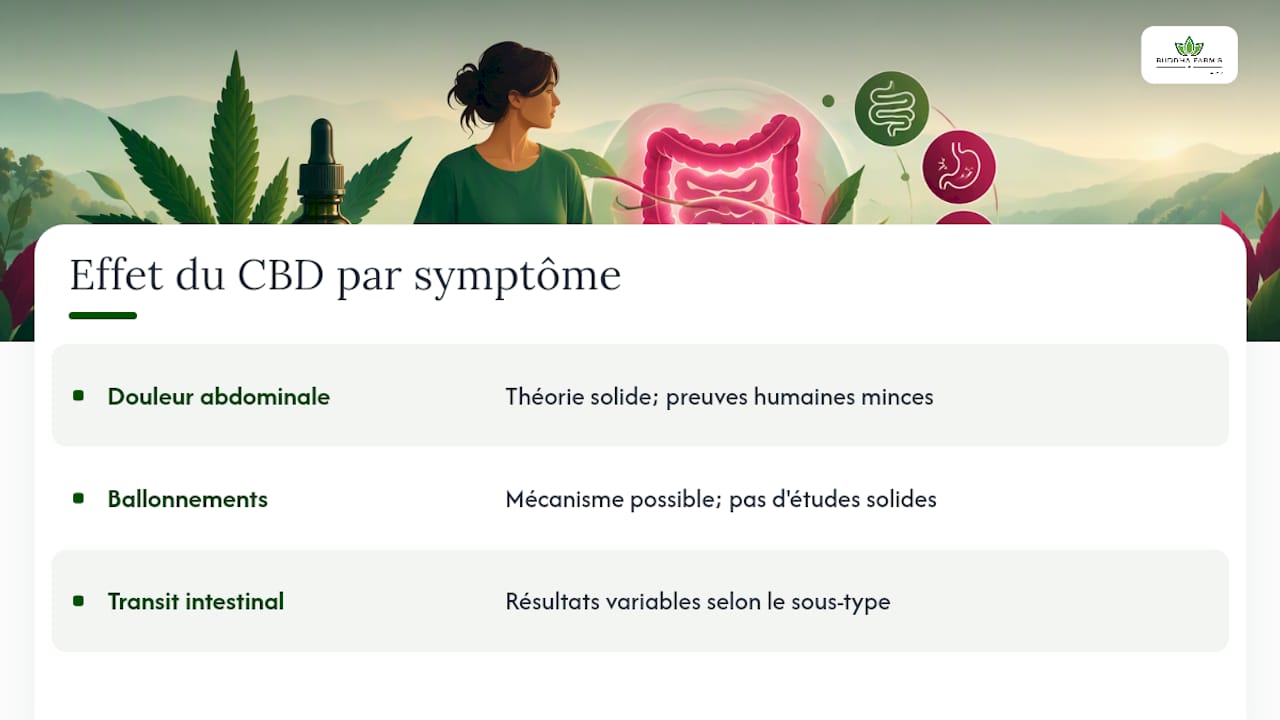
Abdominal pain and visceral hypersensitivity. This is probably the strongest theoretical hypothesis, via GPR55 and TRPV1 receptors. However, direct human evidence remains limited, and the observed effect may be primarily due to a reduction in pain-related anxiety rather than a local action.
Bloating and intestinal gas. The anti-inflammatory mechanism could theoretically limit bloating related to low-grade inflammation, but no robust human study has yet demonstrated this. Current data are inconclusive.
Bowel transit (diarrhea or constipation). Results vary depending on the IBS subtype, and existing motility trials remain too heterogeneous to be conclusive, as highlighted in the review PMC10541995. There is no guarantee that an effect observed in predominantly diarrheal IBS will also be found in its constipating form.
Forms, dosage and progressive trial protocol
For someone with IBS who wants to try CBD, the chosen form is almost as important as the dose. Sublingual oils take effect in 15 to 45 minutes and offer good bioavailability, making it easy to fine-tune the dosage. Capsules and infused foods, while more convenient for everyday use, are processed by the liver before taking effect: their effect is slower and less predictable from one dose to the next.
Here is a reasonable starting protocol, to be discussed with a healthcare professional:
A cautious and gradual approach to dosage is recommended, starting with a low dose and increasing slowly, while monitoring symptoms over several weeks before judging effectiveness.
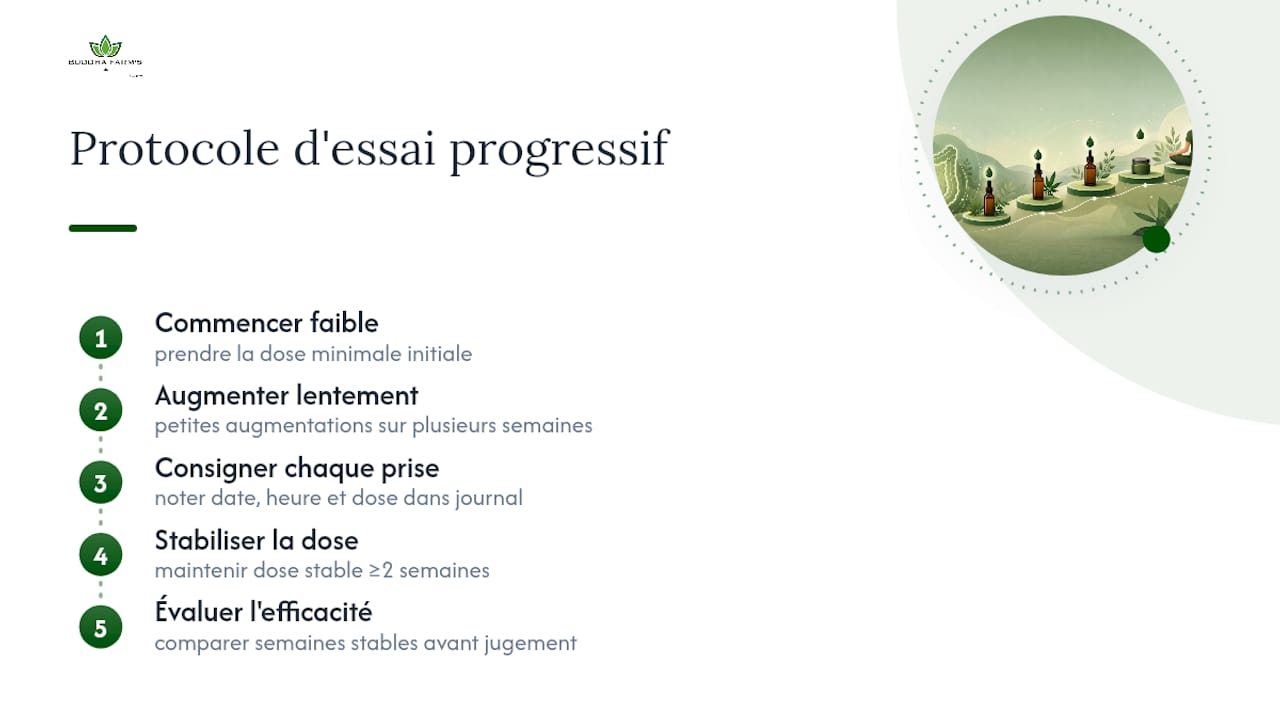
Pro tip: Record the date, time, and dose each time you take it in your symptom diary. It's often by comparing two weeks at a stable dose that you can distinguish a true effect of CBD from a simple natural fluctuation of IBS, which already varies considerably on its own.
When purchasing CBD oil, always check the product's Certificate of Analysis (COA), which confirms the actual CBD levels and the absence of contaminants. The choice between full-spectrum, broad-spectrum, or isolate also warrants careful consideration: a guide to CBD oils can help you understand these differences before making a decision, as well as providing information on CBD bioavailability depending on the timing of intake.
Interactions, side effects and precautions to know
CBD is not pharmacologically neutral, which is precisely why medical supervision is advisable when taking other medications. It is metabolized by cytochrome P450 enzymes, particularly CYP3A4 and CYP2C19, which metabolize many common drugs. As a result, CBD can increase the blood concentration of certain medications, with a relative risk of overdose. Interactions with drugs like ranitidine clearly illustrate this mechanism, as do those observed with certain antivirals.
The liver deserves special attention. The registration dossier forEpidyolex, a cannabidiol-based medication authorized by the European Medicines Agency for certain severe forms of epilepsy, indicates a risk of elevated liver enzymes (transaminases) during treatment. This signal, documented at pharmaceutical doses far exceeding those used for general well-being, nevertheless warrants biological monitoring in cases of prolonged use or high doses. Our article on the effects of CBD on the liver details this point in more depth.
Certain populations need to exercise extra caution:
- Pregnancy and breastfeeding: to be avoided due to a lack of sufficient safety data
- Children and adolescents: use to be discussed only with a pediatrician
- Pre-existing liver failure: enhanced biological monitoring recommended
- Concomitant use of anticoagulants or antiepileptics: medical advice is essential before taking any medication
The most frequently reported side effects remain drowsiness, dry mouth and, sometimes, paradoxical digestive disorders at the start of treatment.
When to consult a doctor: signs that should never be ignored
Some symptoms are unrelated to simple irritable bowel syndrome and require medical advice before self-medicating with CBD. The NHS lists several red flags to watch out for:
- Unexplained weight loss
- Blood in the stool (rectal bleeding)
- Anemia or unusual fatigue
- Symptoms that wake you up at night
- Onset of symptoms after age 60
- Family history of colorectal or ovarian cancer
- Palpable abdominal mass
If any of these signs are present, a first-line assessment is necessary: blood count, CRP, fecal calprotectin, sometimes testing for celiac disease, and a colonoscopy if the clinical picture warrants it. Masking these symptoms with a natural supplement, however promising it may seem, delays a diagnosis that could be urgent.
Does CBD have a place in a comprehensive approach to IBS management?
CBD does not replace any of the approaches already recommended for irritable bowel syndrome; at best, it is a complement. Treatment pathways, such as the one detailed in this clinical reference guideline, prioritize rigorous clinical diagnosis, dietary adjustments (particularly the low-FODMAP diet), and psychosocial therapies.
- Prioritize diet : validated nutritional advice on hydration, fiber, and FODMAPs remains the foundation of treatment, well before any supplements.
- Coordinate the professionals involved : a dietician, a gastroenterologist, and, depending on the case, a therapist trained in CBT or digestive hypnosis provide complementary support to CBD.
- Establish clear evaluation criteria : improvement in pain score, partial normalization of bowel movements, reduction in anxiety, over a defined period before judging the usefulness of CBD
Buddha Farm's approach to CBD and digestive wellness
Since 2018, Buddhafarms has selected organic hemp products based on strict traceability and compliance with French legislation. This rigor is particularly important for products related to digestive health, where the exact composition of a product directly influences what you ingest.
To delve deeper into the practical aspects discussed in this article, several internal resources are available for further exploration: drug interactions, bioavailability depending on the method of administration, and the broader therapeutic effects of CBD. Buddhafarms encourages informed consumption: it's best to understand a product before incorporating it into your routine, especially when IBS is involved.
Editor's perspective: prioritize caution over hope
The conclusion is clear: real potential on paper, but still too little human evidence to speak of a treatment. The temptation is great to overlook this nuance when suffering daily, but it is precisely here that rigor protects the patient rather than disappointing them.
Document your symptoms, talk to your doctor, and monitor your liver function if you continue to use CBD for an extended period. And if you're trying CBD, always prioritize product traceability over price. It's often this detail, more than the dosage itself, that makes the difference.
— Fred
Choose a CBD oil that suits your testing protocol
For a trial protocol like the one described above, the sublingual form remains the easiest to fine-tune, making CBD oil particularly suitable for gradual titration. Buddhafarms offers a selection derived from organic hemp, with a range of concentrations that allows you to start low and increase in small increments, exactly as recommended in a cautious trial.

The product's spectrum is just as important as its concentration: a broad-spectrum or full-spectrum extract retains other hemp compounds that could enhance the overall effect, while an isolate offers a dose of pure CBD, which is easier to quantify precisely. If you prefer a different form, the range of resins and extracts also allows you to compare the available concentrations. Before you begin, talk to your doctor, especially if you are already undergoing treatment, and check the product information sheet to verify the certificate of analysis before placing your first order.
This article provides general information and is not a substitute for professional medical advice. Consult a qualified healthcare professional about your specific situation before taking any action based on this content.
Sources
- NHS — Irritable bowel syndrome (IBS) — Symptoms
- EMA — Epidyolex (cannabidiol) EPAR
- Systematic review: Cannabidiol and intestinal motility disorders — PMC10541995
- PubMed — CBD botanical extract reduces colitis and hypermotility in mice
- Pathway for diagnosis and management of Irritable Bowel Syndrome — Northern locality
Frequently Asked Questions
Who should not take CBD if they have IBS?
Pregnant or breastfeeding women, children without pediatric advice, and people with liver failure should avoid CBD or use it only under strict medical supervision. People taking anticoagulants, antiepileptics, or any medication metabolized by the liver should also seek medical advice due to the risk of interaction via cytochrome P450.
Can irritable bowel syndrome cause dizziness?
IBS is not directly responsible for dizziness, but the anxiety that often accompanies it, as well as dehydration due to episodes of diarrhea, can trigger it. Dizziness associated with other symptoms such as weight loss or anemia should be evaluated by a doctor, as it falls outside the typical presentation of IBS.
How to quickly calm an irritable bowel attack?
Applying heat to the abdomen, practicing slow breathing to reduce stress, and temporarily avoiding high-FODMAP foods often help to soothe an acute attack. CBD, if already part of your routine at a stable dose, may help reduce associated anxiety, but it is not an immediate-response emergency treatment.
Which plant can help as a supplement for irritable bowel syndrome?
Peppermint, in the form of encapsulated essential oil, has stronger clinical data than CBD on the digestive spasms of IBS. Other plants such as fennel or lemon balm are traditionally used for bloating, but without the same level of evidence.
Is Buddhafarms CBD suitable for use in treating IBS?
Some specialized shops offer CBD oils made from organic hemp with a certificate of analysis, which facilitates precise dosage monitoring in a gradual trial protocol. Current prices are available directly on the product pages of the sellers' websites.


