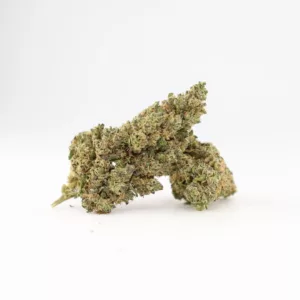
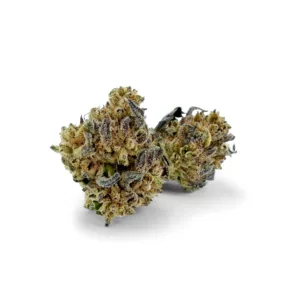
When choosing your CBD flowers, three terms come up regularly: indoor, greenhouse, and outdoor. They appear in shop categories, product descriptions, and comparisons. Yet, their meaning sometimes remains unclear. Should you always choose an indoor-grown flower? Does greenhouse cultivation offer the best value for money? Does an outdoor-grown flower necessarily have more subtle aromas?
These terms primarily describe the environment in which the plant grew. They tell you about its exposure to light, its protection from external conditions, and the level of control possible during its growth. They do not, on their own, constitute a quality rating.
To compare two flowers, you must also consider their variety, post-harvest preparation, storage conditions, and available batch information. Attractive presentation is important, but it doesn't replace a precise description.
At Buddha Farm's, you can start your search in our selection of CBD flowers, then refine your choice according to your preferences. Here's how to understand the differences between indoor, greenhouse, and outdoor cultivation, without relying solely on a label.
Indoor, greenhouse, outdoor: what do these three terms mean?
Before comparing prices or photographs, a few definitions help to establish the right benchmarks.
An indoor CBD flower grows indoors
Indoor cultivation takes place in an enclosed space, usually equipped with artificial lighting. The grower can control several parameters: lighting duration, temperature, air circulation, and humidity.
The goal is to create a relatively controlled growing environment. However, this control depends on the equipment, its maintenance, and the work performed. Two indoor grow operations can use very different equipment and achieve equally different results.
The term therefore describes a production framework. It does not certify a geographical origin, a particular agricultural method, or a precise composition.
A greenhouse-grown CBD flower is cultivated in a greenhouse
Greenhouse cultivation refers to cultivation in a greenhouse. The plants benefit from natural light while being sheltered by a transparent or translucent structure.
This definition covers a variety of situations. A simple greenhouse primarily protects against inclement weather. A more equipped structure may also include ventilation, heating, or additional lighting.
When comparing greenhouse flowers, keep this diversity in mind: not all greenhouses operate the same way. The term "greenhouse" provides initial information, but it doesn't describe the entire production system.
An outdoor CBD flower grows outdoors
Outdoor cultivation takes place in the open air. The plants develop with natural light, local temperatures, and seasonal weather conditions.
The producer chooses their location and varieties, taking the climate into account. They also remain responsible for monitoring the plants and the harvest.
Outdoors does not mean no work. The main difference lies in the relationship to the environment: outdoors, the producer has to work more with the conditions of the location.
Comparative table of CBD flowers for indoor, greenhouse and outdoor use
This table helps you understand the major differences, without automatically turning these categories into a ranking.
| Criteria | Indoor | Greenhouse | Outdoor |
|---|---|---|---|
| Environment | Enclosed interior space | Greenhouse cultivation | Outdoor Culture |
| Light | Mostly artificial | Natural, sometimes supplemented | Natural |
| Weather protection | Strong direct protection | Structure-related protection | Exposure to outdoor conditions |
| Environmental control | Potentially pushed | Variable depending on the equipment | More dependent on the climate |
| Appearance of the flowers | Varies depending on the variety and preparation | Varies depending on the variety and preparation | Varies depending on the variety and preparation |
| Aromatic profile | To be appreciated in the lot | To be appreciated in the lot | To be appreciated in the lot |
| Price | May incorporate high equipment and energy costs | Depends heavily on the type of greenhouse | May benefit from lower technical costs |
| Point to check | What the extra price brings you | Details available on the culture | The quality of preparation and traceability |
The right approach: use the cultivation method to guide your search, then compare the products themselves.
Indoor CBD flowers: what are you looking for when choosing indoor growing?
Indoor cultivation plays a significant role in the selection of flowers marketed as premium. Understanding this connection is crucial to knowing what you're actually buying.
The ability to better control the conditions
The advantage of an indoor growing space lies in the ability to organize the environment around the plant's needs. The grower has more means to limit certain external variations.
This type of organization might be beneficial if it's accompanied by a consistently well-prepared and properly documented product. However, the word "indoor" alone doesn't tell you the level of care taken at each stage.
A useful information sheet should go further: description of the flower, information on its origin when available, presentation of the batch and relevant analytical data.
A presentation that is often highlighted
Indoor flowers are frequently marketed with particular attention paid to their presentation. Detailed photographs, selected buds, and meticulous manicuring are among the selling points you might encounter.
However, it's important to distinguish between the cultivation method and the selection and finishing processes. A flower acquires its final appearance after several operations. Sorting, removing small leaves, and other handling all influence what you see when you open the package.
If you appreciate well-presented flowers, look at the available images and the format description. The indoor label does not replace this information.
A price to put into perspective
An indoor product may be more expensive due to its production costs and commercial selection. To decide if this supplement is right for you, identify your priorities.
Do you require a particularly polished presentation? Are you looking for a specific reference? Would you prefer to explore several profiles with a limited budget?
You can explore the indoor CBD and Cali flower from Buddha Farm's, then compare the characteristics of each product. The goal is to find a flower that meets your expectations, regardless of its category.
Greenhouse CBD flowers: a more diverse category than it seems
The greenhouse is often presented as an intermediate solution between indoors and outdoors. This description is practical, but it only tells part of the story.
Natural light at the heart of the system
A greenhouse allows you to enjoy the sun while creating protection around the plants. This is the central characteristic of this method.
The result then depends on numerous choices: type of covering, location, equipment, and cultivation practices. A small seasonal greenhouse and a fully equipped installation belong to the same broad category, but their operation differs.
Therefore, when comparing two references, avoid assuming that they have experienced identical conditions simply because they both bear the mention greenhouse.
A price-quality ratio that needs to be examined in detail
A greenhouse can be an interesting option when you're looking to balance budget and presentation quality. But the value for money depends on the product itself.
A well-described greenhouse flower that matches your preferences and is offered in suitable packaging can be a sensible choice. Another option will be less appealing if its characteristics remain vague, even with an attractive price.
When selecting greenhouse CBD flowers, first compare the specific information: advertised aromatic profile, bud size, quantity chosen, and price per gram.
An option to consider, but not to reduce it to a compromise
You don't have to choose a greenhouse just because an indoor option is beyond your budget. A greenhouse model might interest you for its specific characteristics.
The most useful approach is to abandon the "first choice, second choice, third choice" ranking. Instead, start with this question: which flower best meets my needs today?
This approach gives you more freedom and avoids paying for a prestige category that does not necessarily correspond to your preferences.
Outdoor CBD flowers: understanding the role of climate and know-how
Outdoor-grown flowers sometimes suffer from a simplistic image. They are often assumed to be less carefully cultivated, less aromatic, or less interesting. These oversimplifications prevent us from properly evaluating a batch.
A production linked to its environment
Outdoors, climate is an important component of production. The season and location are part of the context in which the plant develops.
This dependence also gives full meaning to the producer's work: choosing a suitable location, monitoring the development of the crop and organizing the harvest.
For the buyer, the key question concerns the level of transparency. Can the seller specify the origin? Is the cultivation method clearly indicated? Does the information provided describe the product being sold, or is it general?
A detailed origin provides more information than an evocative phrase like "grown outdoors".
An affordable price is not enough to judge quality
When an outdoor flower is offered at a lower price, you might be tempted to assume it's of lower quality. This reasoning confuses production costs, market positioning, and product characteristics.
A price is determined by several factors. Cultivation is only one part of it. Sorting, packaging, sales volumes, and the seller's policy also play a role.
Consider an outdoor offering as you would examine any other flower: with the same requirements for description, traceability and consistency.
A category to compare without imposed expectations
Don't necessarily expect an outdoor flower to have an earthy scent, a particular color, or a very airy structure. These descriptions may apply to some varieties, but they don't define the entire category.
Your comparison will be more accurate if you start with the lot: its advertised characteristics, its presentation and the elements that allow you to understand its origin.
Does the cultivation method allow us to predict the aromas?
This is one of the most frequently asked questions. Perhaps you are looking for fruity, vegetal, woody or floral notes and you want to know which category to favor.
The answer requires distinguishing between a possible influence of the environment and an overly general commercial promise.
What a study on growing conditions shows
A 2023 study published in Molecules compared the cannabinoid and terpene profiles of genetically identical plants from two cultivars, grown indoors and outdoors. Researchers observed differences in composition between the samples. However, the systems compared also differed in their growing media and other conditions. These results do not allow us to conclude that one growing method will systematically produce better aromas, nor can they be applied to all CBD flowers sold in France. PMC
For you, practical teaching remains simple: the environment deserves to be taken into account, but it does not replace information on the reference you are considering buying.
First, choose a precise aromatic description
If fragrance is your priority, start with the notes listed on the product page. A description like "citrus and woody notes" gives you a more helpful direction than simply stating "indoor premium".
You can then compare several products within the same flavor family. This method helps you identify your preferences without changing all the criteria at once.
Also, keep in mind the distinction between the intensity and the character of a fragrance. A very strong scent isn't necessarily what you prefer. You might appreciate a more subtle yet well-defined profile.
Beware of interchangeable descriptions
When all the flowers in a catalogue are described as "powerful, exceptional and ultra-aromatic", words no longer help you to choose.
Look for concrete differences between the references. The vocabulary should allow you to understand why one flower might suit you better than another.
A good sales description supports your decision. It shouldn't just be a collection of superlatives.
Can you tell if a crop is grown indoors or outdoors from a photo?
A photograph tells you what a flower looks like. It doesn't allow you to reconstruct its production process with certainty.
Density does not constitute proof
A compact bud does not prove indoor cultivation. A more open structure does not indicate outdoor cultivation.
The appearance of a flower results from several factors, including the work done after harvesting. You can use a photograph to appreciate the overall presentation, but not as a certificate of cultivation.
When this information is important to you, prioritize the explicit mention provided by the seller.
Color does not guarantee origin
Green hues, darker shades, and the presence of colored pistils may catch your eye. However, they do not confirm the country of origin or growing environment.
The same principle applies to evocative names. A commercial name does not replace a verifiable indication of origin.
To avoid confusion, separate three pieces of information: the name of the reference, the method of cultivation, and the origin.
The photos must match what you are comparing
A highly polished image can give a favorable impression, without answering your questions about the quantity or format sold.
Specifically, check if the description mentions large heads, small flowers, or an assortment of sizes. A close-up photograph can make a small head appear large.
This vigilance helps you to compare offers on similar grounds.
Why can two flowers grown using the same method cost so differently?
Two indoor or greenhouse products may have significant price differences. This does not necessarily mean that a product description is inconsistent: several factors are involved in the price.
The commercial format
Selected large heads, small flowers and mixed-size lots are not always marketed in the same way.
If you're less concerned about size, you can also look at CBD baby buds and small buds. This category allows you to factor size into your comparison, rather than focusing solely on the growing method.
However, compare products that are properly described. "Small flowers" should remain a size description, accompanied by other useful characteristics.
Packaging and quantity
The price per gram may vary depending on the weight selected. To compare two offers, select an equivalent quantity or calculate the cost corresponding to your actual purchase.
A larger bag is only worthwhile if that quantity suits your needs. The advertised savings become meaningless if you buy significantly more than planned simply to achieve a lower price.
Set your budget before browsing promotions. This will give you a stable reference point.
The accuracy of the offer
A product can also stand out because of the quality of the information it provides. A detailed and consistent description reduces uncertainty when ordering.
This does not mean that more text automatically justifies a higher price. The information must be useful: batch characteristics, format, origin when available, and relevant analytical data.
Your goal is to understand what you are paying for.
Indoor, greenhouse, outdoor: what about the environmental impact?
The environmental issue deserves a place in your comparison, provided that you do not reduce each method to a "good" or "bad" label.
Energy is a well-documented issue
An analysis published in 2025 in One Earth, focusing on cannabis production in the United States, highlights the energy consumption of indoor cultivation and certain highly equipped greenhouses. It emphasizes the potential for emissions reductions associated with alternative production systems. However, its US focus does not allow for a precise carbon footprint to be assigned to the CBD flowers of a French shop. ( ScienceDirect)
This research provides context. It does not replace producer- or batch-specific data.
Ask what supports the environmental arguments
If a product sheet uses the terms "responsible", "sustainable" or "ecological", look for the details that accompany them.
Does it address production, packaging, or transportation? Does it present a concrete commitment? Does it explain the scope of a potential label?
An environmental argument becomes more useful when it describes an identifiable practice. A campaign photograph or the color green on the packaging provides little information on this point.
Distinguish between culture and certification
Indoor, greenhouse, and outdoor do not automatically mean "organic." Nor do these terms alone describe the inputs used.
If a certification is advertised, check its title and what it covers. This will allow you to distinguish between a cultivation method, a marketing approach, and a documented certification.
How to choose your CBD flowers in five steps?
To make your comparison more effective, follow a short method that you can reuse for your next purchases.
1. Define your priority
Choose your first criterion: budget, aromatic profile, presentation, documented origin or discovery of a reference.
You may have several expectations, but prioritizing them prevents you from searching for a flower that is supposed to be the best in every way.
2. Select some comparable examples
Focus on two or three products rather than multiple tabs. Compare similar quantities and identify the real differences.
An indoor option and a greenhouse option can perfectly fit into your selection if they meet the same need.
3. Read the product description to the end
Note the format, the stated growing method, and the aromatic notes. Verify that the characteristics presented relate to the specific product.
The general paragraphs about hemp do not replace a product description.
4. Review the traceability information
When documents are available, verify their correspondence with the product or batch. An analysis only addresses the parameters specifically being sought.
The word "indoor" itself is not an analytical guarantee. Treat cultivation and controls as two separate pieces of information.
5. Choose an appropriate quantity
To discover a new product, choose a quantity that is consistent with your budget and level of confidence.
After your purchase, note the features you liked. You can then search for a similar profile more precisely.
Three examples to guide your purchase
These situations are examples of comparison, without making assumptions about the characteristics of any particular product.
You are primarily looking for a beautiful presentation
Start with the items whose product sheets detail the caliber and finish. Look at the available photographs, then compare the price for the same quantity.
Indoor options may be part of your search, but keep other categories open if they meet your expectations.
You want to control your budget
Compare the price per gram, the size, and the advertised characteristics. Look at greenhouse varieties and small flowers, without automatically assuming their value based on their category.
A relevant offer must combine a suitable price and enough information to allow you to choose.
Do you want to discover new perfumes?
Start with an aromatic family that's different from what you're used to. Then look for precise descriptions in several cultivation categories.
This approach will give you more clues than searching for a cultivation method supposed to consistently produce the best aromas.
Frequently asked questions about indoor, greenhouse and outdoor CBD flowers
What is the best growing method for CBD flowers?
There is no one-size-fits-all answer. The best choice depends on your priorities and the characteristics of the batch. The cultivation method is a good starting point, but this should be supplemented by the product description, its presentation, and its traceability.
Does an indoor CBD flower necessarily contain more CBD?
You cannot deduce a precise content solely from the "indoor" label. Consult the advertised data and corresponding analyses when available. The cultivation method does not replace measurement.
Is a greenhouse flower grown solely with sunlight?
The greenhouse uses natural light, but some installations may have supplemental lighting. Equipment varies. To determine the conditions for a specific product, additional information about its production is needed.
Is an outdoor flower necessarily cheaper?
Not in every situation. The price also depends on sorting, format, packaging, and market positioning. Compare actual offers rather than relying on an assumed price range.
Do indoor and hydroponics mean the same thing?
No. Indoor describes an indoor environment. Hydroponics describes a growing system that focuses on root nutrition. These two terms address different questions and should not be used interchangeably.
Does the term Cali prove a Californian origin?
The word alone is not enough. Check the product's specific origin information. A trade name, a presentation style, and a country of production are three distinct elements.
Can we rely solely on smell to judge a flower?
The smell informs your sensory appreciation. It does not replace traceability and does not prove the cultivation method or analytical conformity. Use it as one criterion among others for preference.
Should you always choose the most expensive flower?
No. The price should reflect what matters to you. If you prefer a specific flavor profile or have a particular budget, another option might better meet your needs than a more expensive product.
Find your ideal match with criteria that reflect your own
The terms indoor, greenhouse, and outdoor become useful when you understand what they describe. They allow you to understand the growing conditions and then refine your search based on the product's characteristics.
For your next purchase, choose a priority, compare a few options, and examine the information specific to each. This will give you a more solid basis than automatically sorting into three categories.
Explore Buddha Farm’s CBD flowers , discover the indoor and Cali selection , or browse the greenhouse flowers . The most suitable choice will be the one whose characteristics match your preferences, budget, and the level of information you require.