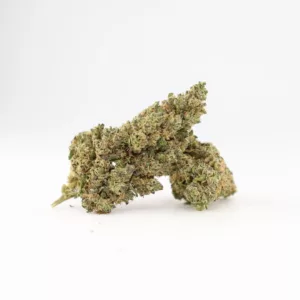
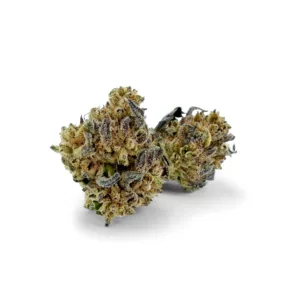
CBD terpenes play a significant role in descriptions of hemp flowers and resins. You'll find them listed under names like myrcene, limonene, and pinene, as well as in descriptions that evoke citrus, woody, floral, or spicy notes. When choosing a product, this vocabulary helps you visualize its aromatic profile.
A flower described as fruity might appeal to you more than a variety with earthy notes. A resin with a woody character might suit your preferences, while another might interest you for its citrus nuances. These differences give the hemp catalog a richness that goes far beyond a cannabidiol percentage.
However, the subject warrants some clarification. The fragrance of a flower does not depend solely on its terpenes, and an olfactory description cannot predict individual effects. Recent research shows a more complex aromatic composition than the simplified associations sometimes suggested in product descriptions.
At Buddha Farm's, we offer you the opportunity to understand what terpenes bring to your reading of products, how to interpret aromatic families and what criteria to use to find the profiles you appreciate.
CBD terpenes: what exactly are we talking about?
The term "CBD terpenes" is a shorthand used in research and marketing descriptions. It generally refers to terpenes present in a hemp-based product or associated with its formulation.
Terpenes and cannabidiol belong to different chemical families. Therefore, a CBD percentage and a terpene measurement do not describe the same thing.
In cannabis, volatile compounds include monoterpenes, sesquiterpenes, and oxygenated derivatives. Frequently studied substances include myrcene, limonene, beta-caryophyllene, and terpinolene. Their presence contributes to the chemical description of the product, but does not automatically allow for the reconstruction of its entire aroma. PubMed
Why this distinction matters for your purchase
When you consult a record, separate three pieces of information:
- the stated cannabinoid content;
- the possible results concerning aromatic compounds;
- the sensory description of the product.
This information can complement each other, but it is not a substitute. A flower with a higher CBD content does not necessarily correspond to the aroma you prefer.
Similarly, a detailed aromatic description does not provide an analytical result. You must be able to distinguish between what constitutes a measurement and what constitutes descriptive vocabulary.
A terpene name remains only partial information
If a product information sheet mentions myrcene or pinene, ask yourself what this information is based on. Does it come from a batch analysis, general information about the variety, or an added formulation?
The response helps to determine the accuracy of the advertisement. A result concerning the sold batch provides a different reference point than a general presentation of the plant.
Do terpenes explain the entire aroma of hemp?
Terpenes contribute to aromas, but they do not form a complete and universal explanation.
A 2025 study investigated the aromatic compounds in dried flowers from six CBD-rich cultivars. Researchers identified 52 olfactorily active compounds. Certain terpenes and terpenoids, including alpha-pinene, myrcene, and linalool, made a significant contribution under the studied conditions. Other families, including sulfur compounds, also contributed to the observed differences.
This research concerns the examined cultivars and calls for further validation. Nevertheless, it demonstrates why a list limited to the best-known terpenes is insufficient to describe the full spectrum of hemp. PubMed
A chemical list and a fragrance are not interchangeable
You can know several measured components without being able to imagine exactly the overall impression.
When making your choice, also look for a product description. Terms like lemony, vegetal, floral, or resinous make comparison easier, provided they are presented as olfactory references.
The role of a good fact sheet is to link this information without pretending that a few names of molecules allow you to predict everything.
Why overly simple associations cause problems
The "one compound equals one unique fragrance" type of correspondences can serve as a first impression. They become misleading if you use them as an absolute rule for all products.
A citrus note alone cannot identify the substances that produce it. Nor is a woody impression a substitute for analysis.
You can appreciate an aromatic family without immediately seeking to attribute a single chemical origin to it.
CBD terpenes: understanding the main aromatic families
To compare flowers and resins, aromatic families provide a practical vocabulary. They allow you to describe a preference even before knowing the names of the compounds.
The following table provides guidelines for sensory reading. This is not an analytical correspondence nor a guarantee applicable to each reference.
| Family described | Possible evocations | A useful question to consider when choosing |
|---|---|---|
| Citrus | Lemon, orange, zest, grapefruit | Are you looking for a bright or a softer note? |
| Fruity | Berries, ripe fruits, tropical fruits | Do you prefer a fresh or a rounder fragrance? |
| Floral | Dried flowers, bouquet, fragrant shades | Do you like delicate profiles? |
| Wooded | Dry wood, bark, undergrowth | Do you want a sober and profound character? |
| Conifer | Pine, resinous plant material | Are you looking for a strong plant-based identity? |
| Spicy | Pepper, dried spices | Do you prefer a more pronounced shade? |
| Earthy | Earth, roots, deep plant life | Do you prefer traditional profiles? |
| Vegetable | Dried grass, leaves, plants | Do you want to maintain a plant-like appearance? |
A reference can belong to several families
A description that is both lemony and woody is not contradictory. It presents a dominant note accompanied by another nuance.
To select a flower, try to identify what attracts you to that combination. The word "lemon" may matter more to you than the woody background, or vice versa.
This information will help you request a similar reference when the one you know is not offered.
The words "gentle" and "intense" require context
A description "soft" may evoke an aromatic impression, while "intense" may describe the strength of the fragrance.
Without further clarification, these terms remain difficult to compare. They should not be automatically interpreted as a measure of effect or concentration.
Look for words that complement the description: intense and floral, sweet and vegetal, resinous and spicy. You'll get a more concrete reference point.
Lemon, red berries or tropical notes: why are perfumes so varied?
Research into the aroma of cannabis has gradually broadened the perspective beyond dominant terpenes.
A study published in 2023 in ACS Omega combined chemical analyses and sensory observations on extracts with various aromas. The authors identified associations between certain minor non-terpene compounds and specific aromatic characteristics, including fruity or atypical ones.
These results pertain to the samples and protocol studied. They do not allow for the identification of all the constituents of a CBD flower by its aroma, but they do suggest avoiding an analysis focused solely on the dominant terpenes. PubMed
A fruity name is not a list of ingredients
When a product has a name that evokes a fruit, you cannot automatically conclude that an aroma has been added.
You also cannot conclude that no additives have been added based solely on the name. The composition and manufacturer's information must answer this question.
For your purchase, therefore, distinguish between the commercial title, the aromatic description and the declared ingredients.
Specify what you are looking for in a fruity profile
"Fruity" can encompass different impressions. To compare, ask yourself if you prefer notes of fresh fruit, berries, or a rounder evocation of ripe fruit.
You don't need professional vocabulary. A few personal words are enough to explain what you like and what you want to avoid.
How to read a product information sheet mentioning CBD terpenes?
A useful information sheet should allow you to understand the nature of the information provided.
If it includes a measured terpene profile, look for the corresponding document. If it simply describes the fragrance, use that description as a sensory guide.
A study published in 2025 in PLOS ONE developed a lexicon of 25 terms and then used it to evaluate 91 cannabis samples. In this research, terpene profiles alone were poor predictors of sensory character. The authors thus highlight the limitations of using a chemical composition as a complete substitute for evaluating aroma. PLOS One
Check the link with the batch
If a chart is available, ask if it relates to the item currently being sold.
The variety name alone is not always sufficient to establish this connection. A batch number, a date, and clear sample identification provide additional clues.
Look at the units and substances being searched for
A value expressed as a percentage cannot be read as a value in milligrams per gram without checking the conversion.
Also check whether the document presents a few targeted terpenes or a broader search. A short table is not necessarily incorrect; it simply reflects a specific testing scope.
The absence of a substance in the table does not automatically mean that it has been sought and then excluded.
Ask for clarification when a term remains ambiguous
A simple question may suffice: "Does the advertised profile correspond to a batch analysis or a general description of the reference?"
You will then know how to use the information to compare.
Flowers and resins: comparing profiles without assuming equivalence
A flower and a resin with a similar name should not be considered as two aromatically identical versions.
Start by reading the description of each product. Then examine the advertised preparation, any additives, and the available documentation.
For CBD flowers
In our selection of CBD flowers, compare the products according to their main ratings, format and batch information.
If you appreciate a flower for its floral character, also note the accompanying nuances. This will help you refine your search beyond just the name.
For CBD resins
In the CBD resins, compare the aromatic description with the advertised texture.
You might look for a crumbly texture with woody notes or a supple, vegetal-like presentation. These preferences remain personal and do not require a universal classification of textures.
The important thing is not to deduce the aroma solely from the color of the hash.
For the small flowers
Small CBD buds are a format to examine with the same questions.
Their small size doesn't automatically tell you what fragrance they contain. Read the specifications of each product and compare the sizes according to your budget.
CBD terpenes and effects: which promises should be avoided?
You may like a particular aromatic profile. However, this preference does not guarantee a specific medicinal effect or an identical experience for all individuals.
The sensory studies cited in this article investigate olfactory compounds and perceptions. They do not constitute validation of therapeutic claims for commercially available flowers and resins.
A floral fragrance is not a guarantee of sleep
Similarly, a lemony note should not be presented as a guarantee of energy, nor a woody profile as a promise of precise relaxation.
These associations go beyond what an olfactory description can establish.
When choosing, keep aromatic notes in mind: to help you identify appreciated characteristics.
The entourage effect is no substitute for proof of the product
If a document uses this expression, look for what it intends to demonstrate and what data it relies on.
The presence of several substances is not sufficient to establish a specific clinical benefit for a commercial preparation.
Ask for a specific explanation rather than considering a general formula as a guarantee.
How can we compare perfumes more methodically?
You can build your own markers without laboratory equipment.
The goal is not to chemically identify a flower by its scent. It is to maintain a consistent personal description of your preferences.
Start with a main family
Choose the simplest word: citrus, floral, vegetal, woody or earthy.
Then add a nuance if you think it's necessary. You can write "citrus with a vegetal base" rather than immediately searching for a long list.
Separate intensity and preference
A strong fragrance will not necessarily appeal to you more than a discreet one.
In your notes, therefore, distinguish between "perceived intensity" and "personal appreciation." This separation prevents you from confusing the strength of the fragrance with its quality according to your taste.
Keep the product identification
Note the full name, the batch number when available, and the date of receipt.
A sensory description without a reference is difficult to use when placing a new order. With this information, you can ask the seller a specific question.
Do not use perfume as a diagnostic tool
Your observations do not allow us to guarantee the absence of contaminants or to confirm a composition.
If you notice a scent that seems concerning or significantly different from the description, discontinue use and ask for an explanation. Do not attempt to mask the change with another fragrance.
A personal profile to find your preferences
You can use this grid after a discovery. It serves to organize your impressions, without assigning an official rating to the product.
| Element | Example of a personal note |
|---|---|
| Reference | Full name and format |
| Batch | Identifier retained with the packaging |
| Dominant family | Citrus |
| Secondary nuance | Vegetable |
| Perceived intensity | Moderate |
| Preference | Desired profile |
| Texture or presentation | Small flowers, open structure |
| Next search | Same family, but a more woody nuance |
This method becomes particularly useful if you enjoy several similar references.
You will be able to request a new proposal with concrete criteria, instead of simply looking for "the most fragrant flower".
Why can a perfume change after purchase?
Preservation is part of the product's history. Aromatic compounds do not necessarily remain identical over time.
A study conducted on cannabis inflorescences and extracts observed a decrease in terpenes under the various storage conditions examined. The results varied depending on the parameters and products studied. They do not allow for the establishment of a universal shelf life for all commercial products. pubmed.ncbi.nlm.nih.gov
Follow the instructions in the reference
Keep the provided packaging, close it properly and follow the instructions provided.
If you are transferring the product, choose a clean, dry and odorless container, while keeping the batch information.
Avoid mixing several references: you will complicate their identification and your comparisons.
Do not add any perfumed materials
A peel, a fresh plant or an added aromatic substance is not a reliable method for "restoring terpenes".
You would be modifying the original product without being able to correctly interpret the result.
If the condition upon receipt seems abnormal, contact the seller before attempting any correction.
How to buy a product based on its aromatic profile?
Start with a simple expectation, then compare the offers that meet it.
If you like citrus notes, look for descriptions that specify the nuances. If you prefer traditional resins, examine the advertised earthy, woody, or resinous profiles.
Also define your format
Aromatic preference does not dictate the weight. Choose a quantity consistent with your discovery and your storage options.
For an unknown product, a small package can facilitate your personal comparison before a larger purchase.
Compare the price on an equivalent basis
Check the cost per gram of the format you actually select. An offer displayed as "starting from" may correspond to a different package size than the one you wish to order.
Next, add the features that matter to you: presentation, texture, description, and documentation.
Ask a question focused on your tastes
You can ask: "I appreciate citrus notes accompanied by a woody base. Which catalogue reference is described in this style?"
This request allows for a more useful response than a search for absolute superiority between all products.
Frequently asked questions about CBD terpenes
Are terpenes CBD?
No. Cannabidiol and terpenes belong to different chemical families. Their measurements must be distinguished in the documentation.
Does a lemon flower necessarily contain a lot of limonene?
Its scent alone is not enough to prove it. To determine the concentration, a relevant analytical result is needed. Research shows that the overall aroma involves several families of compounds.
Does more terpenes mean a better fragrance?
A single number doesn't sum up your appreciation. Sensory description and your preferences remain important when choosing a product.
Does a fruity name prove the addition of an aroma?
No. It also doesn't prove the absence of additives. Check the ingredients list and ask for clarification if it's missing.
Can a cannabinoid be identified by its smell?
An olfactory impression is not a substitute for analytical identification. Do not use perfume to confirm the presence or absence of a substance.
Is a highly fragrant resin necessarily more concentrated in CBD?
The intensity of the fragrance does not provide a percentage of cannabidiol. Compare the analyses for this.
Can terpenes predict a specific effect?
The aromatic studies presented here do not allow us to guarantee an individual or therapeutic effect from an olfactory profile.
Why keep the batch number for an aroma comparison?
It makes it easier to connect your impressions, your purchase, and the available information. This will allow you to ask more specific questions when placing a future order.
Find the aromatic profiles that suit you
Understanding CBD terpenes helps you to better read product information sheets, while still allowing room for other aromatic compounds and your personal perception.
For your next selection, choose a main product family, research the advertised shades, and check the product's ingredients. Then, keep a few notes to easily find what you liked.
Explore Buddha Farm’s CBD flowers, CBD resins and hash , and the different formats available in the CBD shop. You can refine your search based on specific characteristics: a subtle floral profile, more vibrant citrus notes, or a woody and resinous character.
Scientific sources
- Aromatic composition of CBD-rich hemp cultivars — Journal of Agricultural and Food Chemistry, 2025.
- Sensory lexicon of cannabis aromas — PLOS ONE, 2025.
- Role of non-terpene volatile compounds in aromatic differences — ACS Omega, 2023.
- Study of storage conditions and the evolution of cannabis compounds — 2020.