


CBD shows plausible anti-inflammatory effects in the laboratory, with documented action on several molecular pathways of inflammation. In humans, the evidence remains incomplete: some people report real relief, but no study has yet demonstrated that CBD replaces existing treatment. A recent clinical trial detected a risk signal for liver damage, which warrants medical advice before any prolonged use, especially for those currently undergoing treatment.
In short:
- CBD modulates several receptors involved in inflammation, but it does not replace long-term treatment and requires medical advice in case of prolonged use.
- The strong clinical evidence mainly concerns skin inflammation, while the effects on joint or neurological pain remain poorly validated in humans.
- The effectiveness depends greatly on the form used: topical for local inflammations, oral or inhaled for systemic or rapid action, with variability in absorption depending on each method.
- Liver risks have been observed, including an elevation of transaminases in 5.6% of participants in one study, justifying medical monitoring in case of prolonged consumption.
- Product quality, including traceability and batch analysis, is essential to limit the risks associated with uncertain composition or fraud.
Table of Contents
- Proposed mechanisms and level of scientific evidence
- CBD according to the type of inflammation: where the evidence is strong, where it is lacking
- Oil, flower, resin or inhalation: which form for which effect?
- Safety, side effects and interactions to monitor
- How to recognize a reliable CBD product
- What I think, as an observer of this issue for years
- Try CBD under optimal conditions with Buddhafarms
- Sources
- Frequently Asked Questions
Proposed mechanisms and level of scientific evidence
CBD does not act like a classic anti-inflammatory. It modulates a range of receptors and transporters involved in the inflammatory response, without targeting them uniquely or exclusively.
The main targets identified in the research are:
- The CB2, present on immune cells, whose activation tends to inhibit the release of pro-inflammatory cytokines.
- The adenosine A2A receptor , associated with an indirect anti-inflammatory effect.
- The TRPV1 channel , involved in pain perception and local sensitization.
- The nuclear receptor PPARγ, which is involved in metabolic and inflammatory regulation.
- The ENT1 transporter and the GPR55 receptor , whose role in cellular modulation remains to be studied.
A systematic review of animal studies revealed a decrease in TNF-α, IL-6, IL-1β, COX-2, and iNOS following cannabinoid administration, according to an analysis published on PMC. Other work, published in Frontiers in Pharmacology, confirms that CBD, CBG, and certain CBD/THC combinations repeatedly reduce these same markers in in vivo models, whereas THC alone does not produce the same effect.
What the figures show: the decrease in cytokines such as TNF-α or IL-6 is reproducible in the laboratory, but it does not, by itself, prove lasting relief in humans.
This is where the real limitation lies. A decrease in biomarkers in mice does not automatically translate into a functional gain in a person suffering from chronic pain. The extrapolation between animal models and human clinical trials remains one of the weakest points in the scientific evidence on CBD.
CBD according to the type of inflammation: where the evidence is strong, where it is lacking
Not all inflammations react the same way to CBD, and the available data varies greatly depending on the area concerned.
1. Skin inflammation
In vitro studies on skin cells show a consistent anti-inflammatory effect, and a few limited topical trials reinforce this signal. The results remain promising, but the size of the human samples is still too small to constitute solid evidence.
2. Arthritis and joint pain
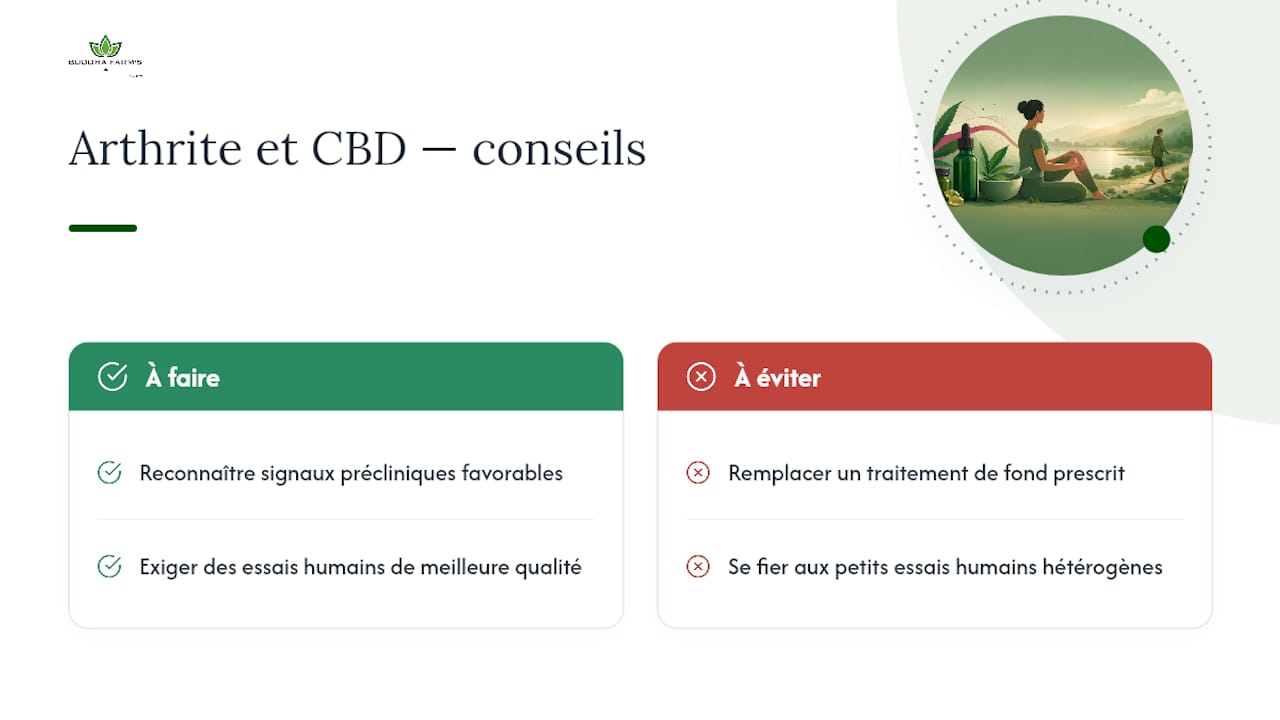
This is the area where CBD is generating the most anticipation. Preclinical signals are strong, but human studies remain small and inconsistent. The Arthritis Foundation points out that animal studies and a few small human trials suggest a pain-relieving effect, while emphasizing that higher-quality trials are needed and that CBD should never replace prescribed disease-modifying therapy.
3. Neurological inflammation
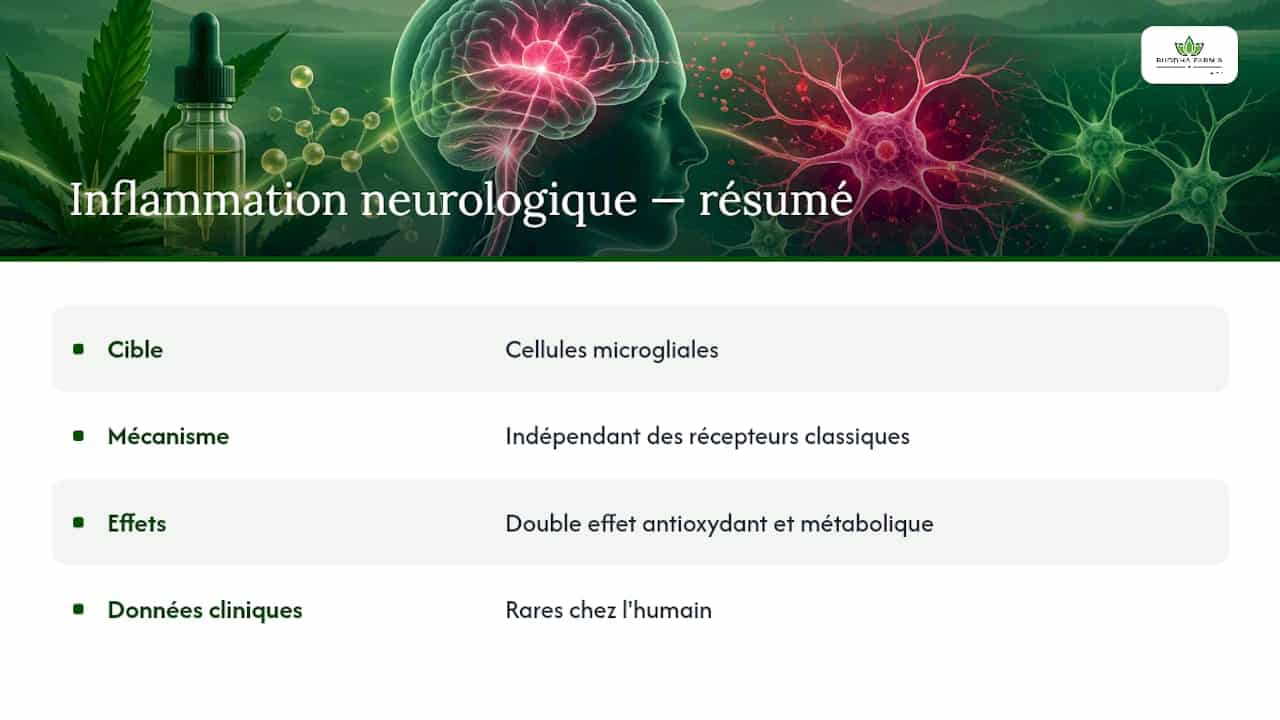
Mechanistic studies conducted by the Brain Institute show that CBD's action on microglial cells may be largely independent of classical cannabinoid receptors and relies on a dual antioxidant and metabolic effect. Clinical data on this mechanism remain scarce in humans.
4. Respiratory and intestinal tracts
Preclinical results are encouraging in these areas, but human trials are almost entirely lacking. Therefore, caution is advised if you are seeking a definitive answer regarding these specific indications.
Oil, flower, resin or inhalation: which form for which effect?
The chosen form directly changes the speed and depth of the expected anti-inflammatory action, which is worth understanding before any purchase.
- Topical route (balms, creams): interesting for localized inflammation, such as a superficial joint or an area of irritated skin, but the skin penetration of CBD remains uncertain and varies depending on the formulation.
- Sublingual or oral route (oil, capsules): remains the most suitable option for deep or diffuse inflammation, with variable bioavailability from person to person and an onset of action ranging from 30 minutes to two hours.
- Inhalation (flowers, vaporization): rapid action in a few minutes, but the risks associated with vaping make it inadvisable in case of pre-existing respiratory pathology.
- Transdermal route and extended-release capsules : everyday practices, with inter-individual variability that makes personal monitoring essential.
To delve deeper into the mechanisms of bioavailability according to the chosen form, our guide on CBD oils details the parameters that influence absorption.
Safety, side effects and interactions to monitor
CBD is not without risks, and certain signs deserve serious attention before any prolonged use.
The most frequently reported side effects remain drowsiness, diarrhea, and nausea. More concerning: a recent randomized trial showed that 5.6% of participants receiving CBD at a dose of 5 mg/kg/day for 28 days experienced an elevation in transaminases more than three times the normal limit. This liver signal aligns with the FDA 's warnings , which highlight the variability of consumer products and recommend increased vigilance.
Key takeaway: a detectable elevation of liver enzymes in more than one in twenty people in this trial justifies a blood test in case of prolonged use, especially in at-risk profiles.
Certain classes of medications interact with CBD via hepatic metabolism:
- Anticoagulants
- Antiepileptics
- Immunosuppressants
- Some antidepressants and opioids
Harvard Health recommends consulting a doctor or pharmacist before combining any medications. See also our article on the effects of CBD on the liver for more information on this topic.
Signs such as jaundice, abdominal pain, persistent vomiting, or confusion should lead to immediate cessation of activity and medical consultation.
Pro tip: Never try multiple forms of CBD (oil, flower, topical) at the same time. You'll never know which one is responsible for a particular effect, positive or negative.
How to recognize a reliable CBD product
Choosing a traceable product reduces a significant portion of the risks associated with an uncertain composition.
- Demand a batch analysis (COA) that confirms the actual CBD content and THC level, consistent with the label.
- Check the extraction method and the origin of the hemp, two criteria that determine the purity of the final product.
- Beware of unsourced therapeutic claims and start with a single form, noting the effects felt day after day.
Our guide to choosing CBD flowers details these criteria in more depth, and Cannaone.se's analysis of CBD and inflammation usefully complements this reading with a European perspective on translating preclinical evidence into practice.
What I think, as an observer of this issue for years
CBD is neither a miracle nor a placebo. It is a molecule with real mechanisms, but the gap between marketing claims and clinical evidence regarding inflammation remains significant. Since 2018, Buddha Farm has championed an approach based on the traceability of organic hemp and legal compliance, precisely because product quality determines everything else: without reliable batch analysis, any discussion about benefits is meaningless. CBD may help certain individuals, but a medically supervised trial remains essential for those currently undergoing treatment or with pre-existing liver disease. To delve deeper into the available scientific data, our page on the therapeutic effects of CBD remains a useful resource.
— Fred
Try CBD under optimal conditions with Buddhafarms
Products derived from organic hemp with verifiable traceability at each stage are recommended, which is particularly important when seeking a reliable and reproducible anti-inflammatory effect.

If you're considering systemic use for diffuse inflammation, CBD oil is often the easiest starting point to dose and monitor over time. For more localized action or to try inhalation, CBD flower and CBD resin offer different profiles depending on your preferences. In all cases: start with a single form, a low dose, and keep a diary of how you feel for two to three weeks. If you are taking any medication, talk to your doctor or pharmacist before starting. Check the product information sheets to verify available batch analyses before ordering.
Sources
This article is based on work published by PMC, Frontiers in Pharmacology, the FDA, the Arthritis Foundation and the Brain Institute, cited throughout the text.
This article provides general information and is not a substitute for professional medical advice. Consult a qualified healthcare professional about your specific situation before taking any action based on this content.
- The Effects of Cannabinoids on Pro‑ and Anti‑Inflammatory Cytokines: A Systematic Review of In Vivo Studies
- Medical Cannabis Activity Against Inflammation: Active Compounds and Modes of Action
- CBD for Arthritis Pain | Arthritis Foundation
- What You Need to Know About Products Containing Cannabis or Cannabis‑derived Compounds
- Randomized clinical trial: effects of daily cannabidiol on liver safety and endocrine hormones
Frequently Asked Questions
What is the best anti-inflammatory CBD?
There is no universally superior form: oil is better suited to diffuse inflammation due to its systemic action, while topical treatments target a specific area. The choice depends primarily on the location of the inflammation and the quality of the product, which can be verified through batch analysis.
What is the most powerful natural anti-inflammatory?
No natural substance has demonstrated potency comparable to pharmaceutical anti-inflammatories in high-quality human trials. CBD is among the compounds well-documented in preclinical research, according to a systematic review, but clinical evidence remains insufficient to claim superiority.
What are the disadvantages of CBD?
The most common side effects are drowsiness, diarrhea, and nausea. A clinical trial also found elevated liver enzymes in 5.6% of participants after 28 days of use, which warrants caution with prolonged use.
Is it possible to give CBD to a child?
No, not without prior medical advice. Safety data in children remains limited, and the FDA points out the variability of products available on the market, an additional risk factor for the youngest users.


