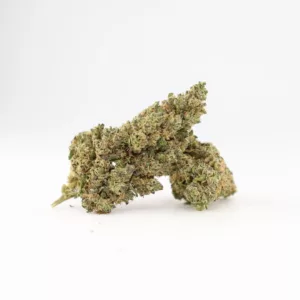
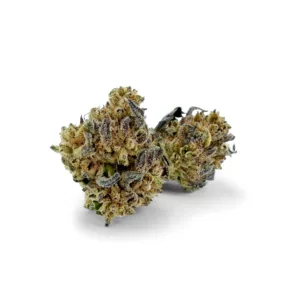
On a resin label, the words "fresh frozen" immediately evoke the cold, freshness, and aromas of the plant. However, their meaning is more precise: in the vocabulary of cannabis processing, they refer to plant material frozen shortly after harvesting, before the usual drying process.
This choice is therefore made at the beginning of the manufacturing process. It provides information about the hemp preparation, but does not yet describe the product you will find in its packaging. The frozen material can undergo several processing steps, with varying results.
This explains the presence of similar terms in catalogues: fresh frozen hash, frozen, live resin, live rosin… They belong to the same universe, without being interchangeable.
To choose a resin or understand the price of an extract, it's helpful to know what information each provides. At Buddha Farm's, we invite you to go back to the harvest, then follow the key steps that separate a fresh flower from a finished product.
What does "fresh frozen" mean?
The literal translation is "frozen fresh". Applied to hemp, the expression refers to flowers or plant material placed in the cold shortly after harvesting, without first undergoing conventional drying and curing.
Extraction equipment manufacturer Lowtemp describes this material as a starting point for various preparations, including bubble hash and certain extracts labeled "live." This is a professional definition of the process, distinct from a quality certification. lowtemp-plates.com
The timing of freezing matters. A flower that has already been dried and then placed in the freezer has not followed the same path as a flower frozen fresh after harvesting. Both have encountered the cold; their initial state differs.
Another useful distinction: "fresh frozen" does not refer to a specific hemp variety. The same variety can be intended for sale as dried flowers or for processing from frozen fresh material. The choice depends on the desired product and the manufacturer's organization.
Finally, this term does not correspond to any cannabinoid. It does not allow us to know the CBD, CBG, or THC content of the finished product.
Why freeze hemp after harvesting?
Preserve a desired aromatic profile
When a plant is harvested, its composition does not remain fixed. Drying, handling, and storage influence the constituents present and their distribution.
Volatile compounds contribute to the smell of hemp. Their evolution partly explains why a fresh flower does not have exactly the same scent after drying.
A study conducted on several cannabis varieties, published in Analytical and Bioanalytical Chemistry, examined the effects of different drying and storage conditions on volatile compounds and cannabinoids. It highlights the importance of considering the entire post-harvest preparation when studying a product's profile. It does not, however, demonstrate that all frozen preparations are superior to all dried preparations. link.springer.com
In a fresh frozen approach, the manufacturer aims to preserve certain characteristics of the fresh ingredients until they are processed. The result then depends on the work carried out.
You can therefore retain the aromatic objective of the process, while keeping a reserve on absolute promises: "all terpenes preserved" or "intact fragrance" would require precise elements of comparison.
Organizing the transformation differently
Freezing also meets a practical need. It allows for a different production chain to be organized from that of flowers intended to be dried, cured and then sold.
For a manufacturer, this means planning for packaging, cold storage capacity, and subsequent processing. The harvest schedule must align with available resources.
This organization can eliminate part of the traditional flower drying process. However, it introduces other constraints: appropriate equipment, refrigerated space, handling and batch tracking.
Fresh frozen products are therefore not simply a matter of adding a freezing step to an unchanged manufacturing process. They change the way the raw materials are prepared and transported to the processing stage.
From frozen flower to finished product: several possible paths
Once the plant material is frozen, the manufacturer has a starting point. All that remains is for them to choose what they want to obtain.
This is where the differences between the products take shape. Freezing after harvesting does not, on its own, determine the final texture or concentration.
The path to a hash
In some manufacturing processes, the resinous parts are separated from the plant material by mechanical processing in a cold environment. The recovered product must then be prepared and stabilized.
You may encounter the terms ice water hash or bubble hash to refer to preparations made using cold water separation. While fresh frozen material can be used in this process, these terms don't describe exactly the same step.
Fresh frozen answers the question: in what state was the plant preserved before processing?
Ice water hash provides information on the separation of resinous material.
This distinction explains why it's important to read the entire description. Two statements can be true for the same product, each describing a part of its journey.
The journey to a rosin
Rosin is produced using a heat and pressure extraction process. In some production lines, hash obtained from fresh frozen material then becomes the raw material for pressing.
The final product is therefore different from the hash that went into the press.
Lowtemp describes this type of professional production line by distinguishing between cold water separation, hash drying, and pressing. These successive operations explain why a product may include several technical details in its name. lowtemp-plates.com
Fresh frozen hash and live rosin can therefore share a plant origin and initial preparation. However, they have not necessarily undergone the same transformations up to the packaging stage.
The path to other excerpts
Frozen material can also be used in other extraction processes. In these cases, you will encounter terms whose meaning depends on the technique employed and the manufacturer's professional practices.
To compare these preparations, look for information about the raw material and the extraction process. The presence of the word "live" or "frozen" is not enough to reconstruct all the steps.
You can explore the different families in our selection ofCBD extracts, then consult the details of each reference.
Fresh frozen, frozen hash, live resin and live rosin: a table of differences
The vocabulary becomes more readable when you separate the indications of raw material, manufacturing and presentation.
| Term encountered | Main information | What remains to be verified |
|---|---|---|
| Fresh frozen | Fresh frozen plant material after harvest | Transformation carried out next |
| Frozen hash | A term referring to cold in the world of hashish | Relevant step and exact procedure |
| Ice water hash or bubble hash | Separation of resinous material using cold water | Initial state of the plant and final preparation |
| Live resin | In common professional use, the extract is combined with frozen fresh material and solvent extraction | Technique, composition and controls |
| Live rosin | Rosin produced using a frozen fresh raw material | Pressed material and manufacturing details |
| Cold cure | Low-temperature refining or stabilization phase | Product concerned and conditions announced |
| Crumble | Friable consistency | Composition and method of production |
This table helps you avoid a common confusion: some words describe the origin of matter, while others describe an operation or a physical aspect.
A product might, for example, be made from freshly frozen ingredients and then have a particular texture after processing. This texture alone wouldn't allow you to trace its history.
To further explore the difference between consistency and manufacturing method, our guide to CBD crumble provides additional examples.
Is a "frozen" resin necessarily fresh frozen?
The term "frozen" deserves careful consideration when it appears on its own.
It may appear in a commercial name without all the steps being detailed in the title. You should then consult the description or ask for clarification on what was frozen and when.
The most useful question is simple: was the material frozen fresh after harvesting, or did the freezing process occur later?
This point alone is enough to distinguish between two different paths. It can then be supplemented by the separation method and the hash preparation steps.
A manufacturer doesn't need to publish all its industrial settings for you to get the information you need. A clear description can specify the nature of the material, the general principle of the process, and the characteristics of the finished product.
Conversely, a highly technical name accompanied by a vague description leaves you with little basis for comparison. In this case, it's best to get an answer before attributing an undocumented characteristic to the product.
Fresh frozen and Piatella: where is the difference?
These two expressions may appear in the same conversation about resins, but they do not convey the same information.
Fresh frozen refers to the initial preparation of the plant. Piatella refers to a specific process of hashish production, in which curing plays a significant role.
Therefore, a possible manufacturing link exists, but the two terms are not equivalent. You cannot call any preparation made from fresh frozen hemp "Piatella".
This distinction matters when comparing prices. Similar raw materials can follow longer or shorter routes, with different processing required before being offered for sale.
We dedicated an article to defining Piatella and its differences from other hashish. Here, the key point to remember is the role of each term in the manufacturing process: fresh freezing occurs upstream, while refining refers to a preparation that has already been processed.
Does fresh frozen contain more CBD?
You cannot deduce a CBD level from this designation.
The content depends first on the plant material, then on the processing steps carried out. The separation of certain fractions, transformations, and possible formulation all influence the final composition.
Freezing does not create additional cannabidiol. Nor does it allow for a direct comparison of one gram of fresh plant with one gram of dried product or concentrate.
These materials do not contain the same proportion of water and do not represent the same stage of manufacturing. Comparing their percentages without taking this difference into account would give a misleading impression.
To find out the composition of a fresh frozen resin, consult the data on the finished product. Look at what is actually measured: CBD, total CBD, other cannabinoids, or the sum of several compounds.
A high value may refer to a specific characteristic. It should not be automatically interpreted as a percentage of CBD.
What kind of flavor can you expect from a fresh frozen CBD?
There is no single flavor of fresh frozen.
The variety and maturity of the raw material, as well as the processing methods used, all contribute to the final result. Two preparations made from different plants can therefore have very different profiles, even if both begin with post-harvest freezing.
The expression also does not mean that the product must have a minty smell or an "icy" feel. The word "frozen" here describes a manufacturing step.
When a product description mentions vegetal, fruity, floral, or resinous notes, it describes a sensory profile. This description helps guide your choice, but it does not replace information about the origin of the aromatic compounds.
It is also useful to distinguish between preserving an aromatic fraction and adding terpenes during formulation. Both situations should be understood from the relevant reference.
A very expressive scent might appeal to you. However, its intensity does not prove the method used or a particular CBD content.
Why do some fresh frozen resins cost more?
Price differences can have several origins. A supply chain requiring refrigeration, multiple transformations and preparation operations can require more equipment or labor.
Yield also matters. A raw material doesn't end up entirely in the quantity of finished product. The steps taken and the fractions selected influence the marketable result.
In addition to this, there are the controls, the packaging, the volumes produced and the seller's pricing policy.
These factors can explain part of the difference between two references. They do not automatically justify any price.
To compare the price of fresh frozen CBD, first compare offers for the same quantity. Then check if the products belong to the same category and have comparable characteristics.
Enriched resin, hash, and rosin are not necessarily equivalent alternatives. Their names may evoke the same cold, icy atmosphere, but their composition and production methods differ.
A price becomes easier to appreciate when you know precisely what it rewards.
How to read a fresh frozen product description
You can start with the title, but continue through to the detailed information. The goal is to link the business name to a clear and understandable description.
Identify the product family
First, determine whether it's hash, pressed extract, or a formulated preparation. This initial information allows you to compare the product with legitimate alternatives.
The word "resin" sometimes has a rather broad commercial meaning. The description must then provide the necessary clarifications.
Understanding the role of cold
Check if the manufacturer specifies freezing after harvest. A mention of cold processing or refrigerated storage does not necessarily describe this same step.
You don't need to interpret a series of abbreviations on your own. If the wording remains ambiguous, ask when the cold comes into play.
Read the percentages with their titles
A number must be associated with a clearly named substance or characteristic.
Don't assume that a percentage in a product's name translates to a CBD content. When a product contains multiple ingredients, research their proportions.
Check the batch documents
A certificate of analysis is useful when it matches the reference and batch being examined. Also, check what it actually measures.
You will find the necessary information in our guide to reading CBD analyses. For fresh frozen resin, this verification complements the manufacturing information; it does not replace it.
Can an enriched resin and an unformulated extract have similar names?
Yes, and that's another reason to check the ingredients.
A preparation may combine a resinous base with other constituents. Its trade name may refer to an aromatic universe, a stated method, or a product range.
When examining such a reference, distinguish between what pertains to the base and what pertains to the added elements. This approach allows you to understand the finished product without attributing to it the characteristics of another extract.
The Buddha Farm's Fresh Frozen 50% MS product sheet , for example, describes an enriched resin. It should therefore be consulted as a specific reference, with its own characteristics, rather than as a definition of all fresh frozen preparations. BUDDHA FARM'S
This distinction also prevents comparing a sales percentage for one product line with the analytical results of another. The descriptions must match before the figures can be compared.
Should the finished product be kept in the freezer?
The post-harvest process and the storage conditions at home are two different subjects.
Plant material frozen before processing can become a finished product whose storage needs are no longer those of the original plant.
Therefore, you should not assume that a resin must remain frozen simply because its name includes "fresh frozen." Refer to the specific instructions on the product and its packaging.
This precaution also avoids transposing professional practices of raw material storage to a product already prepared for sale.
If you have a product with incomplete instructions, seek advice before changing its storage conditions. The container, temperature variations, and handling can all make a difference.
Our guide to storing CBD flowers and resins outlines general guidelines. The specific instructions for your product remain the starting point.
Questions to ask before choosing
A good description should allow you to answer a few questions without having to guess:
- What raw material was used?
- Was it frozen fresh after harvesting?
- What transformations followed?
- Does the product contain any added ingredients?
- What do the announced percentages represent?
- What information is available for the lot?
You can then compare the aspects that matter to you: presentation, aromatic profile, quantity and price.
This approach does not require becoming an extraction specialist. It consists of obtaining information relevant to the product you are considering.
If two descriptions differ significantly in their level of precision, keep this difference in mind. A detailed name is only useful if the accompanying information allows it to be understood.
Frequently asked questions about fresh frozen CBD
Is Fresh Frozen a variety of CBD?
No. The expression describes the preparation of the plant material after harvesting. It can refer to different varieties. The variety name and the "fresh frozen" designation therefore provide two distinct pieces of information: one concerns the plant itself, the other its processing.
Is a flower that is dried and then frozen considered "fresh frozen"?
It hasn't followed the same path as a freshly frozen flower before drying. The difference lies in the state of the material at the time of freezing. If this detail is important to you, look for explicit wording in the description.
Do "fresh frozen" and "frozen hash" mean the same thing?
Not necessarily. "Fresh frozen" usually describes freezing the plant fresh after harvesting. The term "frozen hash," when used alone, requires more details about the production process. Consult the stated method rather than assuming the names are equivalent.
Is fresh frozen necessarily live rosin?
No. Fresh frozen material can go through several processes. Live rosin refers to a preparation that has also undergone pressing in a suitable production line. The term "fresh frozen" does not guarantee that this step has taken place.
Is fresh frozen food always solvent-free?
The initial freezing process alone is insufficient to answer this question. Subsequent transformations must be examined. Information about the raw material is not a substitute for information about the extraction method used to produce the finished product.
What's the difference with a CBD crumble?
Crumble primarily describes a crumbly consistency. Fresh frozen describes a preparation of the plant after harvesting. These terms are not equivalent. To compare two products, first consider their composition and method of preparation, then their presentation.
Does fresh frozen CBD contain THC?
The name alone does not indicate the cannabinoids present. Consult the batch composition and analysis. A cold-testing method does not demonstrate the absence of a molecule, nor is it sufficient to establish a product's compliance in your country.
Is fresh frozen more powerful than regular resin?
This label does not measure potency. Compositions can vary significantly from one product to another. Compare the actual ingredients as stated and measured, without attributing to cold temperatures a content or effect that cannot be determined by the cold itself.
Can you recognize a fresh frozen product by its color?
A light, golden, or dark color alone is not enough to identify the manufacturing process. The raw materials and transformations influence the appearance. A photograph can tell you about the presentation, while traceability and a description detail the production.
Is fresh frozen intended for a specific use?
The name alone does not define a intended use. Follow the instructions and restrictions for the specific product. A non-food product must not be used for food purposes. The products presented in this section are intended for adults only.
Choosing a fresh frozen resin by understanding its journey
The term "fresh frozen" takes on its full meaning at the time of harvest. It indicates a method of preparing the plant before processing, and then opens the door to several possible manufacturing processes.
To choose from Buddha Farm’s CBD resins, start by identifying the finished product. Then look at the advertised material, the described steps, and the batch composition.
You can then distinguish between the initial freezing process, the extraction process, and any formulation. The name becomes useful information: you know which stage it refers to and what details to look for before comparing two products.