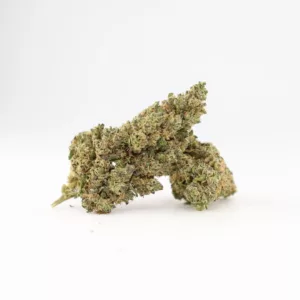
A few golden fragments, a crumbly texture, and a sometimes very high concentration of cannabidiol: CBD crumble has a recognizable visual identity. Yet, its appearance only tells part of its story. Behind this name, you can find products with varying compositions, flavors, and manufacturing processes.
When comparing hemp extracts, several questions arise. Is crumble a resin? How does it differ from CBD wax? Does a very light texture indicate better quality? And what does a claimed CBD content of over 90% actually mean?
To understand this concentrate, three pieces of information must be distinguished: its physical presentation, its measured composition, and its manufacturing method. These elements complement each other, but none of them automatically allows one to deduce the other two.
At Buddha Farm's, this guide helps you read product descriptions more accurately. This allows you to compare CBD extracts based on concrete characteristics, beyond just names and photographs.
What is CBD crumble?
CBD crumble is a concentrated cannabidiol preparation, usually presented in the form of dry, granular or crumbly fragments. Its name comes from the English verb " to crumble," which means "to break into small pieces."
The name therefore primarily describes a consistency. A crumble breaks down into small pieces more easily than a soft, elastic, or very sticky extract. Its surface may appear porous, irregular, or slightly crystalline depending on its formulation.
CBD, on the other hand, refers to a molecule: cannabidiol. The term "crumble" does not refer to an additional cannabinoid and does not transform CBD into a new substance.
This distinction explains why two products marketed under the same name can have different profiles. One may be primarily composed of CBD, while another contains several quantified cannabinoids. Terpenes may also contribute to the aromatic profile.
The word "crumble" alone does not constitute a technical data sheet. To learn about the product, you must consult its composition, characteristics, and the documents associated with the batch.
Why does crumble have a crumbly texture?
The consistency of an extract depends on several parameters: the compounds present, their proportions, their organization in the material and the operations carried out during manufacturing.
Cannabinoid content, aromatic fraction, and processing conditions can all contribute to noticeable differences. For example, one manufacturer might produce a crumbly product, while another maintains a more paste-like consistency.
However, it would be an oversimplification to present a universal recipe for CBD crumble. Trade names do not always describe the same process from one manufacturer to another.
Two consequences are useful when choosing your product.
First, a crumbly texture does not allow us to know the extraction method. It does not prove that the product was obtained without solvent, nor that it comes from a particular process.
Furthermore, it does not demonstrate its purity. A homogeneous and visually pleasing material may require the same documentary checks as a darker or less regular extract.
Appearance allows us to describe what you observe. Analysis and traceability allow us to assess what you cannot see.
What does a CBD crumble contain?
Cannabidiol as the main component announced
In a crumble sold as a CBD concentrate, cannabidiol generally plays a significant role. However, the exact proportion varies depending on the product.
A content expressed as a percentage corresponds to a proportion in the analyzed substance. For example, 90% CBD theoretically corresponds to 900 mg of CBD per gram, if the result is indeed expressed as a mass percentage.
This calculation describes a composition. It does not constitute a quantity to be used or a personal recommendation.
Also check how the figure is presented. A mention of "total cannabinoids" is not equivalent to "CBD." Similarly, a "total CBD" value may include a calculation based on CBD and its acidic form, CBDA, according to the method specified by the laboratory.
Other cannabinoids depending on the formulation
Some crumbles contain other cannabinoids in addition to CBD. Their presence must be established by product-specific data.
You may encounter products distinguished by the presence of CBG. However, the brand name does not necessarily tell you which cannabinoid is predominant.
A product containing "CBG" in its name therefore deserves the same careful reading as a classic CBD crumble: which molecules are measured, in what proportions, and on which batch?
To compare two preparations, the results table remains more informative than an isolated name.
A variable aromatic fraction
Terpenes and other aromatic compounds can contribute to the aroma of crumble. The resulting profile depends on the raw materials and the manufacturing or formulation processes.
One important point to note here: a lemony note does not automatically indicate the origin of the aromas. The product information sheet should clearly state, when available, whether the terpenes were retained during processing or added afterward.
This distinction helps you compare products whose names seem similar, but whose aromatic profile may be different.
CBD crumble, wax and resin: what are the differences?
The vocabulary used for concentrates often mixes indications of texture, process, and composition. To find your way around, start by identifying what each term is trying to describe.
| Name | What she mainly describes | Commonly encountered presentation | Information to be verified |
|---|---|---|---|
| CBD Crumble | A crumbly consistency and a positioning around CBD | Fragments or granules | Documented composition and process |
| CBD Wax | A family of waxy presentations | Waxy or pasty substance | Actual texture and analytical profile |
| CBD resin or CBD hash | A family of products made from hemp resin | Block, paste, pressed powder or soft material | Raw materials and manufacturing |
| Rosin | A process based on pressure and heat | Variable consistency | Confirmation of the announced process |
| CBD Isolate | A preparation highly enriched in isolated CBD | Powder or crystals, depending on the product | Measured purity and other constituents |
These descriptions serve as guidelines. The commercial uses of these terms may vary, making reading the product sheet essential.
CBD crumble and CBD wax
The most immediately noticeable difference concerns the consistency. Crumble generally crumbles, while wax has a more waxy texture.
However, the boundaries are not always clear. You may encounter the expression "crumble wax," used to describe a preparation belonging to the world of wax extracts, but having a crumbly consistency.
This similarity in vocabulary does not mean that all products have the same CBD content, the same scent, or the same manufacturing process.
When comparing a wax and a crumble, ask three questions: what is their composition, how is their texture described, and what information is available about their origin?
CBD crumble and CBD resin
CBD resin can have a more plant-like texture, a compact structure, or a malleable consistency. Crumble sold as a concentrate generally emphasizes a preparation enriched with cannabinoids.
However, there is great diversity within each family. Not all resins are oily, and not all crumbles are pale yellow.
To delve deeper into the specific consistencies of hash, you can consult our guide on CBD resin textures. The choice between these categories then depends on the documented characteristics of each product.
CBD crumble and rosin
The term "rosin" provides information about the process described, which is based on the application of heat and pressure. "Crumble" primarily describes the physical appearance.
Therefore, the two words do not answer the same question.
You can't assume a crumble is a rosin just because it's light in color or appears slightly sticky. Conversely, a preparation obtained by pressing doesn't necessarily have a unique texture.
A process must be confirmed by the manufacturer's documentation, not reconstructed from a photograph.
Does a high concentration mean better quality?
Percentages play a significant role in the presentation of extracts. It is tempting to rank the references from highest to lowest rate, and then deduce a qualitative ranking from this.
However, this approach leaves out several pieces of information.
A CBD percentage describes a concentration. It does not directly indicate the possible presence of contaminants, the accuracy of the labeling, or the quality of storage.
It also does not allow for a direct comparison of two aromatic profiles. A highly purified product may have a different composition than an extract that retains a more diverse fraction of constituents.
Finally, a high number does not guarantee a more satisfying personal experience. Nor does it justify a promise of results regarding sleep, stress, or pain.
To compare quality, therefore, place the CBD level among other criteria: batch identification, consistency of documents, composition, relevant controls and accuracy of description.
"Full spectrum": how should this term be interpreted?
The term "full spectrum" generally suggests an extract containing several constituents of hemp. However, it does not replace a list of results.
You should be able to search for the cannabinoids actually identified and their concentrations. A general statement at the top of the page alone does not tell you what the batch being sold contains.
A simple arithmetic question can also help. If a product claims to contain 98% CBD, theoretically 2% of its mass remains for all the other constituents. This doesn't rule out the presence of other molecules, but it does suggest examining their precise composition.
The same caution applies to the expressions "broad spectrum", "pure" or "natural". They must be accompanied by information that allows the reader to understand what they mean for the relevant reference.
You don't have to choose between a marketing formula and a technical document: the formula should be consistent with the available results.
How to read the analysis of a CBD crumble?
A certificate of analysis provides useful information when it is attached to the product you are examining. Before comparing the figures, check the product name, batch number, and date of the document.
A report on a raw material does not necessarily describe all the characteristics of the finished product. Similarly, a document associated with a previous production run is not sufficient to characterize a new batch.
Next, examine the units. The results can be expressed as a percentage or in milligrams per gram. For a mass proportion, 1% corresponds to 10 mg/g.
It is also important to distinguish between a proven absence and an absence of results. A molecule not detected is not necessarily a molecule measured at zero. A statement below the limit of quantification must be interpreted with the laboratory's specific details.
Finally, consider the scope of the report. A cannabinoid test does not automatically constitute a test for pesticides, metals, or residual solvents.
Our guide to understanding a CBD certificate of analysis elaborates on these points. For the crumble, focus primarily on the correlation between the document, the batch, and the stated characteristics.
Why shouldn't controls be limited to CBD?
The cannabidiol concentration is just one piece of information among many. Depending on the raw material and manufacturing process, other checks may be relevant.
The controls may include certain pesticides, metallic elements, microbiological contaminants or residual solvents when the process justifies it.
As a technical reference, Health Canada's Cannabis Laboratory describes analyses of cannabinoids and several categories of contaminants. This is an example of analytical work, not a European regulation applicable to all products. Canada.ca
A published study on the composition of cannabis concentrates also looked for solvents and pesticides in the samples examined. Its results pertain to these samples: they do not allow for attributing contamination to all CBD crumbles or to any particular Buddha Farm product. pubmed.ncbi.nlm.nih.gov
The practical lesson is simple: a high cannabinoid count does not exempt you from examining other dimensions of quality.
Color and smell: what you can actually observe
A light color does not constitute certification
Crumbles are often photographed in shades ranging from cream to gold. The color can vary depending on the ingredients used and the stages of preparation.
Lighting also influences your perception. A photograph taken in warm light can accentuate yellow tones. Your monitor settings add another variation.
You can therefore use color to identify a presentation or compare a batch with its description. However, it does not allow you to calculate its concentration or rule out an invisible contaminant.
A very pale crumble is not automatically superior to a more amber-colored one.
An intense odor does not measure CBD content
Aromatic intensity and cannabidiol concentration are two distinct characteristics.
A strongly scented extract is not necessarily more concentrated. A discreet product is not automatically devoid of CBD.
When you read a description that mentions citrus, wood, or resin, consider it sensory information. To find out the cannabinoid proportions, refer back to the analytical table.
This distinction prevents you from attributing to the smell a precision that it cannot provide.
How to compare two CBD crumbles before buying?
A useful comparison begins with comparable information. Two displayed prices don't make much sense if one is for a gram and the other for a different package size.
First, check the net weight, then the price per gram. Next, examine the composition and the elements available on the lot.
You can organize your reading around six criteria:
- Product identity: full name, manufacturer or identified responsible party.
- Quantity: net mass and packaging.
- Composition: CBD and other listed constituents.
- The documents: correspondence between analyses and batch.
- The description: texture and aromas presented without ambiguity.
- Product destination: indications and restrictions specific to the reference.
A low price does not necessarily indicate poor quality. A high price does not necessarily indicate better manufacturing either.
The relevant question is rather: what verifiable information accompanies this price?
This gives you a more robust comparison than a ranking based solely on percentage or variety name.
Do the names Lemon, OG Kush, or Pineapple refer to the same thing?
Names inspired by cannabis strains are common in the world of extracts. They can evoke an aromatic profile, a raw material being advertised, or a commercial reference.
However, two products with "Lemon" in their name do not necessarily have the same composition. Nor does the term guarantee a common recipe between manufacturers.
When you consult a reference like Buddha Farm’s Crumble Lemon, examine its own information sheet rather than attributing to it the characteristics of another product with a similar name.
The same method applies to fruity appellations or names of renowned varieties. Look for the specific details provided for the reference and the batch.
The name helps to identify a product; it is not sufficient to establish its origin, composition or properties.
Why can a CBG crumble also contain a lot of CBD?
Cannabinoids can be combined in the same preparation. A product highlighting CBG may therefore also contain cannabidiol.
This is not a contradiction in itself. However, the presentation must allow for an understanding of the actual distribution.
If you're comparing a CBD crumble with one containing CBG, don't just focus on the two letters that differ in the name. Look at the respective concentrations and the nature of the other ingredients.
This reading avoids the belief that all CBG crumbles are mostly composed of CBG or that they are devoid of CBD.
It also allows products to be compared on concrete grounds: a trade name may highlight a minor ingredient, while an analytical table describes the measured proportions.
Can a CBD crumble be used like any other extract?
Presenting products in fragments is not enough to define a use case. Two products that look similar can have different purposes and restrictions.
A non-food extract does not become food-grade simply because it contains CBD. Similarly, a concentrated substance should not be considered a liquid compatible with e-cigarettes.
The composition, manufacturer's instructions and material characteristics matter more than the name "crumble".
This guide does not provide recipes, mixtures, or quantities to use. For specific information, consult the accompanying documentation and ask for clarification if its intended use is unclear.
Do not transfer the instructions of another product to the one you have in your hands, even if their texture and name are similar.
What precautions should be taken with products containing CBD?
The presence of cannabidiol does not allow an extract to be presented as risk-free.
Health authorities are particularly concerned about potential interactions between CBD and certain medications. The FDA also mentions risks of drowsiness and uncertainties regarding products marketed outside the scope of the drugs being evaluated. This health information does not constitute a specific description of a crumble, nor is it a French commercial regulation .
If you are taking medication, consult a healthcare professional before use. CBD products should not be presented as a replacement for your prescribed treatment.
They are intended for adults. The FDA also advises against using CBD during pregnancy and breastfeeding .
Finally, heed the warnings of the relevant reference: do not drive or operate dangerous machinery after use.
Frequently asked questions about CBD crumble
Is CBD crumble a new molecule?
No. Cannabidiol is the molecule designated by the acronym CBD. The word "crumble" primarily describes a crumbly presentation. Depending on the product, this preparation may contain CBD and other constituents. Its texture does not create an additional cannabinoid.
What is the difference between CBD crumble and CBD crumble?
Both phrases are generally used to search for the same type of product. Reversing the words does not indicate a technical difference. To distinguish between two products, compare their composition, documentation, and manufacturing process rather than the word order.
Does CBD crumble necessarily contain 99% CBD?
No. There is no single content associated with the designation. Each reference has its own characteristics. A figure appearing in a title must be compared with the details on the data sheet and the results available for the batch, particularly when it is preceded by "up to" or a comparison sign.
Is a CBD crumble automatically THC-free?
No. The name alone does not guarantee the absence of THC. You must consult the relevant results and the stated limits of detection or quantification. A product's compliance cannot be inferred solely from its texture or CBD content.
Can you smoke CBD crumble?
The word "crumble" does not constitute an indication authorizing this use. Combustion presents risks and cannot be made safe by the mere presence of CBD. Do not infer a method of use from online research or instructions from any other source.
Can you put a CBD crumble under your tongue?
You should not consider this use as suitable for all crumbles. The intended purpose, composition, and status of the product must be explicitly stated. A non-food extract should not be diverted for oral use simply because it resembles another product.
Can you add crumble to an e-liquid?
Don't assume this. The presence of CBD alone is not enough to establish the compatibility of a preparation with a liquid or device. This article does not recommend homemade mixtures. Refer to the products specifically designed for the intended use and equipment.
Is crumble better than wax?
There is no general superiority based on these names. The difference often lies in consistency, while quality depends on broader information. Compare the composition, traceability, and controls. A crumbly product may suit your preference without being universally better.
How to recognize the best CBD crumble?
You can't establish this ranking by eye. Prioritize a clearly identified reference, a precise description, and consistent information about the batch. The best starting point remains a product you can understand and compare, without excessive promises or ambiguous features.
Choosing a CBD crumble with reliable indicators
A crumble is primarily recognized by its crumbly texture. To understand its contents and how it was made, one must look beyond this initial impression.
A careful reading allows you to separate the information: the texture describes the material, the analytical table specifies the compounds being sought, and the documentation explains the stated process. The fragrance and color complement this description but do not replace verification.
To discover the available options, consult Buddha Farm’s CBD extracts. Compare each product description with its specific characteristics and verify the information available at the time of your selection. A well-understood extract is chosen based on specific elements, not just a name, color, or percentage.