CBD may provide moderate relief from insomnia, especially when sleep anxiety is the primary barrier to sleep. Available studies do not show an effect comparable to a hypnotic, and CBD is not a substitute for medical supervision in cases of established chronic insomnia. The best approach remains a structured trial: start with a low dose, keep a sleep diary, and assess the results over three to four weeks before making any adjustments.
In short:
- CBD can moderately relieve anxiety-related insomnia, but its effects remain weak and require medical supervision for chronic conditions.
- The majority of studies show subjective effectiveness, limited by small samples, a lack of objective measures and a short observation period.
- To start, opt for a low-dose oil with a precise dosage, taken 30 to 60 minutes before bedtime, following a sleep diary method.
- CBD works primarily by reducing mental hypervigilance through the modulation of serotonin and GABA, without a direct sedative effect.
- The quality of the product must be verified by a certificate of analysis, favouring organic hemp with a compliant THC level, to avoid mislabelled products.
Table of Contents
- What studies on CBD and insomnia really say
- How CBD affects the sleep-wake cycle
- What dose and form should I choose to get started?
- Side effects and drug interactions to watch out for
- Testing CBD on your sleep: the sleep diary method
- What distinguishes a reliable CBD oil from an ordinary oil
- What you really need to know before trying CBD
- Traceable CBD oils for a confident sleep trial
- Sources
- Frequently Asked Questions
What studies on CBD and insomnia really say
Clinical data on CBD for insomnia remain limited, but they converge on a consistent finding: a real, though not dramatic, effect. A retrospective study conducted in 2019 on 72 adults followed patients receiving between 25 and 75 mg of CBD per day. This figure has been widely circulated, but it comes from a clinical cohort without a strict placebo group, which limits its scope.
A review of the literature on adult insomnia supports this finding: CBD alone demonstrates superior efficacy compared to placebo on sleep quality and sleep latency in the majority of randomized trials analyzed. However, this same review highlights recurring limitations:
- samples are often small, rarely exceeding a few dozen participants;
- short follow-up periods, insufficient to judge a long-term effect;
- an almost systematic absence of polysomnography, which prevents objective measurement of deep sleep phases.
Key point: the reported improvement is almost always subjective, measured by questionnaire, never by a neurological recording of sleep.
How CBD affects the sleep-wake cycle
CBD doesn't induce sleep directly. It primarily works upstream, on what prevents sleep. For most people affected, it's evening anxiety, that rumination that sets in as soon as the lights go out, that blocks sleep more than insomnia itself.
CBD interacts with 5-HT1A receptors, which are involved in serotonin regulation, and modulates the activity of GABA, the main inhibitory neurotransmitter in the nervous system. This dual action tends to reduce mental hypervigilance, which delays sleep onset, without producing the direct sedative effect of a conventional sleeping pill.
A second mechanism involves the FAAH enzyme, whose activity CBD is believed to slow. This enzyme breaks down anandamide, a cannabinoid naturally produced by the body and involved in regulating the sleep-wake cycle. By inhibiting its breakdown, CBD may prolong its presence, indirectly promoting overall relaxation.
Finally, in people whose sleep is fragmented by nighttime pain, CBD appears to interact with TRPV1 receptors, which are linked to pain perception. Some products combine CBD, terpenes, and CBN to enhance this overall effect, a phenomenon practitioners refer to as the entourage effect.

What dose and form should I choose to get started?
The choice of form depends mainly on what you are looking for: precise dosage, speed of action, or ease of daily use.
- Sublingual oil remains the standard for finely adjusting the dose, drop by drop, with an effect felt in 15 to 45 minutes.
- Capsules offer a fixed and convenient dosage, but their effect takes longer to kick in, as CBD passes through digestion.
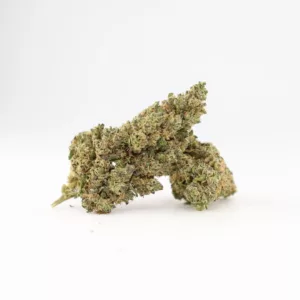
- The flowers act quickly when inhaled, which is suitable for some profiles, but complicates the precise calculation of the absorbed dose.
- Gummies are appealing because of their taste and discretion, with an action profile similar to capsules.
The reasonable limit for self-medication is generally between 50 and 75 mg per day, a threshold beyond which medical advice becomes relevant.
Regarding timing, take CBD 30 to 60 minutes before bedtime. If you frequently wake up during the night, splitting the dose (part in the evening, part when you wake up) may provide better coverage than a single dose.
Pro tip: *Always check the exact concentration of your CBD oil before calculating your drops.
Side effects and drug interactions to watch out for
CBD is generally well tolerated, but it is not without side effects. The most frequently reported are daytime drowsiness, dry mouth, mild headaches, and sometimes digestive upset. Elevated liver enzymes have also been observed in some cases, especially at high or prolonged doses.
The most frequently underestimated point concerns drug interactions. CBD is metabolized by the cytochrome P450 enzyme system, the same pathway as many common medications:
- anticoagulants (such as warfarin);
- certain antiepileptics;
- anxiolytics and antidepressants;
- immunosuppressive treatments.
This interaction can alter the blood concentration of these molecules, in either direction. The French National Health Insurance (Assurance Maladie) reminds the public that CBD is not a medication and that its consumption requires precautions, particularly for individuals undergoing chronic treatment. Medical advice is also recommended for pregnant or breastfeeding women, and for anyone with pre-existing liver disease. This caution applies equally to occasional use of CBD, regardless of the reason for its use.
Testing CBD on your sleep: the sleep diary method
It's difficult to know if CBD really works without a method. The best tool remains the simplest: a notebook, or a note-taking app, kept every morning for the entire duration of the test.
- Record each night the estimated sleep latency, the number of awakenings, and a perceived quality rating out of ten.
- Add to that the daytime sleepiness the following day, an often telltale indicator of an excessively high dose in the evening.
- Maintain the same dose for three to four weeks before drawing any conclusions. This is the minimum time required to distinguish a real effect from a simple placebo effect.
- Stop or consult a doctor if no improvement is seen after this time, if side effects persist, or if you are undergoing treatment that may interact with CBD.
Pro tip: CBD works best as a complement to good sleep hygiene, not as a replacement. Regular sleep schedules, turning off screens an hour before bedtime, and a cool bedroom are key. If insomnia persists despite these measures, cognitive behavioral therapy for insomnia (CBT-I) remains the most validated approach to date.
What distinguishes a reliable CBD oil from an ordinary oil
Effective CBD starts with a traceable product. The Certificate of Analysis (COA), issued by an independent laboratory, indicates the actual concentration of CBD and confirms that the THC level remains below the legal limit. Without this document, it's impossible to know what the bottle actually contains.
Three points deserve systematic verification before purchase: the exact concentration stated on the label, the accuracy of the THC level, and the origin of the hemp used. Organic hemp, cultivated and processed with a clear traceability chain, limits undesirable residues and ensures greater consistency from batch to batch. These criteria apply equally to oil, flower, or resin, and they remain the best filter to avoid mislabeled products still circulating on the market.

What you really need to know before trying CBD
The benefit of CBD for insomnia remains, based on current evidence, modest and focused on one specific mechanism: calming the anxiety that delays sleep onset. It is not a hypnotic, and it should never replace medical treatment for chronic insomnia that has persisted for months. What works is methodical experimentation: a low dose, a monitoring diary, and a predetermined trial period. The rest is more about patience than the molecule itself.
— Fred
Traceable CBD oils for a confident sleep trial
Compared to products purchased without a certificate of analysis or a clear indication of origin, choosing a traceable CBD oil makes a real difference for a serious sleep trial: you know exactly what dose you are taking, night after night.

CBD oils can be selected from organic hemp, with specified concentrations and traceability at every stage, from cultivation to bottling. This is precisely what is lacking in many bottles sold without accessible quality control for the consumer. To begin a trial protocol under optimal conditions, it's best to start with a product whose exact concentration is beyond doubt: explore the selection of CBD oils offered by Buddhafarms and choose the dosage best suited to your starting point. CBD remains reserved for adults, and anyone undergoing medical treatment should seek medical advice before beginning.
Sources
- Cannabidiol in Anxiety and Sleep: A Large Case Series
- Efficacy of cannabidiol in the management of adult insomnia: a literature review
These sources are based on limited samples and short follow-up periods; they guide thinking, without constituting definitive proof.
Frequently Asked Questions
How long does it take to determine if CBD is working?
Allow three to four weeks of regular intake at a stable dose, keeping a sleep diary, before concluding whether there is an effect or no effect.
Is CBD dangerous when used with other medications?
It can interact with treatments metabolized by cytochrome P450, such as certain anticoagulants or antiepileptics, which justifies medical advice before any regular use.
How to check the quality of a CBD oil for sleep?
Check the Certificate of Analysis (COA), the exact stated concentration, and the hemp's origin. Buddhafarms CBD oils display this information before purchase.