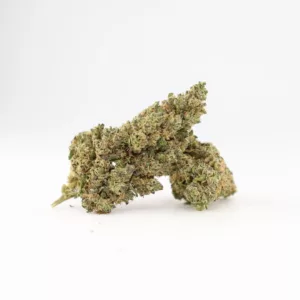
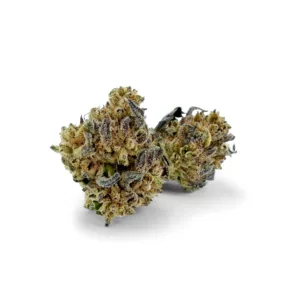
Between a hemp flower and a pot of rosin, there is a process of separation. The material is subjected to heat and mechanical pressure to extract a resinous fraction. This principle distinguishes CBD rosin within the family of hemp extracts.
Two products bearing this name can, however, be quite different. One comes from dried flowers that are directly pressed; the other is obtained from hash that is prepared before pressing. This difference in raw material explains the terms flower rosin and hash rosin.
It also helps to understand why prices, textures, and descriptions vary. Comparing only the CBD percentage leaves out part of the work involved. Conversely, a very detailed technical name doesn't excuse you from looking at the composition of the finished product.
To help you navigate the world of CBD extracts, Buddha Farm's suggests keeping an eye on what's in the press, what's out, and the information that will be useful when making your choice. This will allow you to distinguish between extraction methods, commercial consistency, and cannabinoid profiles.
What is CBD rosin?
In the vocabulary of cannabis extracts, rosin refers to a preparation obtained by hot-pressing a material containing resinous trichomes. This material may consist of flowers or a previously separated resinous fraction, such as some hashish.
The press manufacturer Lowtemp describes rosin as a concentrate obtained mechanically between heated plates. The term thus provides information about the separation method used. lowtemp-plates.com
The addition of the word CBD indicates that the product is presented as containing cannabidiol. It does not define a specific concentration: you must consult the product's specifications to determine its composition.
Rosin is not an additional cannabinoid. It can contain several components of the raw material, in proportions that vary depending on the product. Its name also does not guarantee the absence of THC.
A key distinction is therefore helpful: "rosin" describes a manufacturing process; "CBD" refers to a molecule highlighted in the preparation. The analytical result complements this information by specifying what was analyzed and measured.
How does pressure extraction work?
The principle is based on the combined action of heat and pressure. The material is placed in a suitable device, then the recovered fraction is separated from the remaining material.
In professional manufacturing, the choice of raw material and working conditions are linked. A whole flower is not necessarily treated the same way as hashish, where some of the plant material has already been removed.
It is also important to distinguish between pressing for extraction and simply shaping a resin. Hash can be compressed to form a slab or a ball without, for that reason alone, becoming rosin.
The question is what the operation aims to achieve. In the case of rosin, pressing serves to recover a fraction of the original material. In shaping, it can primarily serve to give the product its form.
This difference may seem subtle in a catalogue, where several preparations can be described as "pressed". It becomes important as soon as you want to understand how they are made.
Flower rosin: when the flowers are directly pressed
Flower rosin is obtained from dried flowers prepared for pressing. The plant material therefore enters the press along with the resinous part.
This distinguishes it from a manufacturing process that begins by isolating the trichomes before pressing the recovered product. The process involves fewer intermediate steps, although its quality still depends on the raw material and the work performed.
In its comparison of flower rosin and hash rosin, Lowtemp highlights precisely this difference in starting point: dried flowers on one hand, prepared hash on the other. lowtemp-plates.com
For you, this detail helps to identify a product family. It does not, on its own, provide a qualitative classification.
A well-documented flower rosin can be easier to appreciate than one bearing a prestigious name without information about its origin. You can examine its aromatic profile, composition, and presentation without automatically considering the number of processing steps as a value judgment.
If the label only says "CBD rosin", the question to ask is simple: was the pressed material made up of flowers or hash?
Hash rosin: a separation process prior to pressing
Rosin hash comes from hash used as raw material in the press. Therefore, its production involves prior preparation.
In the case of bubble hash, a resinous fraction is first recovered by cold water separation, then prepared before pressing. The hash constitutes an intermediate material; the rosin obtained subsequently is a separate product.
Lowtemp also distinguishes between rosin produced from dry sift, that is, material recovered by sieving. These details allow for a more precise description of what goes into the press. Comprehensive Guide
You may therefore encounter a description comprising several levels: type of plant, initial preparation, pressed material and final presentation.
This information becomes useful when it's connected. A sequence of words like "live," "hash," "rosin," and "cold cure" should allow you to understand a process. It shouldn't require you to guess what each term means in relation to the reference.
Flower rosin and hash rosin: the differences to compare
The starting material provides the most direct point of comparison.
| Criteria | Flower rosin | Hash rosin |
|---|---|---|
| Material placed under pressure | Flowers prepared for pressing | Hash prepared in advance |
| Pre-pressing route | Preparing the flowers | Separation and preparation of a resinous fraction |
| Useful information to request | Origin and characteristics of flowers | Type of hash and preparation method |
| Announced yield | This relates to the mass of flowers used | This should be considered in relation to the amount of hash used |
| Final composition | To be checked on the finished product | To be checked on the finished product |
The table reveals a precaution: the yields do not start from the same material.
A manufacturer talking about flower yield and another talking about hash yield are not necessarily describing two comparable performances. Part of the process has already taken place in the second case.
The price may also reflect this preliminary work. However, you need information about the actual product to judge whether the difference corresponds to what you are looking for: composition, traceability, flavor profile, and quantity offered.
Why can yield figures be confusing?
Yield expresses a ratio between a quantity obtained and a starting quantity. The result changes depending on the starting point chosen.
Let's take a purely illustrative example, without presenting it as a typical manufacturing output.
Let's assume a process begins with 100 grams of a given plant material. After initial separation, 10 grams of hash are recovered. Pressing this hash then yields 6 grams of rosin.
You can describe:
- a pressing yield of 60%, since 6 grams are obtained from 10 grams of hash;
- an overall yield of 6%, since these same 6 grams come from the 100 grams of initial material.
Both calculations are correct. They do not answer the same question.
This example shows why an impressive percentage can remain difficult to interpret without its denominator. It's also necessary to know the state of the weighed material: fresh, dried, or already processed.
When you read a manufacturing description, ask: "yield of which step, calculated from which material?" You will avoid confusing pressing efficiency with the complete balance of the transformation.
What distinguishes live rosin?
The term "live" refers to the use of freshly frozen material in the manufacturing process. For live hash rosin, this material is used to prepare hash that is then pressed.
The information relates to the origin and preparation of the raw material, in addition to the rosin process. It does not replace the composition of the finished product.
You can delve deeper into this first step in our guide on fresh frozen CBD. The key point here is to understand the process: initial freezing, hash preparation, and then pressing.
A rosin hash is therefore not automatically a live rosin. The advertised path must correspond to this distinction.
Similarly, the presence of the word "live" in a product name does not tell you about all the added elements or batch controls. A complete description should link the name to the product in question.
Rosin, wax and crumble: why do the names overlap?
Extract catalogues use words of different natures. Some refer to a manufacturing process, others mainly evoke a consistency.
Rosin can thus be presented with a particular texture without changing its initial process. The operations carried out after extraction contribute to the diversity of presentations.
This explains names like "wax rosin". In such an expression, "wax" can describe a waxy consistency while "rosin" provides information about the pressing process.
The term "crumble" generally refers to a friable substance. Its appearance alone is not sufficient to determine that it was obtained using a rosin process.
To make a choice, start by separating the questions:
How was the extract obtained? What is its composition? What is its consistency?
You can then compare the answers. Our article on CBD crumble elaborates on the specific criteria for crumbly preparations. It complements the explanation of the process without making texture a universal indicator of quality.
Fresh press and cold cure: what happens after extraction?
Work can continue after the press has gone through the process. The terms "fresh press" and "cold cure" are used to distinguish presentations related to this phase.
Fresh press refers to rosin presented in its immediate state after pressing, without the same aging process as a cold-cure preparation. The latter has undergone a controlled phase aimed in particular at influencing the evolution of its consistency.
Lowtemp describes rosin curing as a way to work on the texture after extraction. The results depend on the product and the conditions used; it is not a one-to-one process for all rosins. Cold Curing vs. Heat Curing
For you, the key is to understand the advertised presentation. A more opaque or creamier texture may correspond to a desired effect by the manufacturer.
These words, however, do not constitute instructions for modifying the product at home. The preservation of a commercially available product and professional aging processes are two separate matters.
Follow the instructions provided with your product rather than trying to reproduce a step based on its name.
Does the color of rosin allow us to assess its quality?
Color is one of the visible characteristics. It can help you recognize a presentation, but it does not replace batch information.
A clear, well-lit photograph allows for the observation of an extract. It does not allow for the measurement of its cannabinoids, the identification of all its constituents, or verification of the absence of contaminants.
Therefore, avoid creating an automatic ranking that goes from lightest to darkest.
Two products can differ in their raw materials and preparation. Before judging them based on a golden or amber hue, verify that they belong to the same family and that the images show them under comparable conditions.
If you're looking for a product you've already purchased, you can include the color in your description to the seller. Add the full name, batch number, and any other observed characteristics. This will provide more context than simply asking for "light rosin.".
"Solvent-free": what this label tells you
In industry terminology, solventless refers to mechanical separation without the use of an extraction solvent such as hydrocarbons or ethanol. Rosin pressing belongs to this family of processes.
This information addresses a manufacturing question. It should not be extended to all aspects of quality.
A mechanical method does not automatically provide information on growing conditions, batch identity, or the controls performed. You can appreciate the choice of method while still demanding the same level of traceability as for other products.
It is also necessary to distinguish between an extract obtained by pressing and a finished preparation that incorporates this extract with other constituents. In this second case, the complete composition remains to be examined.
When comparing two references, therefore, look for the exact meaning of the mention: does it describe the initial extraction, the entire announced process, or a part of the formulation?
Does CBD rosin contain only cannabidiol?
The name doesn't allow us to confirm it.
Rosin can contain several components derived from the pressed material. The proportion of CBD and the possible presence of other cannabinoids should be checked in the product information.
The term "CBD rosin" does not mean "isolated CBD." If you are looking for a precise composition, the analytical table will be more useful than the name alone.
Also, pay attention to how the figures are presented. CBD, total CBD, and total cannabinoids do not necessarily refer to the same value. The units and calculation methods must remain consistent with the document being consulted.
Finally, a high concentration alone is not enough to determine whether a product is right for you. You should also consider its presentation, the accuracy of its traceability, and the advertised flavor profile.
A well-explained composition allows for comparison; an isolated percentage leaves more room for assumptions.
Why do CBD rosin prices vary so much?
Several elements can be included in the price: the raw material, the operations carried out, the quantities recovered, the controls, the packaging and the volumes marketed.
In the case of rosin hash, a separation process precedes pressing. This step can require additional time and resources. The selection of fractions and the final preparation may also differ depending on the specific product.
These factors explain why it's important to compare similar processes. A product made directly from flowers and a preparation obtained after several steps don't represent the same manufacturing process.
However, price should not prevent you from examining the available information.
For a useful comparison, look at:
- the price per gram;
- the nature of the pressed material;
- the announced composition;
- the documents associated with the lot;
- quantity and packaging;
- details on a possible wording.
A higher price may correspond to additional work. However, you still need to be able to identify this additional work and decide if it meets your requirements.
How to examine a "CBD Rosin Wax" product reference?
The Buddha Farm's CBD Wax Rosin product is the starting point for reviewing this product. As with any extract, consider the product as a whole rather than attributing it to the general characteristics of each term in the title.
Start by identifying the information actually provided. Is the manufacturing method described? Is the raw material specified? Does the composition allow you to understand what is being offered?
You can then examine the presentation and packaging.
If information is missing, ask a targeted question. "Is this product pressed from flowers or hash?" will provide a more useful answer than "Is this a good rosin?".
This method also works for comparing two products from different shops. It prevents you from grouping similar names together when the descriptions don't necessarily show equivalent preparations.
What analyses should I consult before making my choice?
The document must first correspond to the product you are examining. Check the reference, the batch number when indicated, and the date of the report.
A result relating to a raw material does not necessarily describe all the characteristics of a final preparation. This is particularly important if several components have been combined after extraction.
Next, consider the scope of the test. A cannabinoid assay answers certain compositional questions; it does not automatically constitute a comprehensive assessment of all possible contaminants.
You must also be able to distinguish between a measured value, a result below an analytical limit, and a substance that was not sought.
Our guide to reading a CBD analysis certificate details these points. For rosin, the analytical documents complement the process description: they inform you about the product obtained, while the traceability describes its journey.
Is CBD rosin suitable for your equipment?
The term rosin is not sufficient to establish compatibility with a device.
A concentrate presented in a jar and a pre-filled cartridge are two different products. You cannot assume that the former is suitable for the latter's tank simply because they both feature CBD.
The formulation, consistency, and design of the material must be considered together. Do not add an extract to a cartridge that is not explicitly designed to receive it.
Similarly, do not modify a recipe to try to make it compatible with a device. Consult the product reference and the equipment manufacturer's instructions.
Choosing a product therefore also begins with its intended use. A non-food extract must remain within the scope specified for that product. Its plant origin or mechanical processing does not, in itself, define its appropriate use.
Frequently asked questions about CBD rosin
What is the difference between CBD rosin and CBD rosin?
These two expressions generally refer to the same research category. The word order does not indicate a technical difference. To distinguish between two references, examine the pressed material, the final composition, and the documented steps.
Is rosin a classic CBD resin?
It belongs to the world of resin preparations, but its name specifies that it is extracted using pressure and heat. The word "resin" commercially covers a variety of products. You should therefore consult the manufacturing process to understand what distinguishes them.
Is rosin hash the same as hash?
Hash can be the raw material used to produce rosin. After pressing, a fraction is recovered: the two products are at different stages of development. This distinction remains important even when they share the same plant origin.
Is flower rosin necessarily of lower quality?
You can't establish a universal ranking based on this category alone. The material, the workmanship, and the available information all matter. The term primarily tells you the starting point of the pressing process, which helps you compare products more accurately.
Is CBD rosin still considered live rosin?
No. The term "live" requires details about the journey of the freshly frozen material. Rosin can be made from dried flowers or various resinous preparations. Look for the complete information rather than inferring "live" from the word "rosin" alone.
Is a wax automatically obtained by pressing?
The term "wax" often describes a waxy texture. It alone does not identify the extraction method. When the words "wax" and "rosin" are used together, consult the product description to understand the role of each.
Is CBD rosin necessarily THC-free?
No. Its name does not demonstrate the absence of THC. Batch-specific results are necessary to determine which cannabinoids are being tested for and measured. The extraction process alone is also insufficient to establish a product's compliance in a given country.
Should you choose the most concentrated rosin?
Concentration is one criterion among others. It does not describe the process, controls, or other components. Compare clearly labeled data and consider the intended use of the product. A higher percentage does not constitute a personal recommendation.
Can rosin be judged by its texture?
Texture tells you about its appearance and may indicate a desired preparation. It does not measure composition or overall quality. To compare two products, combine this observation with manufacturing information and batch documentation.
What precautions should be taken before use?
Respect the intended use and warnings of this product, which is reserved for adults. Seek professional advice if you have a health question or are taking medication. After use, do not drive or operate dangerous machinery.
Choosing rosin based on its raw material
The most useful question remains the initial one: what was placed in the press?
The answer already distinguishes flower rosin from hash rosin. You can then examine the preparation of this material, the post-extraction processes, and the composition of the batch being sold.
When browsing Buddha Farm’s selection of CBD extracts , consider these factors alongside the price and packaging. If you need more information, ask for it along with the exact product name. This will allow you to compare clearly identified products, knowing exactly what their names describe.