CBD news is constantly emerging, but not all of it describes an immediately applicable change. A bill is introduced in the Senate, an administration publishes a fact sheet, a court decision is discussed, or a headline announces new regulations. For you, one question remains essential: what does this information actually change when you choose a product?
In the fall of 2026, several publications brought the French cannabidiol framework back into the spotlight. Among them was a proposed law concerning the production, traceability, distribution, and certain uses of CBD products. As of November 2, 2026, the official file consulted still showed this text in its first reading stage in the Senate, following its introduction on October 8. Its provisions should therefore not be presented as law already in force. Senate
This distinction is important for your purchases, your travel, and your understanding of information disseminated online. It prevents mistaking a political intention for an authorization, or an administrative reminder for a new general prohibition.
At Buddha Farm's, we suggest you put the news into context: identify the document, check its date, understand its scope and return to the characteristics of the product concerned.
CBD News: Two key takeaways for early November 2026
Two recent publications deserve special attention, with different functions.
On the one hand, the parliamentary file allows us to follow a proposed reform. On the other hand, MILDECA updated its page dedicated to the CBD framework on October 30, 2026, and published a summary sheet for the public. This availability of official information does not, in itself, mean that a new law came into effect that day. Regarding CBD
To read these CBD news articles correctly, ask two separate questions:
- Does the document explain the existing rules?
- Is he announcing or proposing a change to these rules?
A teaching guide can help you understand a situation without creating a new regime. A parliamentary proposal can outline significant changes without authorizing you to implement them prematurely.
This initial sorting already allows you to better read the titles you encounter on search engines and social networks.
What does the text submitted to the Senate on October 8, 2026 propose?
Bill No. 21, presented by Guillaume Gontard and several colleagues, notably proposes:
- a computerized system for tracking raw hemp flowers;
- batch and origin information on the containers;
- a framework for points of sale with training and a permit;
- provisions relating to minors and vending machines;
- a conditional road exemption referring to a blood concentration of THC.
These elements are part of the submitted text. They do not constitute the new rules applicable on the date of this article. Their wording and future depend on the parliamentary process. senat.fr
To keep you informed, focus especially on the topics open for discussion: product monitoring, customer information, distribution organization and conduct.
It would be premature to announce a definite implementation date, to guarantee the final content, or to present the planned systems as already operational.
Bill proposal, adoption and entry into force: three different stages
Parliamentary vocabulary can seem foreign when you're simply trying to understand current events. However, a few key distinctions are enough to avoid significant errors.
A bill is a parliamentary initiative. It can be debated and amended. Its introduction does not guarantee its adoption.
The procedure then involves committee work, discussions, and votes, depending on the stage of the bill's passage. Adoption by a single chamber should not be confused with the completion of the entire procedure. The Senate describes these different phases in its official presentation of the legislative process .
Why the word "voted" requires clarification
When a headline announces that a measure has been voted on, research what was voted on and at what stage.
This could be an amendment, an article, a text in committee, or a vote in an assembly. These situations do not all give the information the same weight.
A useful formulation should specify the step. Without this indication, you risk understanding it as "now applicable" when the document describes an intermediate step.
Publication does not always resolve the entire schedule
Article 1 of the Civil Code stipulates that laws and certain administrative acts published in the Official Journal enter into force on the date they specify or, failing that, the day after their publication. It also specifies that the entry into force of provisions requiring implementing measures may be postponed until those measures are in place.
The publication date and the application date must therefore be checked separately. Legifrance
For your research, do not stop at the title of the text: also look for the provisions relating to its schedule.
A simple grid for reading CBD news
Not all documents serve the same purpose. The following table helps you identify what you are viewing before drawing any conclusions.
| Document or step | What you need to look at | Helpful question |
|---|---|---|
| Bill proposal | Parliamentary file and version of the text | At what stage is she? |
| Amendment | Relevant text and exam results | Does the measure still appear in the next version? |
| Law published | Articles and calendar | When do the provisions apply? |
| Decree or order | Purpose, scope and entry into force | What products and situations are targeted? |
| Court decision | A clear and significant issue | What exactly does the judge decide? |
| Administrative announcement | Quoted text and instructions | Is this a new rule or a reminder? |
| Press article | Sources and date | Can I retrieve the original document? |
This method doesn't require you to become a lawyer. It helps you identify the missing information in a summary.
When you can find neither a reference, nor a date, nor a link to the document mentioned, consider that the verification still needs to be done.
CBD flowers in France: what the 2022 decision actually decided
The decision of the Council of State of December 29, 2022 remains an important reference point in the debates on hemp flowers.
The Council of State has overturned the general and absolute ban on the sale of raw flowers and leaves of the affected low-THC varieties. This decision concerned the ban established by the decree of December 30, 2021.
It must not be transformed into an indiscriminate authorization of all products bearing the CBD label, of all compositions, or of all uses. Council of State
Return to the product you are viewing
When choosing a product, first identify its nature: flower, resin, or other preparation.
Next, read its composition and the details on the product information sheet. Reasoning based on a raw flower is not sufficient to explain all processed products.
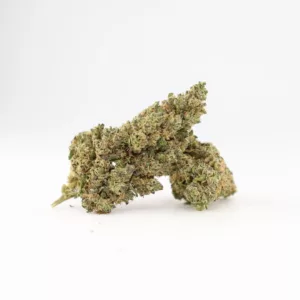
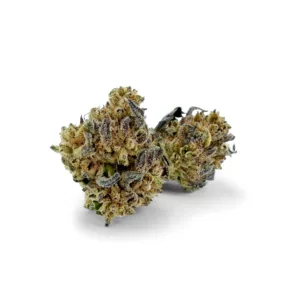
In our CBD flower, take the time to examine the complete product description, its format, and the accompanying information.
Avoid historical shortcuts
An article can reference a past legal victory to comment on recent news. This context is useful provided the dates are not mixed up.
Always ask yourself: does the document presented today change anything, or does it simply reiterate a decision that is already known?
This question prevents you from mistaking the republication of information for a change that occurred this week.
The THC threshold does not answer all questions
In CBD news, the figure of 0.3% is a central one. However, it's important to distinguish between the questions you're seeking answers to.
The composition of a product, its status, its presentation and driving experience cannot be combined in a single formula.
The government information sheet published on October 30, 2026, reiterates the THC limit and emphasizes that CBD remains subject to strict regulations. It also mentions risks such as drowsiness and drug interactions. Therefore, commercial information regarding a THC level should not be interpreted as a guarantee of the absence of risk. drogues.gouv.fr
See the full composition
Before accepting a general statement of conformity, check what it covers.
A percentage for a substance does not automatically describe all the components of a preparation. If the information sheet contains additional acronyms, ask what they mean.
A new name deserves a precise explanation, even when it appears in a familiar category.
Keep questions separate
For comparison, you can distinguish:
- What substances are being advertised?
- What results are available?
- To which batch do they relate?
- Which product category is affected?
- What regulatory claim is being put forward?
This separation makes the discussion clearer with the seller and prevents you from attributing to a figure a significance it does not have.
CBD and driving: a proposal does not change the rules in advance
Driving is a subject on which inaccurate titles can have concrete consequences.
In its ruling of June 21, 2023, the Court of Cassation reiterated that the authorization to market certain low-THC cannabis derivatives has no bearing on the offense of driving under the influence of narcotics, when such use is established under the prescribed conditions. The decision clarifies that the dose ingested is not the determining factor in dismissing the offense. Court of Cassation
Do not confuse the product level with a biological result
A percentage displayed on a sales sheet and a concentration measured in a sample do not represent the same data.
You cannot convert the first into a guarantee of a negative outcome for the second. Nor does an invoice or packaging provide general authorization to drive.
Do not drive or operate dangerous machinery after use.
No universal deadline can be promised here
This article does not specify a waiting period to guarantee a negative test result. Such a guarantee cannot be inferred solely from the name of the reference product or its stated rate.
If you read that a reform will allow for a new tolerance, first check its status. A parliamentary debate should not change your behavior as if the measure had already taken effect.
New cannabinoids: check for updates rather than memorizing a list
The vocabulary of the sector evolves rapidly. A new name may appear in catalogues before the reader has a clear explanation of its composition.
To follow these topics, a search limited to three or four letters is insufficient. It is necessary to identify the substances and the applicable decisions.
The news from 2024 also illustrates the importance of corrections: the National Order of Pharmacists published an update following a change in a classification decision, clarifying certain exclusions under certain conditions. Therefore, reading only the initial announcement may provide incomplete information. CNOP
Search for the latest version
Check if the document you are viewing has been updated, corrected or supplemented.
A recent date at the top of an article is not enough: look at what sources were used and whether the changes are explained.
When several pages appear to contradict each other, look for the official text and its amendments rather than choosing the most assertive title.
Do not generalize to an entire range
The status of one substance is not sufficient to define all others. Similarly, the presence of a product on a foreign site does not resolve its status for a particular destination.
If you wish to examine a product, start with its exact composition and ask for the necessary details. General expressions like "new generation" do not provide this level of identification.
Traceability: useful information to request as soon as you make your purchase
Without waiting for the outcome of the debates, you can adopt a personal method of tracking your purchases.
Keep the full name, order reference, and batch information when available. Also retain any documents provided by the seller.
This is about organizational advice, not about presenting the provisions of the parliamentary proposal as already mandatory.
Why keep the batch number?
If you ask a question about an analysis or the condition of a product, this identifier makes it easier to match it with the available information.
The name of a variety is not always enough to precisely identify your purchase. A photo of the label and packaging can therefore be helpful.
Ask a targeted question
You will generally get a more actionable response with a specific request:
"Does this certificate correspond to the batch in my order? Can you explain what the percentage indicated on the certificate represents?"
Conversely, a very general question about the legality of "all molecules" mixes situations that each require verification.
CBD news and purchases: how to use the information without rushing?
News stories can prompt you to change your preferences, order a product, or avoid a category. Before deciding, identify what the information actually demonstrates.
A political debate does not prove the characteristics of a batch. A decision on one category does not necessarily describe another preparation.
For your purchase, therefore, combine two readings: the regulatory context on one side, the reference sheet on the other.
Compare the categories using their own criteria
A flower is described, in particular, by its size and aromatic profile. A resin can also be compared according to its texture and its stated preparation method.
You can explore Buddha Farm’s CBD resins and small CBD buds while keeping these differences in mind.
Current events do not replace this individual comparison.
Don't order based on a rumor of imminent change
An advertisement without verifiable documentation is not a good basis for a hasty purchase.
If a seller or publication mentions a deadline, ask for the reference and its scope. You will then be able to distinguish documented information from a hypothesis or interpretation.
How to check CBD news in five minutes?
A short routine can resolve some of the most frequent confusions.
Start by finding the event
Note what is announced: submission of a text, decision, publication or control.
Next, identify the date of this event. It may differ from that of the article that comments on it.
Open the original source
For a parliamentary matter, consult the tracking page. For a court decision, search for the official summary and, if necessary, the decision itself.
For an administrative publication, look at the texts and documents to which it refers.
Check the version and scope
Look for words that limit the information: product category, territory, condition, exception, or application date.
They are often the ones who disappear from the shortest publications.
State what you actually know
After reading, try to summarize the information in one precise sentence:
“A text has been submitted proposing an evolution” is different from “the rule has changed”.
If you cannot make this distinction, keep the question open rather than turning uncertainty into certainty.
Frequently asked questions about CBD news in France
Is the proposal submitted in October 2026 already law?
As of November 2, 2026, the official file consulted presents it at the stage of the first reading in the Senate. Its measures should not be treated as already applicable.
Does a new government chapter mean a new ban?
Not necessarily. A publication can explain or reiterate the existing framework. You need to find the cited texts and verify whether a change has actually occurred.
Does the 0.3% threshold automatically authorize driving?
No. The rate stated in the product does not constitute authorization to drive nor a guarantee regarding screening.
Does an analysis prove the complete conformity of a reference?
It documents tests performed on an identified sample. Its scope depends on the parameters studied and does not replace all regulatory checks.
Why can two recent articles contradict each other?
They may comment on different versions, confuse a proposition with a rule, or reuse old information. Check the original documents and their dates.
Does information about CBD apply to all preparations?
Its scope must be examined. A raw flower, a resin, and another formulation should not be considered interchangeable without justification.
How can you follow a reform without rereading all the press?
Keep the link to the official document and check the new steps. You will then be able to read the comments with a common reference point.
Keep reliable reference points for your future research
To stay up-to-date on CBD news, start by checking the status of the information: proposal, adopted text, applicable publication, or commentary. Then, verify the product, territory, and date in question.
At the beginning of November 2026, the challenge is to read the proposed changes without applying them in anticipation, while maintaining close attention to existing rules.
Visit the Buddha Farm’s CBD shop to explore their products and review their specifications. For each selection, compare the product information with the batch details and ask a specific question if anything remains unclear.
Official sources
- Senate: follow-up to bill no. 21 tabled on October 8, 2026.
- Senate: text of the proposal.
- MILDECA: Legal framework for CBD, page updated on October 30, 2026.
- Council of State: Decision concerning the marketing of flowers and leaves, December 29, 2022.
- Court of Cassation: Driving under the influence of drugs, June 21, 2023.