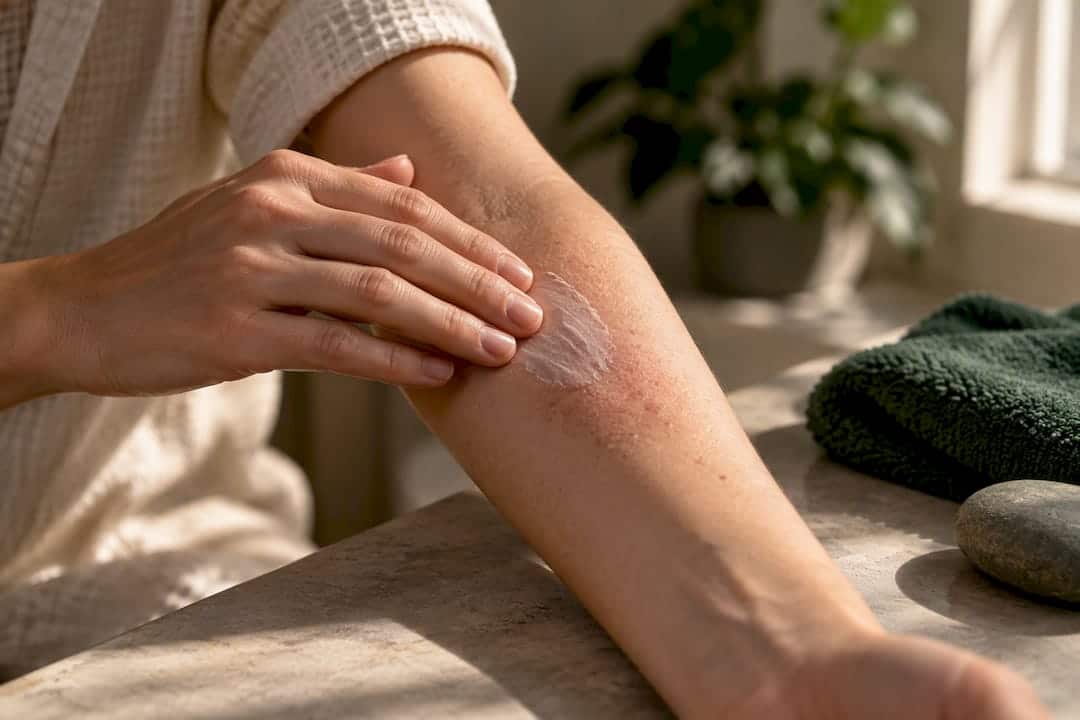
Topical CBD may help soothe the inflammation and itching of eczema in some people, but it is not a substitute for treatments prescribed by a dermatologist. Human evidence remains limited and inconsistent: a recent pilot study reports encouraging results, but these are insufficient to establish general efficacy. Caution is still advised for any active or widespread lesions.
In short:
- The effectiveness of topical CBD for eczema remains limited to small pilot studies, without solid evidence of a widespread result.
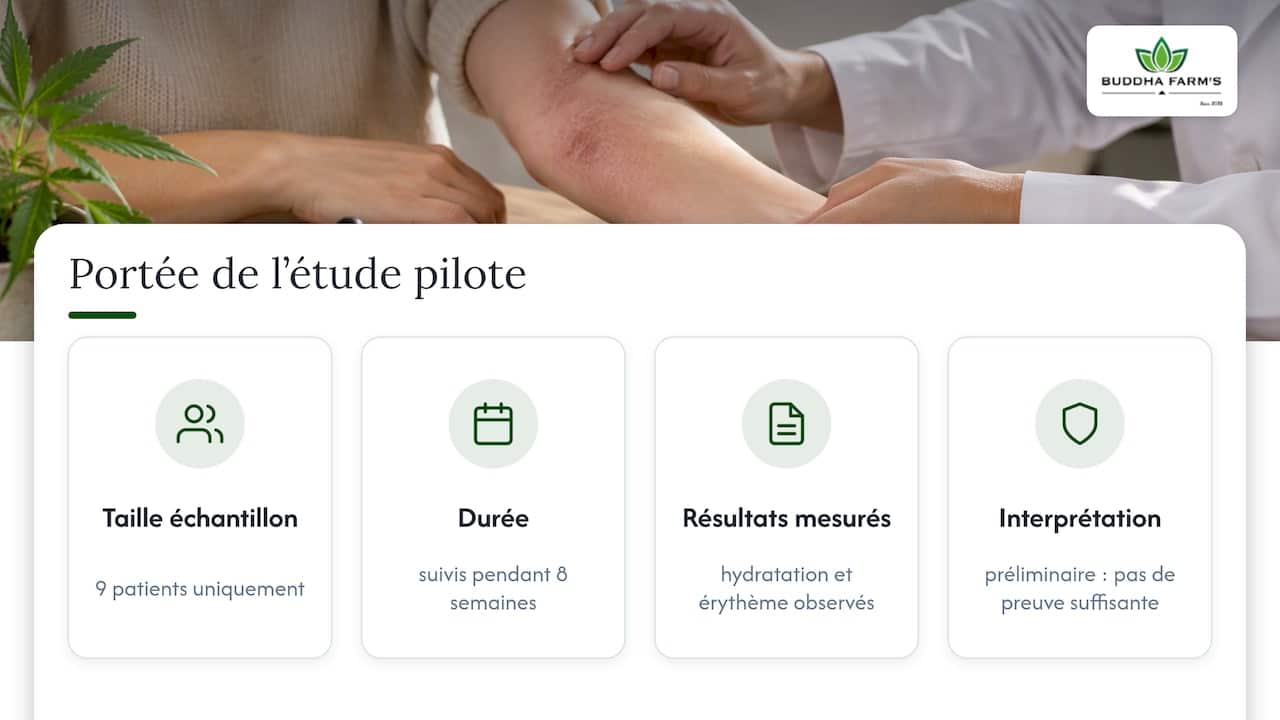
- Only one study observed improved hydration and reduced erythema in nine patients after eight weeks of application.
- The formulations vary greatly, making any comparison difficult and preventing precise attribution of benefits to CBD alone.
- Gradual use by testing on an unaffected area and maintaining the emollient routine remains the best approach to prevention.
- CBD, when applied topically, should remain a complement, not a substitute for medical treatment prescribed by a dermatologist.
Table of Contents
- What is eczema and why does topical soothing matter?
- How CBD acts on the skin: plausible mechanisms
- The available clinical evidence and its limitations
- Try a topical CBD treatment safely
- Safety and interactions: topical use versus oral use
- Choosing the right CBD cream or ointment for eczema
- What Buddha Farm's expertise brings to this subject
- What you really need to know about CBD and eczema
- Explore complementary CBD products at Buddha Farm's
- Sources
- Frequently Asked Questions
What is eczema and why does topical soothing matter?
Eczema, or atopic dermatitis, is characterized by marked dry skin, sometimes intense itching, and lesions that may ooze or thicken over time. It affects the skin barrier: the barrier loses its ability to retain moisture and protect itself from external irritants, thus perpetuating a cycle of inflammation and scratching.
The treatment aims at three simple objectives.
- Restore hydration and strengthen the skin barrier.
- Reduce visible inflammation and itching.
- Space out or limit the intensity of the pushes.
Emollients form the basis of any protocol, regardless of the severity of the eczema. A soothing treatment, whether it contains CBD or not, is part of this complementary approach: it never replaces this moisturizing base or medical treatments when necessary.
How CBD acts on the skin: plausible mechanisms
The skin contains cannabinoid receptors, notably CB1 and CB2, which are involved in regulating inflammation and the sensation of itching. A review of available preclinical and clinical data describes potential anti-inflammatory and antipruritic effects of CBD, while emphasizing that these observations remain heterogeneous across studies, as highlighted in this review on the therapeutic potential of CBD for the skin.
Several biological avenues emerge from the available research.
- An action on inflammatory cytokines such as TNFα and certain interleukins, involved in eczema flare-ups.
- An effect reported on mast cells, cells responsible for the release of histamine which causes itching.
- A modulation of the NF-κB pathway, associated with chronic skin inflammation.
Preclinical evidence (in vitro and animal studies) is more abundant and robust than human trials, which explains the gap between the often enthusiastic discourse surrounding CBD and the still incomplete clinical reality, according to the same review. This gap should be kept in mind before expecting any quick or guaranteed results.
The available clinical evidence and its limitations
Human trials remain rare, small, and involve very different formulations, as highlighted in an analysis of CBD in dermatology. This is what makes any comparison between studies difficult.
The most cited recent work is a pilot study on a 30% CBD and 5% CBG ointment, conducted on nine patients with atopic dermatitis. After several weeks of application, the researchers observed a progressive improvement in skin hydration, as well as a decrease in transepidermal water loss and erythema, with a reduction in pruritus in some participants.
Significant improvement in hydration and reduction in transepidermal water loss and erythema after eight weeks of application of a 30% CBD and 5% CBG ointment in patients with atopic dermatitis.
- A sample of nine people does not allow for any large-scale generalizations.
- The improvement was gradual, occurring over several weeks, never overnight.
- The variability of formulations (presence or absence of CBG, terpenes, nature of the base) complicates the comparison between studies, according to the same dermatological analysis cited above.
Given this still incomplete picture, the 2026 guidelines from theAmerican Academy of Dermatology on atopic dermatitis do not mention CBD among the standard treatments. The AAD continues to favor emollients, topical corticosteroids, calcineurin inhibitors, and other established therapeutic options. At this stage, CBD remains an adjunct to clinical trials and not a treatment recognized by dermatological authorities.
Try a topical CBD treatment safely
Before incorporating a CBD product into an eczema routine, a gradual approach limits the risk of irritation and allows you to honestly assess its personal benefit.
- Apply a small amount to an area of intact, unbroken skin, and observe the reaction for 48 to 72 hours.
- Avoid application on oozing lesions, very thin areas such as the eyelids, or raw skin.
- In the absence of redness, burning or swelling, begin regular application, usually once or twice a day.
- Continue for several weeks before judging effectiveness: the effects reported in available studies appear gradually, never in a few days.
- Continue your usual emollient routine in parallel and do not modify or interrupt a prescribed treatment without speaking to your doctor.
Pro tip: note the start date of application and your observations each week; this facilitates a concrete discussion with your dermatologist if you wish to adapt your routine.
Safety and interactions: topical use versus oral use
Topical CBD and oral CBD do not pose the same level of risk. Topical use is generally better tolerated, but certain precautions are necessary.
- Irritation or an allergic reaction can come from the CBD itself or, more often, from other ingredients in the formula such as fragrances or certain preservatives.
- Atopic skin, whose barrier is already weakened, absorbs more of the substances applied and deserves increased vigilance.
- Drug interactions mainly concern the oral route, where CBD can interact with liver enzymes of the CYP450 system; limited cutaneous use presents a significantly lower risk, but caution remains essential in case of ongoing treatment, as detailed in this article on CBD interactions with certain drugs.
- In children, pregnant or breastfeeding women, and on extensive lesions, medical advice before any use remains the rule, without exception related to the route of administration.
Choosing the right CBD cream or ointment for eczema
Not all formulas are created equal, and choosing a suitable product significantly reduces the risk of irritation.
- Check the INCI list: favour the presence of emollients and ceramides, and the absence of perfume or preservatives known to sensitize atopic skin.
- Request or consult the product's Certificate of Analysis (COA), which confirms the actual CBD concentration and the origin of the hemp used.
- For very dry areas, a rich ointment often provides more comfort than a light cream; if there's an uncomfortable feeling of tightness, a more fluid texture is preferable. CBD oils clearly illustrate these differences in texture and skin penetration depending on the base used.
What Buddha Farm's expertise brings to this subject
The company has positioned itself as a specialist in organic hemp and product traceability, with a rigorous selection process for the products it offers. This commitment to quality also extends to the CBD-based cosmetics and oils it sells.
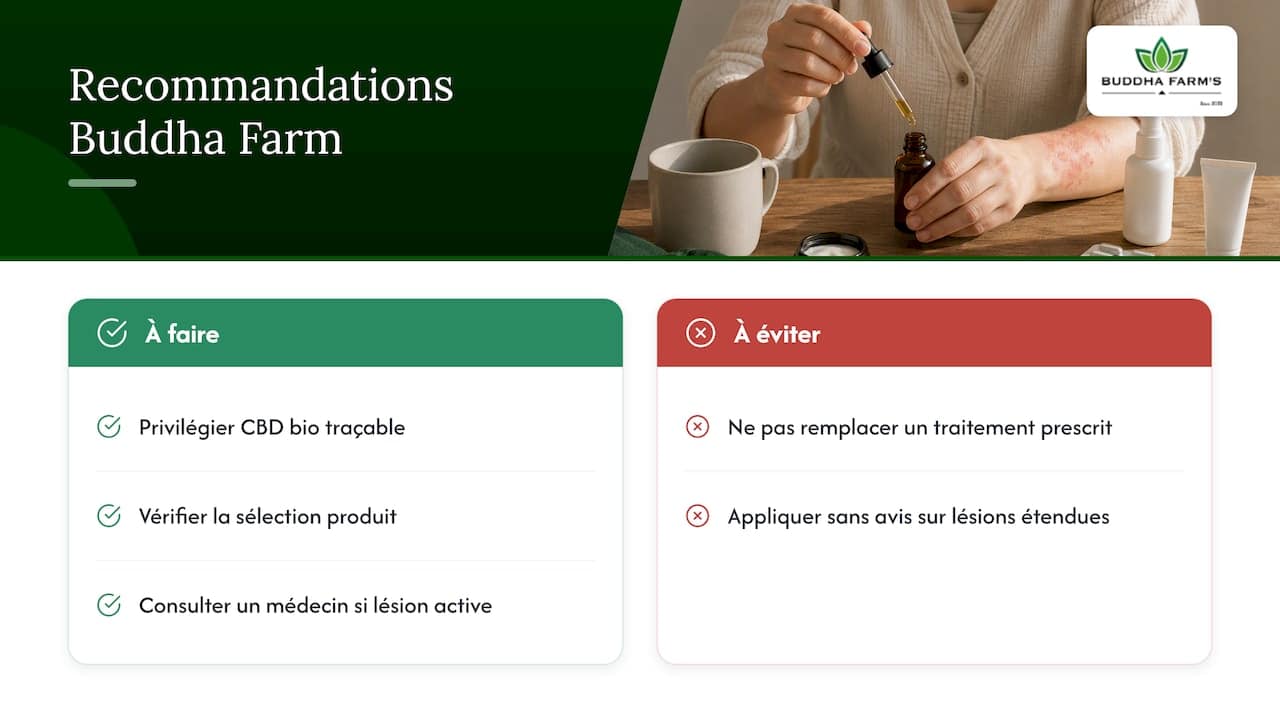
A CBD cosmetic product should be considered a comfort aid, never a substitute for prescribed dermatological treatment. For active or extensive lesions, consulting a doctor before application remains the safest course of action.
What you really need to know about CBD and eczema
Topical CBD is attracting attention for some valid reasons: its anti-inflammatory and antipruritic mechanisms are plausible, and a pilot study showed measurable results on hydration and erythema. But the commercial enthusiasm surrounding CBD far exceeds what nine patients followed for eight weeks can demonstrate.
What readers often underestimate is the importance of the formulation itself. An emollient-rich ointment combined with CBD can soothe as much, sometimes even more, thanks to its moisturizing base as to the cannabinoid. Isolating the exact contribution of CBD to any perceived improvement remains difficult, and no current study can definitively confirm this.
The priority remains simple: a rigorous emollient routine, a dermatologist's opinion for any significant flare-up, and CBD considered as a supervised personal trial, never as a replacement. It is this hierarchy, and not the other way around, that protects the skin in the long term.
— Fred
Explore complementary CBD products at Buddha Farm's
For readers who wish to try a soothing treatment in addition to their routine, the CBD oil and the wellness products include references selected for their traceability and compliance with French regulations.

Before making any purchase, check the certificate of analysis for the chosen product and always perform a preliminary skin test on a small area. To discover the entire selection and its traceability guarantees, visit the Buddha Farm’s online store.
Sources
- American Academy of Dermatology — Guidelines on atopic dermatitis
- Evaluation of Biophysical Parameters of the Skin of Patients With Atopic Dermatitis After Application of an Ointment Containing 30% Cannabidiol and 5% Cannabigerol
- Therapeutic Potential of Cannabidiol (CBD) for Skin Health — review
Frequently Asked Questions
What are the effects of CBD on the skin?
Topically applied CBD is associated with anti-inflammatory and antipruritic effects in preclinical data and some small human studies. One pilot study, in particular, measured improved hydration and a reduction in erythema after eight weeks of application in patients with atopic dermatitis.
How can I calm eczema flare-ups?
Regular application of emollients remains the recommended first step to limit dryness and inflammation during a flare-up. In addition, a soothing treatment tested beforehand on a small area may help some people, but treatment prescribed by a dermatologist remains the gold standard in the event of a severe flare-up.
Is it possible to give CBD to a child?
The use of CBD in children, including topical application, requires prior medical advice, as safety data specific to this population remains limited. No CBD cosmetic formulation should replace pediatric or dermatological advice for a child suffering from eczema.


