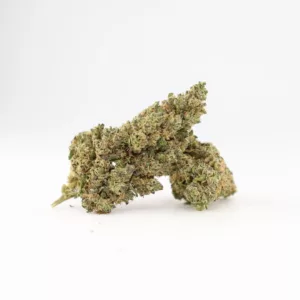
The texture of CBD resin is one of the first characteristics you'll notice. Some varieties have a sandy appearance and break easily into small fragments. Others have a foamy texture, a soft consistency, or a slightly sticky surface. These differences contribute to their unique character and can influence your preferences.
But what does texture actually tell you? Does oily resin necessarily contain more cannabidiol? Is dry hash necessarily old? Does the word "foamy" refer to a specific manufacturing method?
To compare products, you must distinguish between what you observe, what the seller describes, and what an analysis can measure. Texture indicates the physical behavior of the material. It does not, on its own, provide a CBD level, proof of purity, or a guarantee of quality.
At Buddha Farm's, we offer a guide to help you understand the terms used in product descriptions, identify your preferences, and select a resin based on specific criteria. This will allow you to explore the different presentations of hash without confusing texture, composition, and aromatic profile.
CBD resin texture: key terms to know for comparison
In commercial descriptions, several terms can characterize the same product. A resin can be flexible, brittle, and slightly sticky: these words describe different behaviors, which are not necessarily mutually exclusive.
"Flexible" refers to its ability to deform. "Brittle" indicates that it fragments easily. "Sticky" describes its adhesion to contact. "Compact" suggests a tightly packed material.
This precise reading avoids the need to search for a single classification ranging from dry to fatty.
| Term encountered | Characteristic described | What the term does not demonstrate |
|---|---|---|
| Dry | Appearance or feel not very sticky | An absence of cannabinoids |
| Friable | Material that fragments easily | Excessive aging |
| Sandy | Visible presence of small grains | A determined purity |
| Sparkling | Structure described as light or airy | A universal recipe |
| Flexible | Material that deforms | A specific CBD level |
| Sticky | Adherence to contact | A higher concentration |
| Compact | Tight structure | A precise manufacturing process |
When comparing two product descriptions, look for several additional adjectives. A description like "light brown, crumbly and slightly sticky" is more informative than a single word like "premium".
Where does the resinous substance of hemp come from?
To understand the vocabulary of hash, we must go back to glandular trichomes. These small plant structures are associated with the production and accumulation of compounds such as cannabinoids and terpenes.
A study published in 2023 examined the development of trichomes under a microscope on several genotypes of THC-rich cannabis. Researchers described resinous secretions that could cause certain glandular buds to stick together. They also observed the effects of post-harvest handling and drying on the morphology of the trichomes.
These results pertain to the plants studied. They explain certain phenomena at the microscopic level, but do not allow for a direct deduction of the composition of a commercially available CBD resin. Springer Nature Link
For your purchase, the essential information remains the description of the finished product. The fact that the raw material is plant-based does not automatically explain all the steps in its preparation or any added ingredients.
Dried CBD resin: how to interpret this aspect?
A resin described as dry generally exhibits little stickiness to the touch under the conditions in which it is observed. It may remain compact or easily break into fragments.
The term, however, requires clarification. Are we talking about a dry feel, a crumbly structure, or a material that has changed from its initial state? These situations are not interpreted in the same way.
"Dry" does not automatically mean "old"
You cannot date a resin based solely on its friability. The original description and the product's history are necessary to interpret its condition.
If the product description states a dry, sandy texture, this may be what you expected. If it describes a very flexible material and you receive an unusually brittle product, ask for an explanation.
The discrepancy with the description deserves more of your attention than a general rule found online.
An interesting presentation tailored to your preferences
If you appreciate materials that are not very sticky and fragments that are easy to distinguish, a dry or crumbly resin may be what you are looking for.
However, check the aromatic description and the stated composition. Touch is a practical criterion; it does not replace other information.
In the Buddha Farm’s CBD resin, examine the characteristics specific to each reference rather than assuming that all clear resins behave the same way.
Foamy CBD resin: a structure to be clarified
The word "foamy" occupies an important place in hash catalogs. It evokes a material that appears light, sometimes porous, which can fragment while retaining a certain flexibility.
This qualifier remains to be interpreted in the relevant information sheet. It does not automatically tell you which method was used or which components are present.
Sparkling wine is not a complete composition
A texture description does not replace a list of ingredients or an explanation of the process.
When you come across a foam product reference, look for the following details: advertised color, behavior on contact, composition and any additives.
Avoid concluding that an open appearance necessarily means a lower concentration. The volume occupied and the measured concentration are two different pieces of information.
A resin can be foamy and slightly sticky
These descriptions can coexist. The structure of a piece and its adhesion do not refer to the same property.
For example, Buddha Farm's CBD Foaming product description describes a soft, crumbly, and slightly sticky substance with citrus and woody notes. This description illustrates the value of using multiple adjectives to understand the product. It is not a comprehensive definition of all foaming resins. BUDDHA FARM'S
To find out which items are available at the time of your purchase, consult the catalogue and the availability indicated on each product page.
Soft or sticky CBD resin: what to look for?
A flexible resin can deform while maintaining some cohesion. A sticky material adheres more strongly to the surface or tool it comes into contact with.
If you appreciate compact and flexible presentations, these features may interest you. They also require suitable packaging to avoid unnecessary handling.
Touch does not measure CBD content
You cannot convert a feeling of grip into a percentage of cannabidiol.
Similarly, a shiny surface does not constitute an analysis. It is not sufficient to confirm a particular composition or the absence of additional ingredients.
To compare rates, look for results corresponding to the batch and the exact titles of the measures.
An example of a resin with a traditional profile
Buddha Farm’s Charas CBD leaflet features a soft and malleable texture, combined with an earthy, woody and slightly spicy profile.
This example allows you to link a texture preference to an aromatic description. However, you should not infer the geographical origin or production process of every product with a similar name from that name alone. BUDDHA FARM’S
Why temperature can change the feel
Your observation also depends on the conditions under which you examine the product.
In its manual for identifying cannabis products, the United Nations Office on Drugs and Crime describes, among other things, a decrease in resin adhesion at low temperatures during certain separation operations.
This property helps explain why touch is not a characteristic entirely independent of the environment. It does not provide a universal storage temperature for all CBD resins. unodc.org
Compare under consistent conditions
A substance observed immediately after transport and the same substance examined later should not be compared without taking into account their environment.
Before concluding that there is an anomaly, read the product instructions and describe the conditions of receipt to the seller.
Avoid impromptu tests involving excessive heating or cooling of a resin to "check its quality." You would be altering the sample without a protocol for interpreting the result.
An unusual texture warrants a specific question
You can state: "The product description states a flexible material, but it seems very brittle upon receipt. Is this consistent with the product description, and what storage conditions do you recommend?"
This formulation facilitates a response tailored to the product.
It is more useful than a general conclusion that all brittle resins are defective.
Dry sift, bubble hash and texture: distinguishing the process from the result
Terms related to manufacturing provide different information than words describing touch.
Dry sifting refers to dry sieving. Bubble hash is associated with separation using cold water and filtration. These indications describe a family of processes; they are not sufficient to predict the exact final texture of all varieties.
The UNODC manual distinguishes several approaches to resin collection and separation, including rubbing, sieving, and cold-processing methods. These processes should be distinguished from simply presenting the resulting piece for sale. unodc.org
"Dry" and "sec" do not always answer the same question
When you read "dry sift", the word "dry" primarily refers to the process being described.
When a product description describes a "dry touch", it characterizes the product as presented.
The two pieces of information may be linked in a particular reference, but you should not consider them as perfectly interchangeable.
The process does not replace the analysis of the finished product
Even when a method is clearly indicated, it remains necessary to understand what is being offered: material from the separation, reformulated preparation or enriched product.
Ask for the missing details before comparing concentrations.
A well-explained manufacturing process provides useful context. It is not proof of absolute purity.
"Filtered", microns and prestigious names: what do these terms mean?
Resin datasheets may highlight a number of passes, a filtration size, or a specific name.
These statements deserve careful reading. Their relevance depends on the details provided about the process and the product.
The number of filtrations requires an explanation
A mention of "3x" or "4x filtered" does not, by itself, give you the characteristics of each pass or the results obtained.
If this argument matters to your purchase, ask what has been filtered, for what purpose, and how the final preparation is described.
The figure does not allow for the automatic creation of a ranking between all the resins on the market.
A caliber is not a percentage of purity
An indication in micrometers refers to a dimension. It does not directly constitute a cannabinoid content.
Before comparing two values, check what they specifically designate in the datasheets: a step, a collection range, or another characteristic of the process.
This will prevent you from treating technical data as a general quality rating.
A name does not tell the whole story of the product
Names like Charas, Piatella or references to a region can help you explore a commercial universe.
They do not replace the need to check the declared origin, composition, and batch description. If you want to know about a specific process, request its documentation rather than deducing it from the name.
Color, shine and texture of CBD resin: how to interpret them together?
Colour and touch contribute to the presentation, but they should not be transformed into a chemical classification.
A light-colored resin might appeal to you with its sandy appearance. A darker shade might suit your preference for a more compact material. These choices are valid when they remain purely descriptive preferences.
A color cannot be used to calculate a concentration
Beige, light brown or dark brown are not units of measurement.
To understand the advertised content, consult the associated documents. To appreciate a presentation, look at several photographs and read the description.
This separation allows you to choose without asking a color to prove what it does not measure.
Photographs have their limitations
Lighting and contrast can alter your perception of a surface. A bright area in a photo doesn't necessarily indicate the product's grip.
If texture is your primary criterion, look for a sufficiently precise written description.
You can also ask whether the images represent the current reference or serve as general illustration.
Texture and aromas: two preferences to combine
You might like crumbly textures while still seeking a woody profile. Or you might prefer a soft resin with citrus notes.
There is no need to choose between texture and fragrance: the goal is to find a product whose descriptions appeal to you in both ways.
Start by naming your expectations
Instead of just searching for "best CBD resin", specify what you like.
For example: a non-sticky material, a resinous character, and limited packaging. Or a flexible presentation, earthy notes, and a familiar format.
This formulation will help you browse CBD resins and hash with a clear objective.
Do not infer the effects of touch
A pleasant texture does not allow us to predict an individual experience.
The words "rich," "foamy," or "creamy" do not constitute promises of effects. Nor do they justify a medical claim.
Keep them in their role: to describe a subject and help you compare its presentation.
How to choose a CBD resin texture according to your preferences?
For your selection, you can arrange the criteria in a simple order.
Start by considering the product's nature and composition. Then examine its texture, aromas, and size. Finally, compare prices for equivalent weights.
| Your priority | Information to prioritize | Additional verification |
|---|---|---|
| Poor adhesion | Dry or slightly sticky feel as advertised | Description of behavior upon reception |
| Material that is easy to fragment | Friability described | Difference between normal texture and unusual change |
| malleable presentation | Flexibility announced | Packaging designed for contact |
| Lightweight appearance | Foamy or airy description | Full composition |
| Traditional profile | Earthy, woody or resinous notes | Description specific to the reference |
| Budget | Price per gram selected | Quantity and conditions of the offer |
| Documented composition | Analysis attached to the batch | Parameters actually sought |
This grid does not assign a universal rating to each texture. It helps you identify what matches your search.
A concrete example to compare two resins
Let's imagine two fictitious offers, created solely to illustrate the method.
The first one has a crumbly resin, described as woody, at €24 for 4g. The second one advertises a supple and spicy substance, at €35 for 7g.
The first costs €6/g and the second €5/g. The calculation provides information on the price, but it doesn't decide for you.
If you're looking for a low-grip material, the first description might be worth considering. If you appreciate suppleness and spicy undertones, the second might be a better fit.
In both cases, also check the composition, the batch number, and the available documentation. Don't let a single adjective or discount define your comparison.
To discover a product, also choose a quantity that you can store according to the instructions provided. A larger quantity is only worthwhile if it meets your needs.
Preserve the texture without trying to transform the resin
Once you have received your product, follow the storage instructions on its product sheet and packaging.
Keep each part separate, with its identification. Avoid repeated handling solely to test its flexibility.
Studies on the storage of cannabis products show that the composition can change depending on the conditions. They do not allow for the definition of a single optimal texture for all commercial preparations. pubmed.ncbi.nlm.nih.gov
Keep a suitable contact container
If the product is supplied in packaging designed for its material, keep it as long as it remains clean and functional.
Avoid replacing this packaging with printed paper or scented material. If you are unsure about alternative packaging, ask the seller for advice.
Do not add anything to change the feel
Do not mix your resin with water, perfume, or any other substance to obtain a more flexible appearance.
You would be changing the initial preparation without being able to assess the consequences.
If the texture seems abnormal, photograph the product and contact the seller before attempting any correction.
Frequently asked questions about the texture of CBD resins
Does a sticky CBD resin necessarily contain more CBD?
No. Adhesion does not provide a percentage. A concentration must be documented by a relevant measurement, linked to the product in question.
Is dried resin necessarily expired?
Friability alone is not enough to date the product. Compare its condition with the description and instructions received, then ask for clarification if any change concerns you.
Is sparkling wine a manufacturing method?
The word describes a commercial presentation. To understand the process, you need to look up the technical information specific to the reference.
Is a light-colored resin purer than a dark-colored resin?
Color alone is insufficient for establishing this classification. Purity must be defined by appropriate criteria and controls, rather than deduced from a photograph.
Can an additive be identified by smell or touch?
These observations are not sufficient to definitively identify all the constituents. Consult the composition and available documents.
Why doesn't my resin look exactly like the photo?
First, check the reference, format, and representativeness of the image. If the discrepancy seems significant, send the seller a photo and the batch number.
Are the most flexible resins the best?
It depends on your presentation preferences. Flexibility is not a general indicator of quality, safety, or focus.
Can conformity be determined from texture?
No. Touch and appearance do not replace checks of composition and the applicable regulations for the product.
Find your CBD resin based on specific criteria
To choose, combine three aspects: the composition to understand the product, the texture to appreciate its presentation, and the aromas to identify your preferences.
A dry resin might suit your needs for friability. A foamy resin might interest you for its structure. A flexible material might appeal to you because of its malleability. In each case, the information on the product sheet should allow you to understand what is being offered.
Discover Buddha Farm's selection of CBD resins and keep track of your favorites: full name, batch number, texture description, and aromatic nuances. This will help you refine your future searches and ask more helpful questions to find the style of hash you prefer.