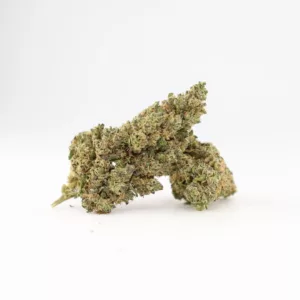
When choosing a CBD flower, your attention is often drawn to its name, its advertised aroma, or its cultivation method. However, another part of its journey deserves to be understood: its preparation after harvest. Drying, trimming, curing, and packaging all take place before the flower arrives in your bag.
These steps appear regularly in marketing descriptions. A product might be presented as "slowly dried," "aged," or "cured for a long time." These expressions provide a direction, but their usefulness depends on the details that accompany them.
Drying primarily aims to remove water from plant material. Curing refers to a refining phase after drying, the practices of which vary among producers. The Oregon State University Agricultural Extension Service distinguishes between these operations and emphasizes that curing remains relatively unexplored by research. extension.oregonstate.edu
Your goal is not to become a specialist in production facilities. It's about understanding what these labels tell you, their limitations, and the useful questions to ask before making a purchase.
Here are the key points to know to compare Buddha Farm’s CBD flowers with a more complete understanding of their quality.
Why post-harvest preparation deserves your attention
Cultivation describes one part of the flower's journey. Post-harvest preparation constitutes another.
This allows you to examine two distinct aspects: the environment in which the plant grew, and the processing of the harvested material. The terms "indoor" or "greenhouse" do not automatically describe how the drying, sorting, and packaging were carried out.
This separation helps you read the product information sheets more easily. You no longer need a single label to summarize all the product's features.
A series of operations to identify
The presentation of a flower can involve several stages: harvesting, removal of certain leaves, drying, possible refining, selection and packaging.
The order and arrangement may vary. To understand a specific product, seek the seller's instructions rather than assuming the same process applies to all flowers.
A clear description should explain what the product being offered is all about. A long, general paragraph about hemp cultivation does not replace this information.
Sales arguments that need to be put back into context
"Artisanal drying" and "premium curing" may sound impressive. To determine their importance in your purchase, ask what they actually describe.
A duration? A stated method? Specific monitoring? Information from the producer?
The clearer the answer, the more you can appreciate the argument. Conversely, a term without explanation should remain just one element of the presentation among others.
Drying, curing, manicure: what are the differences?
These words are sometimes combined in the same sentence, even though they serve different purposes.
| Stage | What she describes | Helpful question before buying |
|---|---|---|
| Drying | Water removal after harvest | What method is being announced? |
| Manicure | Removing leaves around the flowers | Which finish corresponds to the format sold? |
| Curing or refining | Post-drying phase presented as a refining process | What does this reference mean? |
| Sorting | Selection or separation of different formats | Large heads, small flowers, or mixed sizes? |
| Packaging | Placed in the sales container | What weight and presentation are offered? |
| Conservation | Conditions for maintaining the product over time | What instructions come with the product? |
This table provides a framework for interpretation. It does not constitute a manufacturing protocol.
When comparing two references, look at which steps are actually documented. A flower can be accurately described without each operation being used as a marketing ploy.
What is the purpose of drying CBD flowers?
A freshly picked flower does not have the same moisture content as a dried and packaged flower. Drying removes some of this water.
However, the professional challenge is not limited to obtaining a material that feels dry to the touch. Process choices must also take into account the characteristics the producer wishes to preserve and the necessary controls.
Several methods exist
Hemp research is investigating different processes. A 2025 publication in the journal Plants notably compared ambient air drying, hot air drying, and freeze-drying on two hemp cultivars.
Researchers examined several parameters: duration, cannabinoid composition, color, and microbiological indicators. The results depend on the protocol and do not constitute a universal recipe for all commercially available flowers. PMC
When making your purchase, remember above all that a method must be evaluated based on its conditions and results. Its name alone is not enough to establish a general ranking.
Duration is just one piece of information among others
A drying time of several days indicates a schedule. It does not, on its own, describe all the conditions.
Two different durations therefore make it impossible to immediately decide which option will best suit your needs. You also need to know the characteristics of the finished product and the information available about the batch.
The right question goes beyond "how long?". It becomes: what do we know about the work announced and the product obtained?
"Slow" should not automatically become synonymous with "better"
If a product description highlights slow drying, you can consider this a point to investigate further.
Avoid directly inferring a higher content, guaranteed safety, or necessarily a more successful fragrance. These topics require separate information.
This reading allows you to appreciate a claimed expertise without transforming an expression into proof covering all the qualities of the product.
What is CBD curing?
Curing is often translated as refining. In the commercial vocabulary of hemp, it refers to a phase that takes place after drying.
The word can encompass different practices. It is therefore preferable to look for its meaning in the description of the relevant reference.
A useful term when explained
A mention of refining may be of interest to you if it is accompanied by details on the organization of the work or the characteristics sought.
For example, the seller may indicate an advertised duration, explain the source of this information, or describe the final profile of the flower.
This information allows you to understand the argument. Without it, you don't know exactly what is being compared between two products.
Curing time is not a quality rating
You may encounter listings with several weeks of refinement. The figure seems precise, but you need to know what it represents.
Is this just the curing phase? The entire post-harvest period? A period before packaging?
When making your decision, ask for clarification on whether this duration justifies the price or is your primary selection criterion. This will help you avoid comparing schedules that don't cover the same operations.
Curing does not replace product documentation
A flower presented as refined must remain clearly identified: reference, format, weight and composition announced.
Any available documentation also plays its own role. A mention of curing alone does not explain the results of an analysis.
The refinement can therefore be seen in a set of coherent information, with the same requirement as the other arguments in the sheet.
Does curing increase the CBD level?
This question arises again when refining is presented as a general improvement of the flower.
In the study published in Plants in 2025, the drying and curing processes studied did not significantly alter the total cannabinoid content measured. However, the researchers observed other changes, including decarboxylation and color alterations. These results pertain to the cultivars and experimental conditions examined. PMC
Therefore, you cannot use the single mention "long curing" to attribute a precise content to the product.
Consult the data that answers your question
If your question relates to the advertised rate, please refer to the composition information and relevant documents.
If it concerns refining, look at the description of the process. These are two complementary readings.
This separation avoids a common confusion: a step presented as qualitative does not automatically become proof of concentration.
Compare clearly defined figures
When two cards display values, verify that they describe the same data. If the presentation is ambiguous, ask for clarification.
A figure in the title should be considered alongside the full description. This will allow you to assess the offer without relying on your own interpretation of the percentage.
Drying and aromas: what does the available research show?
Fragrance is an important criterion for many buyers. However, a distinction must be made between a result measured in a study and a general promise applied to an entire product range.
The processes are being compared
University research conducted in 2025 at the University of Georgia studied the drying, curing, and storage of hemp flowers. The project focused on two CBD-rich cultivars and monitored terpenes, cannabinoids, moisture, and color.
This approach demonstrates the value of examining multiple parameters and stages. It does not, however, allow us to conclude that a single duration would be suitable for all references. openscholar.uga.edu
For you, the practical consequence is to favour an aromatic description specific to the product rather than a promise based solely on the name of a method.
A rapid process is not a uniform category
A 2024 study compared a microwave and infrared drying process with a reference method. It examined various indicators, including terpenes and trichome condition. The results illustrate the range of trade-offs studied in post-harvest processing; they do not constitute a recommendation for home use. sciencedirect.com
The words "fast" and "slow" are therefore too general to summarize the whole issue.
Look for specific aromatic notes
In your purchase, indications such as "vegetal and woody" or "floral with fruity notes" give you a direction.
You can then compare several products within the same category. This approach will be more helpful than a search limited to the longest curing time.
Your preference remains personal. The goal is to find a profile that appeals to you, within a sufficiently detailed offer.
Flower humidity and air humidity: avoid confusion
Articles about drying often use several percentages. They do not necessarily refer to the same thing.
A percentage must always be accompanied by its unit of measurement
Relative humidity describes a property of the atmosphere. The water content of a substance describes the product itself, according to a method and a basis for calculation.
Do not simply transfer a figure from one category to another. If you read a value in a technical data sheet, look at what is actually being measured.
This precaution alone is enough to avoid many comparison errors.
A small device in a container does not answer all the questions
Before interpreting a display, ask yourself what the device is measuring, under what conditions, and with what accuracy.
A visible number should not be interpreted as a complete analysis of the flower. Measurement has a scope; product controls have another.
If you are looking for specific technical information, the seller should be able to explain the data presented or direct you to the relevant document.
Do not use a single value as a general guarantee
Even when correctly identified, a measurement only describes one parameter. For your purchase, consider it within the context of all available information.
This method is particularly useful when the vocabulary becomes technical: better to have data that is understood than an accumulation of figures whose scope remains unclear.
Can we judge dryness by touch?
Touch tells you about your perception of texture. It does not allow you to reliably reconstruct the entire preparation process.
Describe what you observe
A flower may appear fragile, flexible, or more compact than expected. Note this observation in simple words.
Avoid immediately turning your impression into a diagnosis: "poorly dried", "too cured" or "necessarily old".
To establish the cause of a discrepancy, more information than this single observation is needed.
Compare with the format description
A batch of small flowers and a batch of large buds will not look the same. So start by checking what was advertised.
The baby buds and small buds CBD selection allows you to identify the products offered in this format.
Caliber, finish, and packaging must be examined before seeking a single explanation in curing.
Make a specific request to the seller
If the presentation received surprises you, indicate the reference, the batch number if it exists and the observation made.
A question like "Does this texture correspond to the usual presentation of this batch?" opens up a more useful discussion than a verdict based on an isolated impression.
Does a plant-like odor indicate poor curing?
The vocabulary of perfumes also deserves precision.
Aromatic preference is not a process analysis
You may not appreciate a vegetal note or may prefer a woody one. This preference is legitimate.
However, this alone does not allow you to identify the step responsible for the perceived profile. To compare your experience to the offer, start with the advertised description.
The question then becomes: does the perfume correspond to what was presented?
Avoid automatic explanations
Very general claims circulate regarding chlorophyll, taste, and aging. When making a purchase, ask for substantiated explanations when a salesperson systematically links a flavor to a specific cause.
A clear sensory description is often more useful than a simplified chemical explanation.
Keep your notes for the next order
Note down the references whose profiles appeal to you. You can then search for a close family or request a recommendation based on those characteristics.
This way you will build your selection based on concrete preferences, rather than a ranking of curing times.
Indoor, greenhouse: should we also compare the post-harvest period?
Yes, in the sense that this information answers different questions.
A culture category helps you understand the stated production context. The preparation description provides further insight.
Don't focus your entire search on a single mention
If you are exploring indoor and Cali CBD flowers, also look at the format and characteristics of each product.
Similarly, a flower from the greenhouse should be appreciated from its own information sheet.
Your comparison will be more accurate if you look for what distinguishes the products, beyond their category.
Ask for information that is proportionate to your purchase
You don't need to obtain an industrial dossier for each order. Start with your priority questions: composition, format, aromatic notes, weight, and available preparation information.
If a technical argument justifies your choice or a price increase, elaborate on that argument.
This hierarchy allows you to remain demanding without making the search unnecessarily complicated.
Can the curing process justify a higher price?
Preparation work can be part of positioning a product or service. To decide if the price is right for you, identify what is being advertised and what matters to you.
A positive word is not enough
"Premium aging" becomes more interesting when it's explained. Without clarification, you don't know what difference you're paying for.
View the entire offer: presentation, advertised composition, batch information and quantity chosen.
Compare equivalent packaging
Convert the price per gram to the weight you wish to purchase. Then check for any discounts and the order total.
A minimum price associated with a large volume does not necessarily correspond to your actual budget.
Choose a quantity suitable for discovery
For a new product, a small package size might be appropriate. You can check if its presentation and features meet your expectations before considering a larger order.
The low-cost CBD category can also broaden your search, provided you maintain the same reading criteria.
Helpful questions to ask before you buy
You can prepare a short list, then retain only the questions that the sheet does not answer.
- What does the mention of curing mean for this reference?
Look for an explanation specific to the product. - Does the stated duration refer to drying or ripening?
You will avoid comparing two different periods. - What size is the sachet?
Confirm the size and finish. - What information relates to the proposed batch?
Check the link between the documents and the product. - What instructions accompany the packaging?
You will have the instructions provided for the reference. - What is the price for my fabric weight?
Compare it to your actual purchase.
These questions are intended to clarify the offer. They do not assume that all salespeople use exactly the same vocabulary.
Is it necessary to repeat the curing process after receiving the product?
Before any handling, keep one simple distinction: you have bought a finished product, the preparation and instructions for which must be explained by the seller.
If the information sheet indicates that the refining process has been completed, this does not mean that an additional step is expected from you.
Seek advice rather than immediately changing the product
A surprising presentation warrants clarification. Keep the batch information and contact customer service.
You will be able to describe what you observe and ask if it corresponds to the reference.
Do not attempt to correct an anomaly with an improvised treatment
Managing microbiological risk in hemp is subject to specific professional recommendations, particularly regarding production, drying, and storage conditions. It is not simply a matter of altering the product's appearance after delivery. OSU Extension Service
If anything appears suspicious, discontinue use and contact the seller. Do not consider further drying as confirmation of quality.
Frequently asked questions about drying and curing CBD
What is the difference between drying and curing?
Drying removes water after harvesting. Curing refers to a maturation phase after drying. For precise information, consult the producer or seller.
Does a longer curing time mean a better flower?
Duration alone is not enough to compare products. Examine the advertised conditions, final characteristics, and available batch information.
Can the CBD content be determined through curing?
To find out the stated content, consult the composition data. The description of a preparation step does not replace this information.
Is a very green flower necessarily poorly ripened?
Color alone is not enough to reconstruct its journey. Compare the presentation to the description and ask for clarification if necessary.
Does the absence of the word "curing" imply poor quality?
A fact sheet may use different vocabulary or not detail this step. Look at the information actually available rather than the presence of a particular term.
Does the jar prove that the curing process was successful?
A container doesn't tell the whole story. To appreciate the claim, look for information about the product and the advertised preparation.
Can two flowers be compared solely based on their fragrance?
Fragrance helps you express your preferences. To decide on a purchase, consider the size, the stated composition, the price, and the traceability.
Choose your CBD flowers by looking at their complete journey
Drying and curing provide valuable information when the terms are explained. You can incorporate them into your comparison without expecting them to summarize the entire quality of a flower.
Start with what matters most to you: presentation, flavor profile, or budget. Then examine the advertised ingredients, format, and batch-specific information. Delve into the technical details that truly influence your decision.
Discover Buddha Farm’s CBD flowers, compare the different varieties, and choose the ones whose descriptions meet your needs. A well-informed purchase relies on clear information, going beyond a simple promise of “long curing.”
Sources and further reading
- Oregon State University Extension — preparing hemp flowers after harvest.
- Baek, Grab and Chen — Drying, curing, cannabinoids and microbiological indicators of hemp, Plants, 2025.
- University of Georgia — Evolution of terpenes and cannabinoids during drying, curing, and storage, 2025.
- Das and colleagues — study of a microwave and infrared drying process, 2024.
- Oregon State University Extension — Aspergillus ecology and prevention in hemp production.