🚚 Free shipping on orders over €25 | 🎁 10% off with code FIDEL10 | 📦 3-pack (same weight) = 20% off | 🔥 Back-to-school clearance: Buy one, get one free on selected items

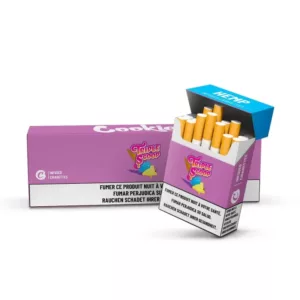
FLOWERS COOKIES 10 OH HHC
10-OH-HHC: Discover the Buddha Farm's selection
Are you looking for 10-OH-HHC and above all want to be able to clearly identify the composition, concentration and origin of the products offered? Buddha Farm's brings together in this category its selection of 10-OH-HHC, a recent cannabinoid related to HHC that is generating increasing interest in the new cannabinoid market.
Here you will find the various 10 OH HHC available from Buddha Farm's, with particular attention paid to traceability, stated concentrations, flavor profiles, and information associated with each product. Depending on the products listed in the catalog, the range may include different sizes and concentrations to allow you to easily compare their characteristics before making your selection.
10 -OH-HHC, also known as 10-hydroxy-HHC, should not be confused with traditional CBD. It belongs to a much newer and significantly less scientifically documented class of cannabinoids. This is why Buddha Farm prioritizes a transparent presentation of its products rather than making promises of effects that cannot be guaranteed.
Before choosing a 10-OH-HHC product, take the time to check its composition, stated concentration, cannabinoid profile, batch information, and any available analyses. Two products with the same brand name can have significantly different formulations.
Below you can browse the 10-OH-HHC Buddha Farm’s selection and consult each sheet to find the characteristics specific to the reference that interests you.
Products intended for adult use only. 10-OH-HHC may produce psychoactive effects and impair alertness. Do not drive or operate machinery after use. Keep out of reach of children. Not recommended for pregnant or breastfeeding women.

10-OH-HHC: Understanding this cannabinoid, its effects, risks, and status in France
10-OH-HHC in a nutshell
10 -OH-HHC, also written as 10 OH HHC or 10-hydroxy-HHC, is one of the cannabinoids that has recently appeared on the European market. While its name is similar to HHC, it should not be confused with HHC, CBD, or THC. Products marketed under the name 10-OH-HHC can have very different concentrations and compositions, and scientific knowledge regarding its effects on humans remains limited.
This situation necessitates an essential distinction between what is actually known about the compound, what is extrapolated from other cannabinoids, and the commercial claims circulating online.
Here you will find a complete dossier on 10-OH-HHC in France : definition, origin, differences with HHC and THC, reported effects, potential duration, risks, laboratory analyses, driving and regulatory developments.
What is 10-OH-HHC?
The term 10-OH-HHC generally refers to 10-hydroxyhexahydrocannabinol, a compound chemically related to HHC, or hexahydrocannabinol.
The abbreviation can be broken down as follows:
10-OH refers to the presence of a hydroxyl group associated with position 10 of the molecular structure.
HHC stands for hexahydrocannabinol.
This terminological similarity explains why 10-OH-HHC is frequently presented as belonging to the HHC family.
However, it would be incorrect to conclude that the two molecules automatically possess the same properties.
A change in chemical structure can influence how a substance is absorbed, metabolized, distributed, and eliminated by the body.
It can also modify its interaction with different receptors.
Why is there so much talk about 10-OH-HHC?
Interest in 10-OH-HHC is part of a broader evolution in the cannabinoid market.
After CBD, several molecules or families of molecules have successively attracted public attention: HHC, HHC-O, THCP, H4CBD, HHCP, 10-OH-HHC and various more recent commercial names.
This succession is notably linked to regulatory changes.
When a substance is banned or classified as a narcotic in a country, new, structurally similar molecules can quickly appear on the market.
This phenomenon raises a major difficulty for the consumer: the commercial availability of a substance does not mean that it benefits from the same scientific background as a cannabinoid studied for several decades.
10 OH HHC particularly illustrates this problem.
10-OH-HHC and HHC: what's the difference?
The similarity of the names leads to frequent confusion.
HHC stands for hexahydrocannabinol. 10-OH-HHC stands for a related hydroxylated derivative.
This difference may seem minor on paper, but it is important.
In pharmacology, two similar molecules are not necessarily interchangeable.
They may differ in terms of:
- their affinity for certain receptors;
- their bioavailability;
- their metabolism;
- their half-life;
- their power;
- their metabolites;
- their toxicity.
Therefore, we must avoid shortcuts such as "10-OH-HHC is simply a new version of HHC".
The scientific reality is more complex.
10-OH-HHC and CBD: very different profiles
Another common confusion is to group all cannabinoids into the same category.
CBD , or cannabidiol, now benefits from a considerably larger body of scientific literature .
CBD is not generally sought after to produce an intoxication comparable to THC.
10-OH-HHC belongs to a different context.
Products containing this compound are frequently associated with the search for psychoactive or noticeable effects.
This difference significantly changes the approach to precautions.
A consumer accustomed to CBD should therefore not assume that a product containing 10-OH-HHC is simply a "more concentrated" version of CBD.
These are two different categories.
10-OH-HHC and THC
THC, and more specifically delta-9-THC, remains the best-documented psychoactive cannabinoid in cannabis.
Its interaction with the endocannabinoid system, its acute effects and some of its risks have been studied for a long time.
10-OH-HHC has a significantly lower level of documentation.
Some descriptions available on the Internet attempt to establish a potency scale between CBD, HHC, 10-OH-HHC and THC.
These comparisons should be viewed with caution when they are not based on controlled tests.
To say that one molecule is precisely "half as strong" or "three times more powerful" than another requires solid data.
For 10-OH-HHC, such data are still insufficient to transform these statements into general rules.
What are the effects of 10-OH-HHC?
This is probably the most frequently asked question about this molecule.
And it is also the one for which scientific caution is most important.
The information currently circulating about the effects of 10-OH-HHC largely comes from commercial descriptions, individual testimonials, and extrapolations from related cannabinoids.
These sources are not a substitute for controlled clinical studies.
Users of products sold under this name report, in particular, changes in perception, a feeling of relaxation, a change in mood or even drowsiness.
However, one testimony does not establish a universal pharmacological effect.
Two products bearing the same name may also have different compositions.
Is 10-OH-HHC psychoactive?
Products containing 10-OH-HHC are generally marketed in the world of psychoactive cannabinoids.
It is therefore prudent to consider that they can impair alertness and psychomotor skills.
This precaution is particularly important when it comes to driving.
A person who has used a product that may alter their perception, attention, or reflexes should not drive or operate dangerous machinery.
The absence of significant subjective sensation does not constitute a guarantee of intact abilities.
How long do the effects of 10-OH-HHC last?
There is no universal duration that can be accurately predicted.
The perceived duration potentially depends on many parameters:
- actual composition of the product;
- quantity used;
- route of administration;
- individual physiology;
- tolerance ;
- food ;
- simultaneous consumption of other substances;
- drugs ;
- metabolism.
The extremely precise estimates that can be found on some websites should therefore be interpreted with caution.
The duration experienced by one person is not necessarily reproducible in another.
Is 10-OH-HHC potent?
The word "powerful" is itself ambiguous.
It can refer to the concentration of a product, the affinity of a molecule for a receptor, the intensity felt, or simply a marketing positioning.
A vape indicating a very high proportion of a distillate does not automatically establish a proportional pharmacological potency.
Similarly, a flower advertised as containing 20% 10-OH-HHC cannot be directly compared to a flower containing 20% of another cannabinoid based solely on the percentage.
Concentration and pharmacological potency are two different concepts.
Why can the effects vary so much?
The market for new cannabinoids has a particularity: standardization sometimes remains limited.
Two products labeled "10-OH-HHC" may differ in the following ways:
- the purity of the distillate;
- the isomers present;
- other cannabinoids;
- terpenes;
- residual solvents;
- the matrix used;
- potential contaminants.
In addition to this, there is human variability.
The same product can produce very different experiences depending on the individual.
That is why testimonials published on the Internet should never be considered as a guarantee.
10-OH-HHC: what are the risks?
The main problem lies in the lack of perspective.
For a new substance, the absence of data demonstrating a particular danger does not mean that it is safe.
This distinction is fundamental.
By analogy with other psychoactive cannabinoids and based on reported experiences with this family of products, various adverse effects can be considered:
- drowsiness;
- dizziness;
- anxiety ;
- confusion ;
- impaired coordination;
- dry mouth;
- accelerated heart rate;
- nausea;
- faintness ;
- attention deficit disorders.
This list is neither a systematic prediction nor an exhaustive inventory specific to 10-OH-HHC.
It illustrates why a cautious approach remains necessary.
The particular problem of high concentrations
High concentration increases the importance of analytical precision.
Products marketed as vapes or distillates may display particularly high concentrations.
With this type of formulation, a composition error, a contaminant, or a misidentification of the cannabinoid takes on added importance.
The concentration displayed on a label should therefore never be considered in isolation.
It must be compared with a batch analysis certificate.
Why the certificate of analysis is essential
For a new cannabinoid, the COA, or Certificate of Analysis, is a major element of transparency.
A proper laboratory report should ideally allow for the precise identification of the product and the batch analyzed.
It can, in particular, indicate:
- the cannabinoids detected;
- their concentrations;
- THC;
- certain residual solvents;
- certain heavy metals;
- certain pesticides;
- other contaminants depending on the method used.
It is also necessary to verify that the analysis actually corresponds to the batch sold.
A generic certificate used for multiple references does not provide the same level of information as a specific analysis.
Purity as proclaimed and purity as real
The terms "95%", "97%" or "99%" appear regularly in the world of distillates.
These figures must be able to be documented.
A stated concentration should not be confused with an absolute guarantee of quality.
A highly concentrated product may nevertheless contain impurities.
Conversely, a complete analysis can provide much more information than a simple percentage highlighted on the packaging.
To understand a 10-OH-HHC product, you need to look at the entire analytical profile.
10-OH-HHC and drug interactions
The specific data is insufficient to establish a reliable map of all possible interactions.
This lack of data precisely justifies the need for caution.
Cannabinoids can be metabolized by liver enzymes also involved in the metabolism of many drugs.
A person undergoing drug treatment should therefore not assume that a new cannabinoid is automatically compatible with it.
In the event of treatment, caution dictates seeking advice from a healthcare professional capable of assessing the individual situation.
10-OH-HHC and alcohol
Combining several substances that can impair alertness increases unpredictability.
Alcohol itself can affect coordination, judgment, and reflexes.
Combining it with a psychoactive cannabinoid can therefore make the effects more difficult to anticipate.
Prudence dictates avoiding these associations.
10-OH-HHC and driving
This issue deserves special attention.
Using a psychoactive cannabinoid before driving poses a safety risk.
There is also an issue related to drug testing.
Road tests and their legal consequences should not be interpreted solely from the trade name printed on packaging.
The composition of the product, the possible presence of THC and metabolites may come into play.
In practice, the rule of caution is simple:
Do not drive after using 10-OH-HHC or any product that may impair your abilities.
Can a saliva test be positive?
It would be unwise to guarantee that a 10-OH-HHC product could never cause difficulty during an inspection.
Several factors can come into play.
A product may contain other cannabinoids than the one highlighted on the label.
Traces of THC may also be present depending on its composition.
Questions of metabolism and test reactivity also require specific data.
The statement "the test does not look for 10-OH-HHC, therefore there is no risk" is therefore a dangerous shortcut.
Is 10-OH-HHC legal in France?
The answer to this question must be dated.
The French regulatory framework concerning new cannabinoids has undergone numerous changes.
Several molecules that were previously freely marketed have subsequently been subject to classification measures.
The status of a cannabinoid cannot therefore be deduced simply from the fact that it is available on certain websites.
It is necessary to verify the official texts and regulatory decisions in force at the time of the consultation.
The exact composition of the product must also be taken into account.
A product presented as primarily containing a given molecule may contain another regulated substance.
Why does the word "legal" require so much caution?
Three different questions are often confused:
Is the molecule explicitly classified?
Does the product contain other regulated molecules?
Does the product comply with all other regulations applicable to its category?
Answering the first question does not necessarily answer the other two.
Therefore, a product's conformity does not depend solely on the name of the cannabinoid printed on the label.
The THC threshold does not solve all the questions
The regulatory threshold applicable to hemp is frequently invoked in the CBD trade.
But meeting a delta-9-THC threshold does not automatically mean that a product containing any other cannabinoid becomes legal.
Substances can be subject to independent classifications.
Therefore, a distinction must be made:
- hemp regulations;
- THC content;
- individual classification of certain molecules;
- regulations applicable to the finished product.
This distinction is essential to understanding the neo-cannabinoid market.
Why are regulations changing?
Health authorities can intervene when they identify risks associated with new psychoactive substances.
The market sometimes evolves faster than scientific research and the law.
A new molecule may appear commercially before a significant volume of toxicological data is available.
The authorities can then collect reports, analyze the chemical structure, assess the risks and possibly change its status.
That is why a page dedicated to 10-OH-HHC in France needs to be regularly updated.
Natural or synthetic 10-OH-HHC
The question "Is 10-OH-HHC natural?" also calls for a nuanced answer.
A molecule can exist as a metabolite or be found in certain biological contexts without the naturally occurring quantities allowing for direct commercial production.
The products available on the market can therefore originate from chemical transformations of cannabinoid precursors.
A distinction must be made between the existence of a molecule in nature and the industrial method used to manufacture a commercial distillate.
Simply saying "natural cannabinoid" may therefore be insufficient to properly describe the process.
What is a semi-synthetic cannabinoid?
The term semi-synthetic is used when a molecule is obtained by chemical transformation of a naturally occurring compound.
In the hemp sector, a cannabinoid extracted from the plant can serve as a raw material before various transformation reactions.
This distinction is of direct interest to the consumer because the quality of the manufacturing process influences the final purity.
A poorly controlled chemical transformation can theoretically leave behind reactants, by-products or solvents.
Hence, once again, the importance of analysis.
Flowers 10-OH-HHC
Flowers marketed under this name should not necessarily be interpreted as plants that have naturally produced 10 or 20% of 10-OH-HHC.
In the emerging cannabinoid market, hemp flowers often serve as a matrix to which a cannabinoid formulation is then applied.
This distinction deserves to be clearly explained.
It allows us to differentiate:
the natural profile of the hemp flower, and
the final concentration of the product after enrichment.
Transparent information must clarify this difference.
10-OH-HHC Resin
The same principle applies to enriched resins.
A resin can serve as a base for a formulation containing an added cannabinoid.
The stated concentration then corresponds to the final formulation and not necessarily to a content naturally obtained in the plant material.
To evaluate this type of product, batch analysis and traceability of raw materials become particularly important.
Vape 10-OH-HHC
Vapes represent another category frequently associated with concentrated cannabinoids.
In this format, the product may contain a distillate, terpenes and possibly other components.
Particular attention should be paid to the complete composition.
A vape product should not be evaluated solely on the concentration of cannabinoids highlighted.
The quality of the material, the formulation, and the absence of undesirable contaminants also matter.
10-OH-HHC vs HHC
Here are the key differences to remember.
HHC is hexahydrocannabinol.
10-OH-HHC is a related hydroxylated compound.
Their structural similarity does not guarantee identical pharmacology.
HHC has benefited from greater prior commercial exposure.
10-OH-HHC remains less documented.
The two terms should therefore not be used as synonyms.
10-OH-HHC vs CBD
CBD has a much higher level of research.
It does not have the same psychoactive profile as the products sought for cannabinoid intoxication.
10-OH-HHC should be approached with more caution due to the lack of available data.
A CBD consumer should not consider the two products as directly comparable.
10-OH-HHC vs THC
Delta-9-THC has a much better characterized pharmacology.
For 10-OH-HHC, human data remains insufficient to produce accurate and universal comparisons regarding potency, duration, or risk profile.
Tables announcing precise percentages of relative power should therefore be considered with caution.
How to recognize reliable information about 10-OH-HHC?
Given the amount of content published on neo-cannabinoids, a few criteria can be used to assess the quality of information.
A reliable source clearly distinguishes:
- scientific data;
- regulatory data;
- assumptions;
- testimonies;
- sales arguments.
It also avoids turning a lack of data into certainty.
“No danger has been demonstrated” and “this product is safe” are two radically different statements.
Why 10-OH-HHC reviews are not enough
searches for " 10 OH HHC reviews " because consumers are seeking to understand a molecule for which scientific data is limited.
The testimonies can provide information on the diversity of experiences.
However, they do not allow us to establish:
- a safe dose;
- an exact power;
- a frequency of adverse effects;
- a drug interaction;
- long-term toxicity.
A user review remains an individual experience.
Is 10-OH-HHC addictive?
Specific data to quantify the potential for dependence of 10-OH-HHC are insufficient.
It would therefore be incorrect to claim that it is devoid of addictive potential.
More broadly, repeated use of psychoactive substances can lead to problematic behavior in some people.
A gradual increase in the quantities used or a difficulty in reducing consumption are signals that deserve attention.
Is there a tolerance to 10-OH-HHC?
Here again, specific data is lacking.
Tolerance refers to a decrease in response to a substance after repeated exposures, which may lead some people to increase the amounts used.
This phenomenon is known with several psychoactive cannabinoids.
However, a tolerance curve specific to 10-OH-HHC should not be invented without appropriate studies.
Can 10-OH-HHC and CBD be mixed?
Combining several cannabinoids alters the overall composition used.
There is insufficient specific data to accurately predict the interactions between 10-OH-HHC and CBD in all possible proportions.
The idea that CBD systematically "cancels out" the effects of another cannabinoid is an oversimplification.
Who is 10-OH-HHC not recommended for?
Given the lack of data and the potentially psychoactive nature of the products concerned, particular caution is required.
They are not intended for minors.
They should be avoided during pregnancy and breastfeeding.
Individuals undergoing drug treatment or with a specific medical condition should seek the advice of a healthcare professional before any exposure to a new cannabinoid.
They must be kept out of reach of children and animals.
10-OH-HHC: Why traceability is fundamental
In a recently established market, traceability helps answer several key questions:
What raw material was used?
Who produced the distillate?
Which laboratory analyzed the product?
Which batch does the certificate correspond to?
Which cannabinoids were actually detected?
What contaminants were being investigated?
A brand name alone does not answer any of these questions.
Cannabinoid analysis: what should you look for?
A chromatogram or a certificate of analysis may seem complex.
The first step is to verify the identity of the laboratory and the batch reference.
Next, the cannabinoid profile must be examined.
The result should allow us to distinguish the different molecules detected and their concentrations.
For new cannabinoids, the analytical method used is also important: a substance can only be properly quantified if the laboratory has a suitable method and relevant analytical references.
Heavy metals, pesticides and solvents
The cannabinoid profile is only one part of quality control.
Depending on the raw material and manufacturing process, other analyses may be relevant.
Heavy metals can originate from environmental contamination, among other sources.
Pesticides primarily affect plant matter.
Residual solvents may be related to certain extraction or purification processes.
For inhaled products, the issue of contaminants takes on particular importance.
Why a recent analysis is preferable
The composition may vary from batch to batch.
An analysis carried out on an old production does not therefore automatically guarantee the composition of a new series.
Ideally, the batch number indicated on the product should be able to be compared with the corresponding certificate.
This approach is far more informative than a simple "lab tested" badge.
FAQ – 10-OH-HHC
What is 10-OH-HHC?
10-OH-HHC, or 10-hydroxy-HHC, refers to a cannabinoid chemically related to HHC. It belongs to a class of compounds that have recently appeared on the market and remains much less studied in humans than CBD or delta-9-THC.
Is 10-OH-HHC the same as HHC?
No. The two molecules are related but not identical. 10-OH-HHC has a chemical modification compared to HHC. This difference can alter its pharmacological properties.
What are the effects of 10-OH-HHC?
Psychoactive effects have been reported with products sold under this name, but the available clinical data remain insufficient to precisely establish their intensity, frequency or duration.
Does 10-OH-HHC get you high?
The product should be considered potentially psychoactive. However, the term "high" is subjective and does not constitute a precise pharmacological description.
Is 10-OH-HHC stronger than HHC?
The available data does not allow for a reliable universal power equivalency. Numerical comparisons circulating on the internet should be considered with caution.
Is 10-OH-HHC more potent than THC?
There is not enough robust human data to assert a precise equivalence between the two molecules.
How long do its effects last?
The duration of action can vary depending on the composition, quantity, route of administration, and the user. There is no universally established, scientifically applicable duration of action for all 10-OH-HHC products.
Is it safe to drive after using 10-OH-HHC?
No. A product that can impair alertness or psychomotor skills is incompatible with driving. Screening issues may also arise depending on the product's composition.
Can 10-OH-HHC cause a positive result on a saliva test?
The absence of risk cannot be guaranteed. The possible presence of other cannabinoids, particularly THC, as well as issues of metabolism and analytical reactivity, make any promise of a negative test unwise.
Is 10-OH-HHC safe?
We cannot say for sure. The lack of toxicological data is precisely what creates uncertainty. Absence of evidence of danger and evidence of safety are two different things.
Is 10-OH-HHC natural?
The question depends on what is meant by "natural." A molecule can exist biologically while also being commercially produced through the chemical transformation of a precursor. The manufacturing process of the product in question must be examined.
What is the difference between a 10-OH-HHC flower and a CBD flower?
A flower marketed as 10-OH-HHC may be a hemp flower enriched after harvest. Its final composition can therefore be very different from that of a flower naturally rich in CBD.
Why request a laboratory analysis?
Because it allows verification of the actual composition of the batch, the measured concentrations and, when the corresponding tests are carried out, certain potential contaminants.
Is it safe to consume 10-OH-HHC with medication?
Specific data on interactions are insufficient. A person undergoing treatment should seek advice from a healthcare professional rather than assuming the absence of interaction.
Is 10-OH-HHC suitable for beginners?
The lack of scientific perspective and the variability of concentrations make any trivialization of this type of product among inexperienced people particularly problematic.
Is 10-OH-HHC intended for minors?
No. Products containing psychoactive cannabinoids must not be made available to minors.
10-OH-HHC: Key points to remember
10 -OH-HHC belongs to the new generation of cannabinoids which are generating a lot of interest but for which the level of scientific knowledge remains limited.
Its chemical similarity to HHC means that the two molecules cannot be considered identical.
It should also not be confused with CBD.
The reported psychoactive effects, toxicological uncertainties, and variability of marketed products justify a particularly cautious approach.
To truly understand a product containing 10-OH-HHC, four elements are paramount: the exact composition, the batch analysis certificate, traceability, and up-to-date regulatory status.
Absolute claims such as "risk-free", "undetectable", "legal everywhere" or precise potency comparisons with THC should be viewed with suspicion when not accompanied by sound scientific or regulatory data.
Finally, the status of new cannabinoids can change rapidly. Therefore, any information regarding the legality of 10-OH-HHC in France should be verified using the most recent official texts rather than an older product information sheet.
For adults only. Keep out of reach of children. Not recommended during pregnancy or breastfeeding. Do not drive or operate machinery after use. If you are taking medication or have any doubts about your personal situation, consult a healthcare professional.